

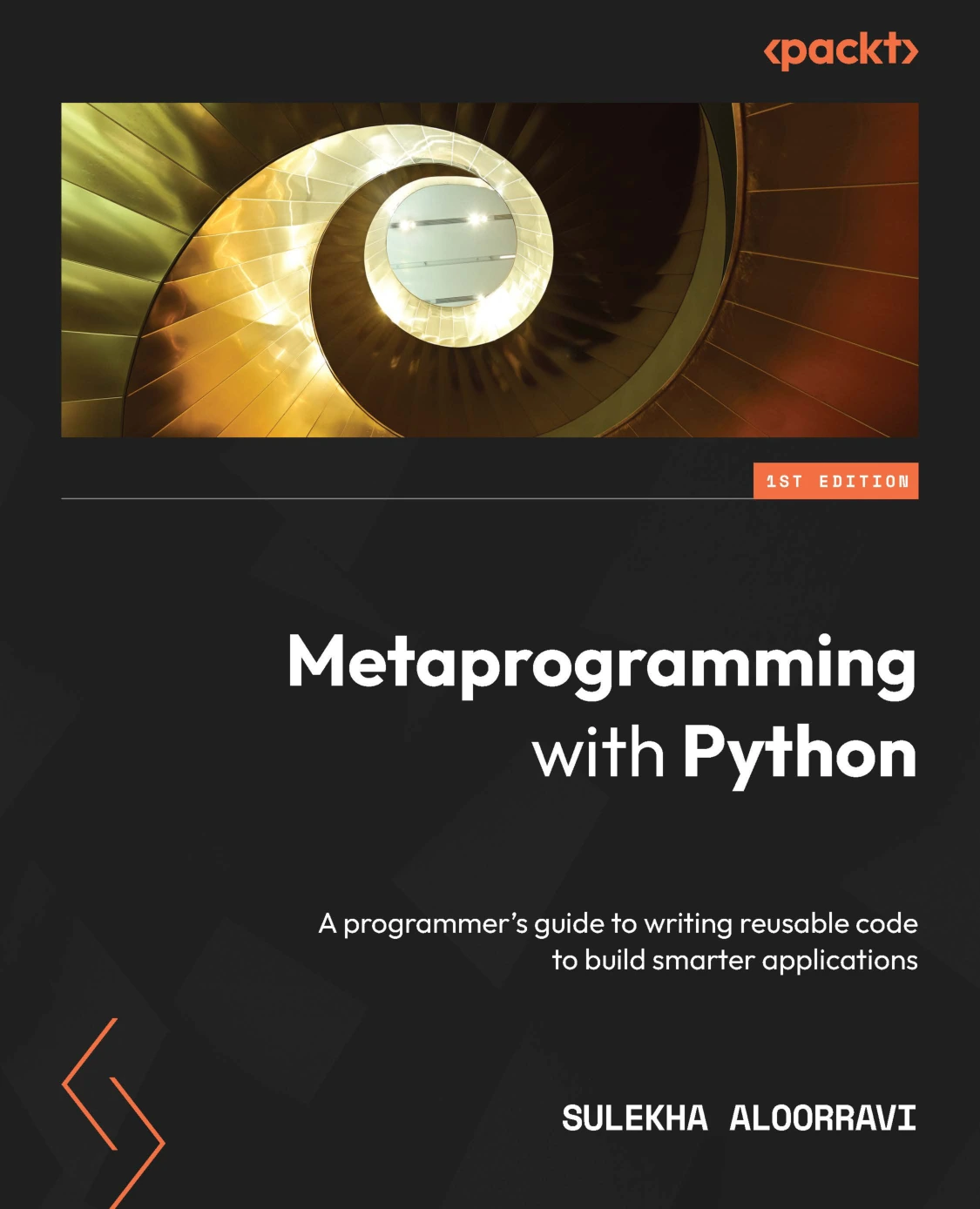
Metaprogramming with Python
Original price was: $5.00.$2.50Current price is: $2.50.

Sulekha AloorRavi
Product Specs:
- File Type: PDF
- File Size: 25.2 MB
- Book Language: English
- Total Page Count: 402
- Instant Download
Metaprogramming with Python: Write Code That Writes and Adapts
Python gives developers an unusual amount of freedom to inspect, modify, and generate code while a program is running. Metaprogramming with Python by Sulekha AloorRavi explores that layer of the language: the techniques that let classes, functions, and attributes do more than their first draft suggests. Published by Packt in 2022, the book is aimed at programmers who already know the basics of Python and want to understand the machinery beneath everyday syntax.
The material moves from object-oriented foundations into the tools that make Python flexible: decorators, metaclasses, introspection, reflection, generics, and typing. Rather than treating these as isolated tricks, the book connects them to reusable design and smarter application structure.
From OOP Foundations to Python’s Dynamic Core
The opening chapters refresh the object-oriented concepts that metaprogramming depends on: classes, objects, methods, inheritance, polymorphism, abstraction, and encapsulation. From there, the book turns to the reasons metaprogramming exists, including the practical goal of reducing repetition and solving type-related problems more elegantly.
That groundwork matters. Metaclasses and decorators can feel mysterious when they are introduced without context. Here, they sit on top of familiar class design, which makes the progression easier to follow.
Decorators, Metaclasses, and Runtime Control 🐍
Several chapters focus on decorators and metaclasses. Readers encounter function decorators, class decorators, multiple decorators on a single function, built-in decorators such as static methods and class methods, and the structure of metaclasses. The book also examines how metaclasses inherit, switch, and manipulate class variables.
These are the tools that allow Python code to wrap behavior, enforce patterns, and alter how classes are created. For developers working on frameworks, libraries, or large codebases, understanding them can clarify why certain APIs behave the way they do.
Introspection, Reflection, and Typing ⚙️
The later chapters look at introspection and reflection through built-in functions. Topics include checking whether an object is callable, whether it has a particular attribute, whether it is an instance or subclass, and how to use id, property, hasattr, isinstance, and issubclass in practical code. A chapter on generics and typing then explores type hints, explicit type checks, custom data types, and domain-specific types.
This section connects metaprogramming to code quality. Type checking and reflection are not just academic features; they can help developers design APIs that are clearer, safer, and easier to maintain.
Who This Book Is For 💻
Metaprogramming with Python suits intermediate Python developers, software engineers, and computer science students who want to move beyond basic syntax. It is especially relevant to readers who write reusable libraries, maintain complex applications, or want to understand the design patterns behind Python frameworks. The book assumes familiarity with Python and object-oriented programming; it is not an introduction to programming.
If you have ever wondered how decorators work under the hood, why metaclasses exist, or how Python can inspect itself at runtime, this book provides a structured path through those questions.
User Reviews
Be the first to review “Metaprogramming with Python”
You must be logged in to post a review.
Original price was: $5.00.$2.50Current price is: $2.50.
There are no reviews yet.