

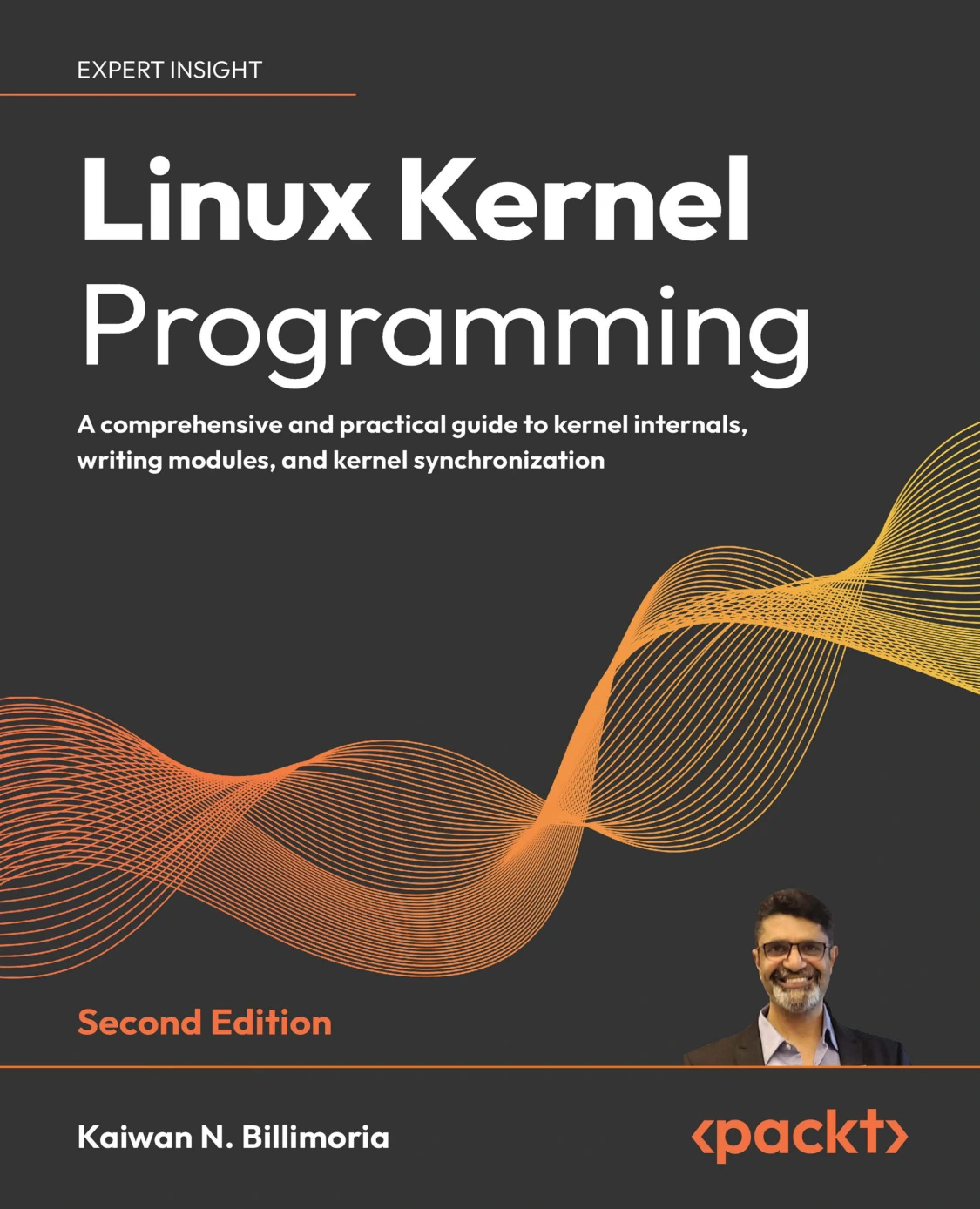
Linux Kernel Programming: A Comprehensive and Practical Guide to Kernel Internals, Writing Modules, and Kernel Synchronization, Second Edition
Original price was: $35.99.$18.00Current price is: $18.00.

Kaiwan N. Billimoria
Product Specs:
- File Type: PDF
- File Size: 63.3 MB
- Book Language: English
- Total Page Count: 827
- Instant Download
Kernel development becomes much easier to approach when the first steps are concrete: obtain the source, configure a build, and see what happens when you change the system beneath the familiar Linux command line. In Linux Kernel Programming, Kaiwan N. Billimoria takes that practical route, building from kernel setup and module writing toward the internals that explain how the operating system works.
This second edition uses the Linux 6.1 LTS kernel and is written for programmers ready to move beyond user-space code. Its progression gives readers a working foundation before tackling subjects such as memory management, scheduling, and synchronization.
Start by building the kernel
The opening chapters guide readers through obtaining kernel source, configuring it, building and installing the kernel and its modules, and preparing the boot process. The coverage also includes a Raspberry Pi kernel build, giving the early material a useful cross-architecture dimension.
Write and understand kernel modules
From a first loadable kernel module onward, the book explores how modules fit into the kernel and how to develop and work with them. This step-by-step foundation helps connect the mechanics of writing kernel code with the environment in which that code runs.
Make sense of kernel internals
Later sections examine kernel architecture, processes and threads, memory management, and CPU scheduling. These topics offer context for developers who need to reason about what the kernel is doing—not just compile a module, but understand the system structures and behavior their code interacts with.
Approach concurrency with care
The book also addresses kernel synchronization and the challenges of concurrent execution. Its coverage includes techniques such as mutexes, spinlocks, atomic operations, per-CPU approaches, and RCU, helping readers become familiar with the choices involved in coordinating work inside the kernel.
Who will find it useful?
This Linux kernel programming guide is intended for programmers and developers getting started with kernel development. A working knowledge of C and comfort using the Linux command line are expected; prior experience with Linux system programming can help, but is not presented as essential.
For readers ready to explore Linux below the application layer, Billimoria’s second edition offers a substantial, hands-on path from kernel builds to modules, internals, and synchronization.
User Reviews
Be the first to review “Linux Kernel Programming: A Comprehensive and Practical Guide to Kernel Internals, Writing Modules, and Kernel Synchronization, Second Edition”
You must be logged in to post a review.
Original price was: $35.99.$18.00Current price is: $18.00.




There are no reviews yet.