

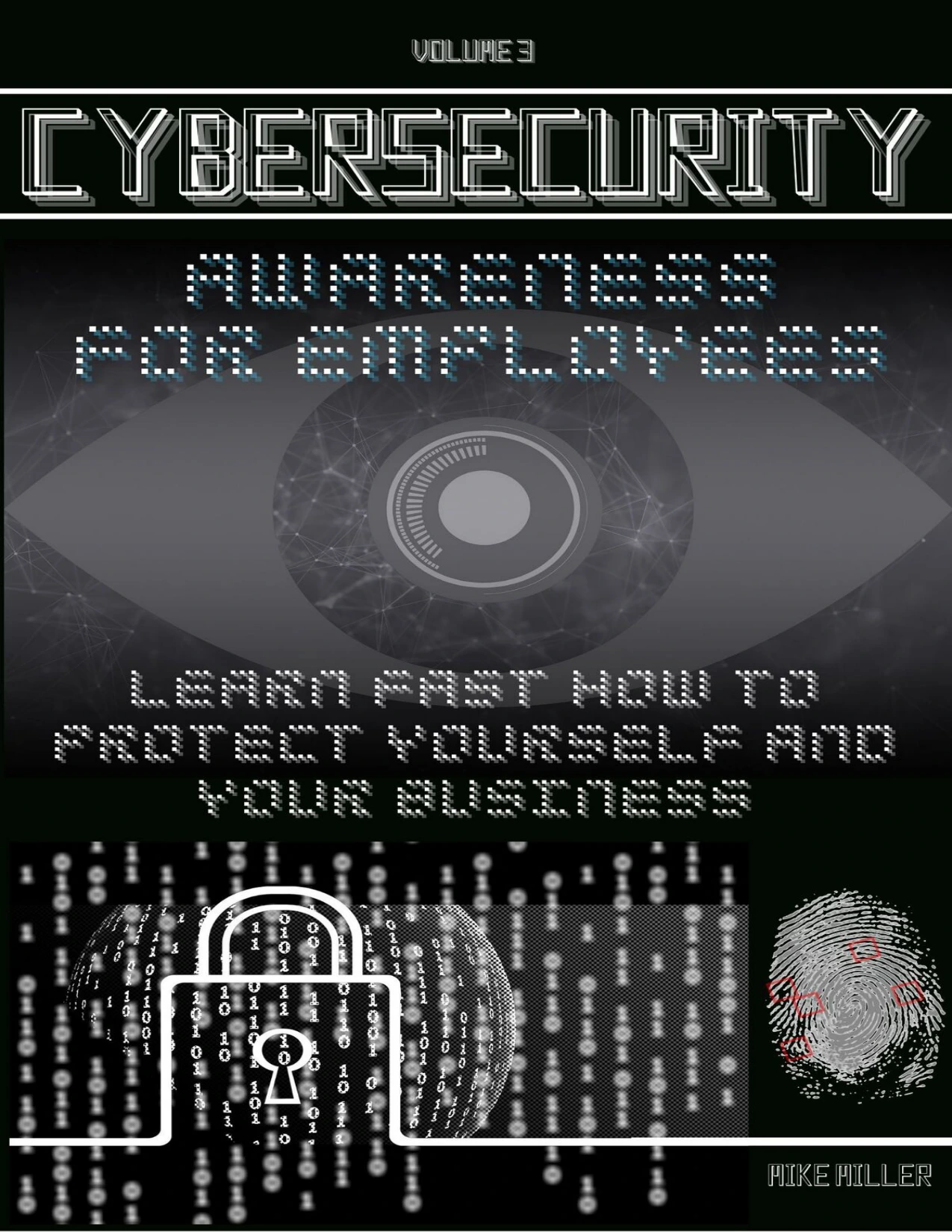
Cybersecurity Awareness for Employees: Learn Fast How to Protect Yourself and Your Business, Volume 3
Original price was: $5.00.$2.50Current price is: $2.50.

Mike Miller
Product Specs:
- File Type: PDF
- File Size: 1.0 MB
- Book Language: English
- Total Page Count: 148
- Instant Download
Cybersecurity threats range from deceptive emails and malicious software to attacks on networks, applications, and user accounts. In Cybersecurity Awareness for Employees: Learn Fast How to Protect Yourself and Your Business, Volume 3, Mike Miller assembles a broad survey of these risks, giving readers a map of the terminology and attack types they may encounter in cybersecurity discussions.
The scope is notably wide: alongside familiar topics such as viruses, ransomware, and social engineering, the book covers technical vulnerabilities, threat actors, penetration testing, and security controls. It is an overview for readers who want to explore how different parts of the cybersecurity landscape fit together.
From malware to manipulation
Early chapters introduce malware including Trojans, rootkits, keyloggers, spyware, and botnets. The discussion then turns to social engineering and tactics such as vishing, impersonation, shoulder surfing, and appeals to urgency or authority. Together, these subjects show that cybersecurity risks can involve both software and the ways people are persuaded to act.
A broad catalogue of attack methods
The contents range across denial-of-service, replay, man-in-the-middle, injection, cross-site scripting, DNS poisoning, wireless, password, and session-hijacking attacks, among others. This breadth makes the volume useful as an introduction to the names and categories of common attack methods, while offering a starting point for readers who want to investigate individual subjects more deeply.
Testing, vulnerabilities, and defensive concepts
Later chapters introduce threat-actor types and the stages and terminology of penetration testing, including reconnaissance, exploitation, and privilege escalation. The book also distinguishes penetration testing from vulnerability scanning and discusses authorization, rules of engagement, vulnerability impacts, secure-coding concepts, misconfiguration, and weaknesses in business processes.
Who may find it useful?
This volume may suit employees, business readers, and newcomers to cybersecurity who want a wide-ranging orientation to security vocabulary and risks. Its table of contents also reaches into technical subjects, so readers seeking only basic workplace safety guidance should note that the book extends well beyond introductory awareness.
For readers building a foundation in cybersecurity concepts, Miller’s volume offers a substantial tour of threats, attack techniques, and vulnerability-related topics—all gathered in one place.
User Reviews
Be the first to review “Cybersecurity Awareness for Employees: Learn Fast How to Protect Yourself and Your Business, Volume 3”
You must be logged in to post a review.
Cybersecurity for Beginners: Incident Management Best Practices, Volume 2
Sold by Mike Miller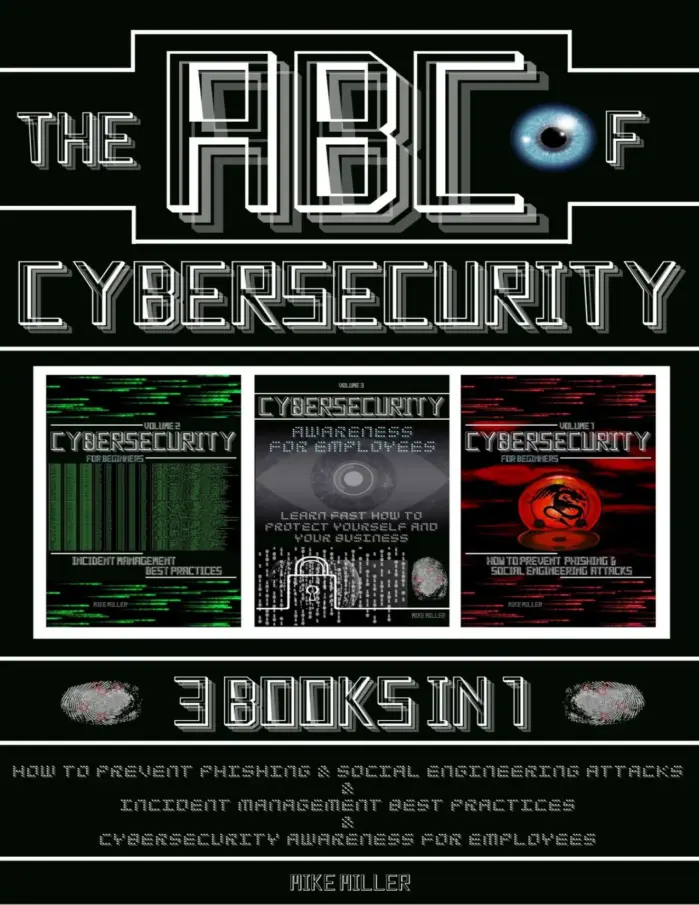
The ABC of Cybersecurity: How to prevent Phishing & Social Engineering Attacks, Incident Management Best Practices and Cybersecurity Awareness for Employees
Sold by Mike Miller Original price was: $5.00.$2.50Current price is: $2.50.






There are no reviews yet.