

Real-World Python: A Hacker’s Guide to Solving Problems with Code
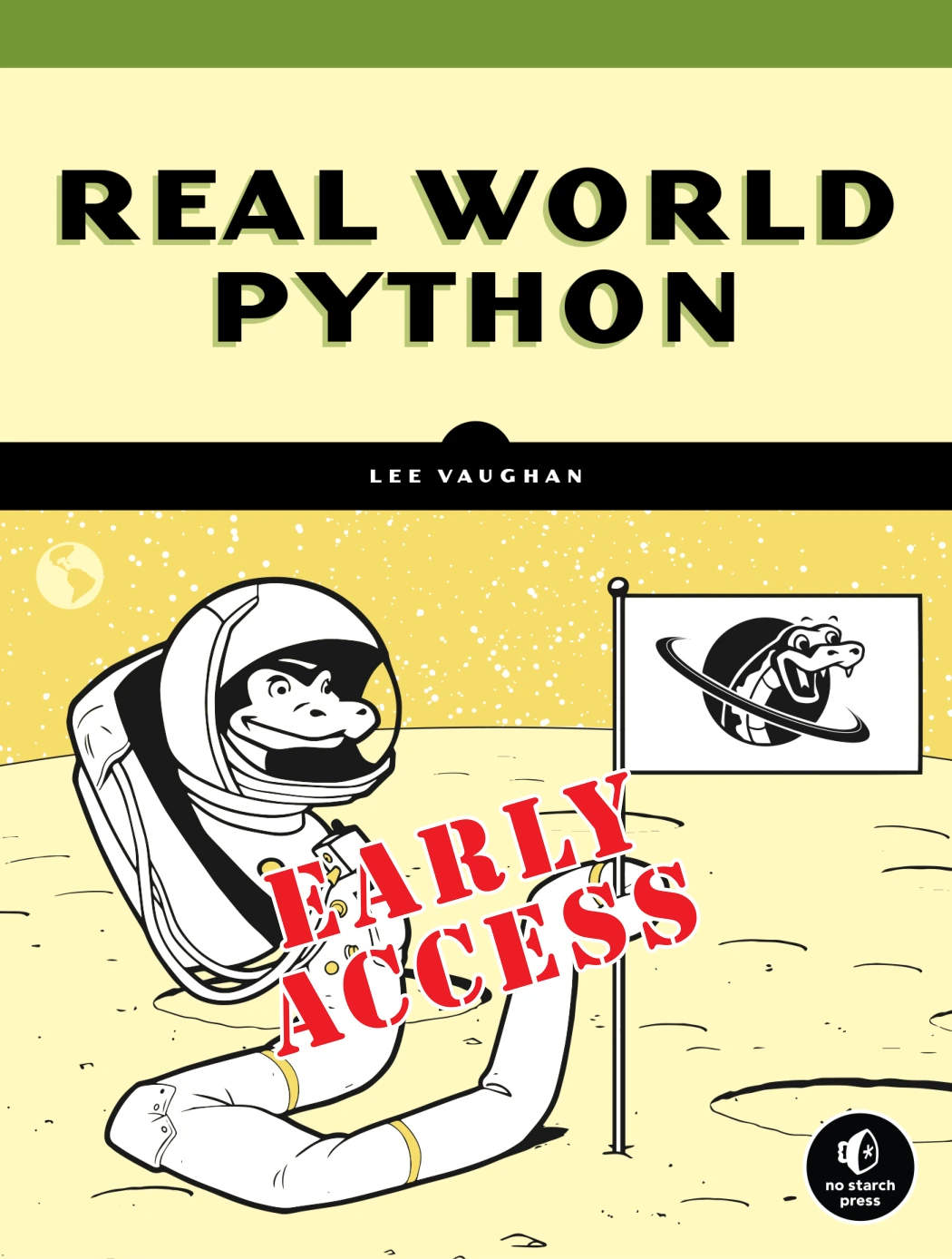
Original price was: $5.00.$2.50Current price is: $2.50.

Lee Vaughan
Product Specs:
- File Type: PDF
- File Size: 53.2 MB
- Book Language: English
- Total Page Count: 322
- Instant Download
There’s a special moment when Python stops being a collection of syntax rules and starts becoming a tool for exploring the world. Real-World Python invites you into that moment with a series of hands-on projects that read more like missions than exercises.
Projects That Feel Like Adventures 🚀
Instead of toy examples, Lee Vaughan builds each chapter around a historically inspired or scientifically grounded challenge. You’ll write code to help search and rescue teams apply Bayes’ rule, reproduce the blink comparator that helped discover Pluto, plot the Apollo 8 free-return trajectory, hunt for exoplanets, and even create an interactive zombie escape map using real demographic data.
The result is a book that keeps your curiosity engaged while you strengthen practical programming skills.
Libraries and Techniques You’ll Actually Use
Working through these projects means getting comfortable with the same tools used in professional data science and computer vision. The book introduces OpenCV for image processing, NLTK for natural language tasks, NumPy and pandas for numerical work, and matplotlib for visualizations. You’ll also meet useful modules like itertools, collections, BeautifulSoup, and tkinter as each problem calls for them.
Who Will Get the Most from This Book
If you’re already familiar with Python fundamentals—variables, loops, functions, and basic data structures—this book is a natural next step. It doesn’t spend time re-teaching the basics. Instead, it throws you into complete, working programs that solve genuine problems. Beginners who’ve completed an introductory course will find the explanations detailed enough to follow, while intermediate programmers will appreciate the project-based approach and the chance to explore new libraries.
From Simulation to Space 🔭
One of the book’s strengths is the variety of subjects. You’ll tackle Bayesian search theory, authorship attribution with stylometry, secret messages with a book cipher, and even the simulation hypothesis. That breadth means you’re not just learning Python syntax—you’re learning how to think about modeling, data, and uncertainty.
Keep Building After the Last Chapter
Each chapter closes with practice and challenge projects. Solutions to the practice projects are included in the appendix, while the challenges are left open-ended to encourage your own experiments. This structure makes the book useful both for self-study and for anyone teaching a project-oriented Python course.
User Reviews
Only logged in customers who have purchased this product may leave a review.
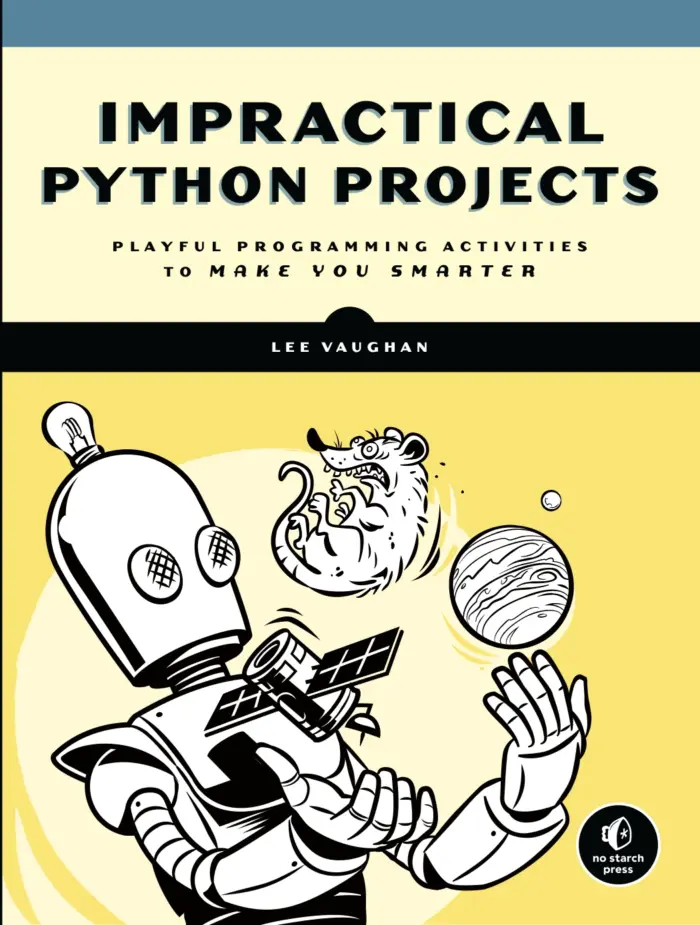
Impractical Python Projects: Playful Programming Activities to Make You Smarter
Sold by Lee Vaughan Original price was: $5.00.$2.50Current price is: $2.50.

There are no reviews yet.