

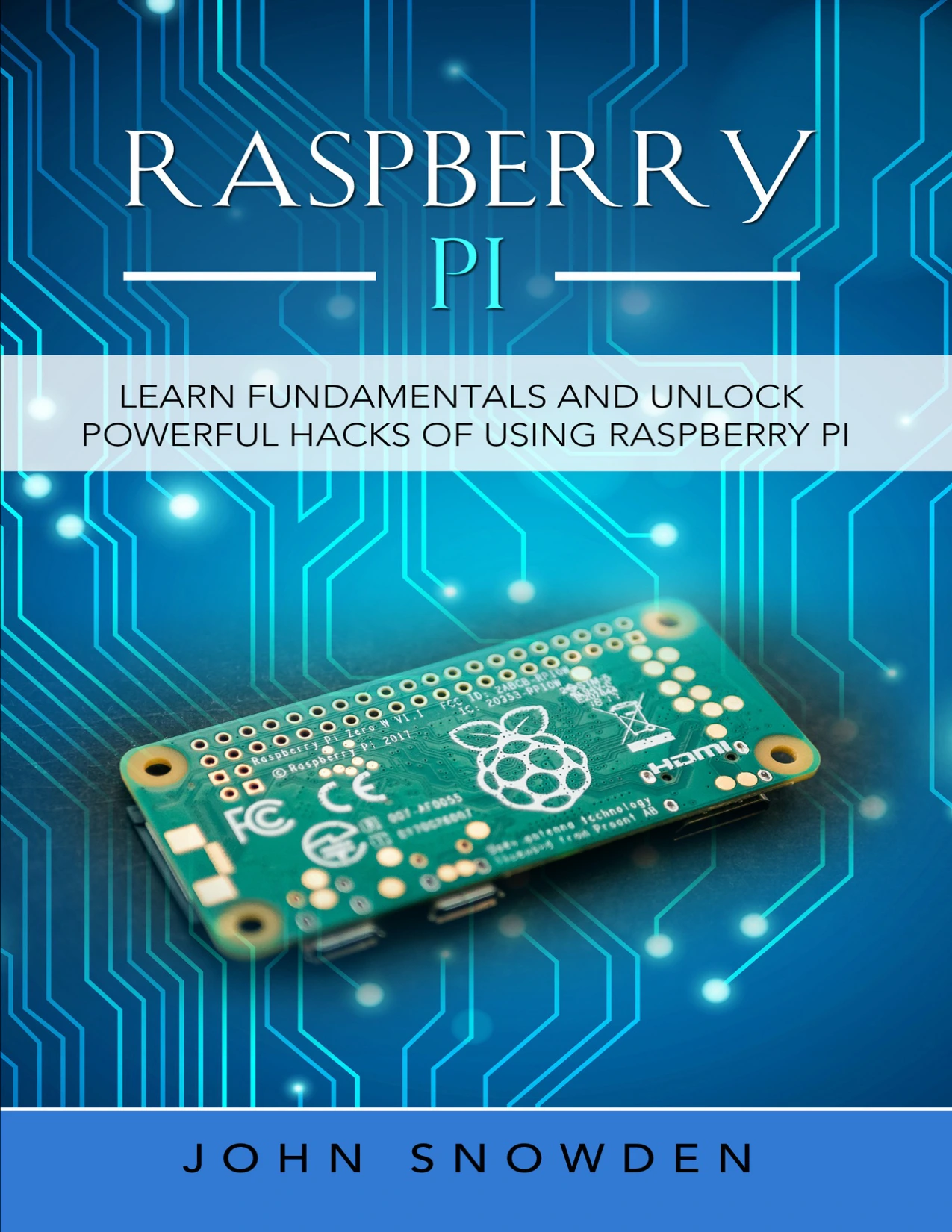
Raspberry Pi: Learn Fundamentals and Unlock Powerful Hacks of Using Raspberry Pi | Raspberry Pi
Original price was: $35.00.$17.50Current price is: $17.50.

John Snowden
Product Specs:
- File Type: PDF
- File Size: 1.1 MB
- Book Language: English
- Total Page Count: 146
- Instant Download
A Hands-On Introduction to the Raspberry Pi
Raspberry Pi: Learn Fundamentals and Unlock Powerful Hacks of Using Raspberry Pi is a 2020 guide by John Snowden for readers who want to understand the little board that has become a favourite tool for learning, making, and experimenting. It begins with what the Raspberry Pi is, how the current models differ from the original, and why a low-cost Linux computer has earned such a wide following in classrooms, workshops, and home studios. 💻
Rather than treating the Pi as a novelty, the book follows a practical path: get the board running, learn the operating system, connect it to a network, and then turn it into something useful—a media centre, a productivity machine, a coding platform, or a base for hardware projects.
The Board, the Setup, and the Linux Basics
Part I concentrates on fundamentals. Early chapters look at Raspberry Pi components, configuration for the Raspberry Pi 4, Linux distributions used with the Pi, and reasons to choose the platform. The guide then moves into setup and first launch, benefits and drawbacks, common applications, and an introduction to Linux system administration with Raspbian. There is also material on safe shutdown, troubleshooting, wired and wireless networking, Wi-Fi setup, and the Raspberry Pi configuration tool, including user accounts, network options, boot options, internationalisation, and advanced settings.
This section is useful for readers who want the early experience to go smoothly. The order—understand the board, install and configure the system, then solve common problems—mirrors the way many beginners actually meet the Pi for the first time. ⚙️
Build a Media Centre or a Productivity Machine
Part II shifts from setup to use. It explores how a Raspberry Pi can become a home theatre PC, what hardware may be needed, cases, and optional add-ons. A later chapter considers the Pi as a productivity machine and asks how important cloud services are in that setup. The focus is on turning the Pi into a working part of daily life rather than leaving it as a bare board on a desk.
Coding with Scratch, Python, and Minecraft Pi
Part III is dedicated to programming. It introduces Scratch through the editor, coding blocks, a simple project, backdrop work, command sequences, and iteration. Python follows with syntax comparisons and an overview of the language’s features. A chapter on Minecraft Pi Edition rounds out the programming section with tips for keeping the process fluid.
For readers who learn best by making something happen on screen, these chapters connect the Pi’s hardware story to the software skills that make it rewarding. 🧠
Hardware Hacking, GPIO, and Camera Projects
Part IV moves into physical computing. Chapters cover hardware hacking, a short soldering guide, soldering safety, the GPIO port and its pins, the Raspberry Pi camera module, and add-on hardware such as the official case and HATs. The appendixes add Python recipes, a camera module quick reference with shared options and raspivid options, and HDMI display modes.
These sections are where the Raspberry Pi’s GPIO pins and camera interface become practical. The book does not just explain what the pins are; it places them in the context of building and extending projects. 💡
Who This Guide Suits
This is an introductory guide with a broad sweep. It should appeal to new Raspberry Pi owners, students, teachers, hobbyists, and makers who want one book to cover setup, Linux basics, networking, programming, and hardware exploration. Readers looking for deep specialist treatment of a single topic may find the later appendixes and project chapters more useful as starting points than as exhaustive references.
If you have a Raspberry Pi waiting to be used, this guide offers a structured route from first boot to code, media, and hardware experiments.
User Reviews
Be the first to review “Raspberry Pi: Learn Fundamentals and Unlock Powerful Hacks of Using Raspberry Pi | Raspberry Pi”
You must be logged in to post a review.

Cybersecurity: An Ultimate Guide to Cybersecurity, Cyberattacks, and Everything You Should Know About Being Safe on The Internet
Sold by John Snowden
Linux for Beginners: A Practical Guide for Complete Beginners on How to Master and Discover Surprisingly Tips On How to Use Linux Efficiently
Sold by John Snowden Original price was: $35.00.$17.50Current price is: $17.50.






There are no reviews yet.