

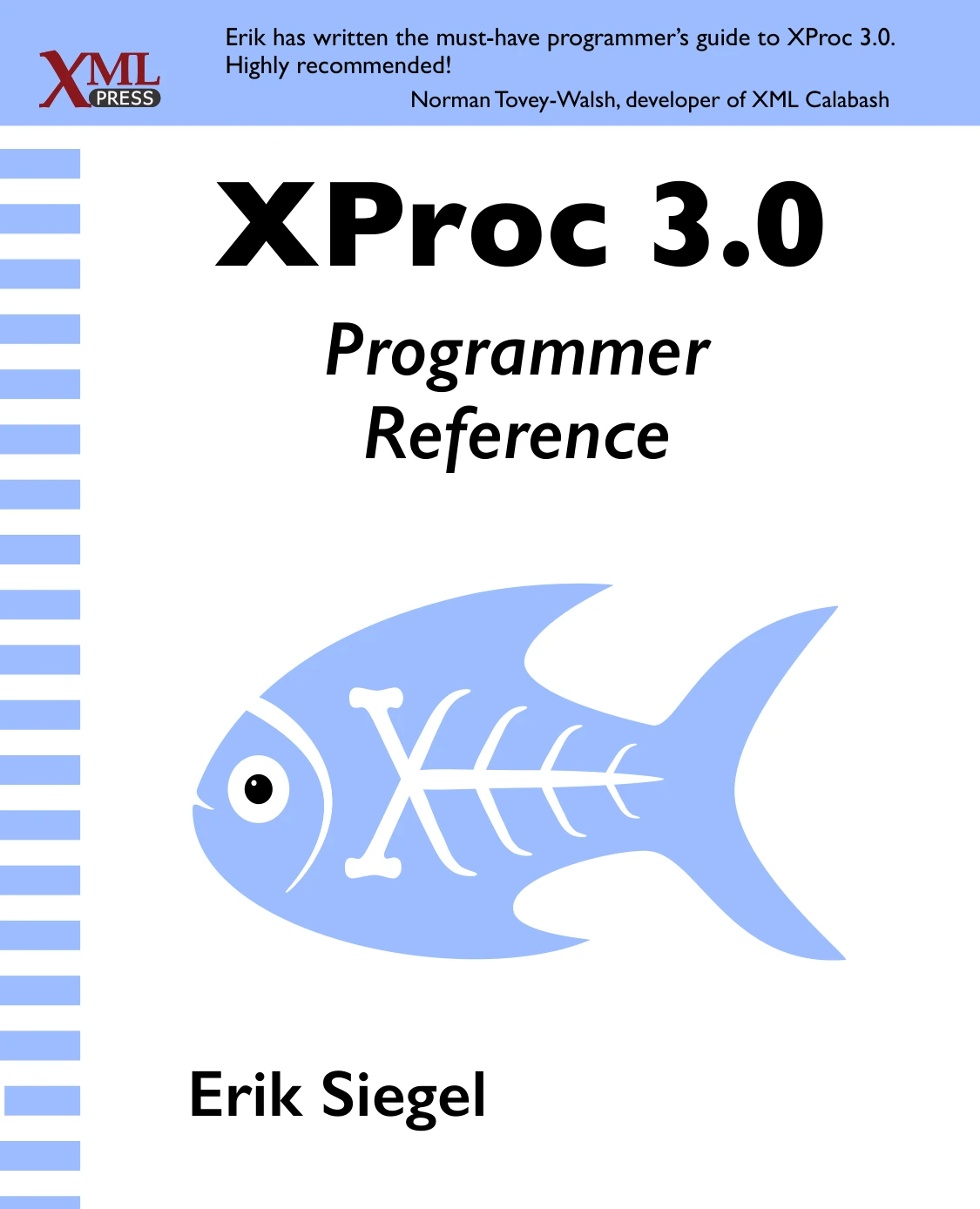
XProc 3.0 Programmer Reference
Original price was: $5.00.$2.50Current price is: $2.50.

Erik Siegel
Product Specs:
- File Type: PDF
- File Size: 3.4 MB
- Book Language: English
- Total Page Count: 355
- Instant Download
XProc 3.0 remains one of the most dependable ways to build maintainable XML processing pipelines, and Erik Siegel’s programmer reference is tailor-made for developers who need both a solid grounding in the language and a reliable desk-side companion for daily work.
What This Reference Covers
The book walks through the fundamental building blocks of an XProc pipeline: declaring steps, connecting input and output ports, setting options, and using variables. It then moves into more advanced territory such as subpipelines, viewports, conditional processing with <p:if> and <p:choose>, and the standard step library. Each concept is presented with enough context to understand not only how the syntax works, but also when and why you would choose one approach over another.
Practical Pipeline Patterns
Beyond the reference material, the author includes dozens of recipes that reflect real-world requirements. You will find clear examples for working with JSON documents, text files, ZIP archives, XInclude resolution, XSLT transformations, and document properties. These are not abstract snippets: they demonstrate techniques you can adapt for tasks such as extracting and modifying files from an archive, casting between content types, and managing multipart requests.
Examples That Reflect Real Work
The later chapters bring everything together with complete examples and appendices covering common XSLT invocation patterns and optional built-in steps. Whether you are automating document conversion, building data validation pipelines, or simply trying to keep a tangled set of processing steps manageable, the examples provide practical starting points you can modify with confidence.
Who Benefits Most
Programmers, integration specialists, and XML developers who already understand the basics of XML and XPath will get the most from this title. The reference style makes it equally useful as a learning path for newcomers who prefer to study by example and as a quick lookup for experienced practitioners who need to confirm a specific attribute or step behavior.
Clear, Task-Focused Learning
The author’s writing style is direct and task-oriented, avoiding unnecessary theory while still explaining the reasoning behind important language choices. If you work with XML pipelines or are considering XProc 3.0 for a new project, this reference offers a grounded, comprehensive resource that helps you move from concept to working pipeline without guesswork.
User Reviews
Be the first to review “XProc 3.0 Programmer Reference”
You must be logged in to post a review.
Original price was: $5.00.$2.50Current price is: $2.50.





There are no reviews yet.