

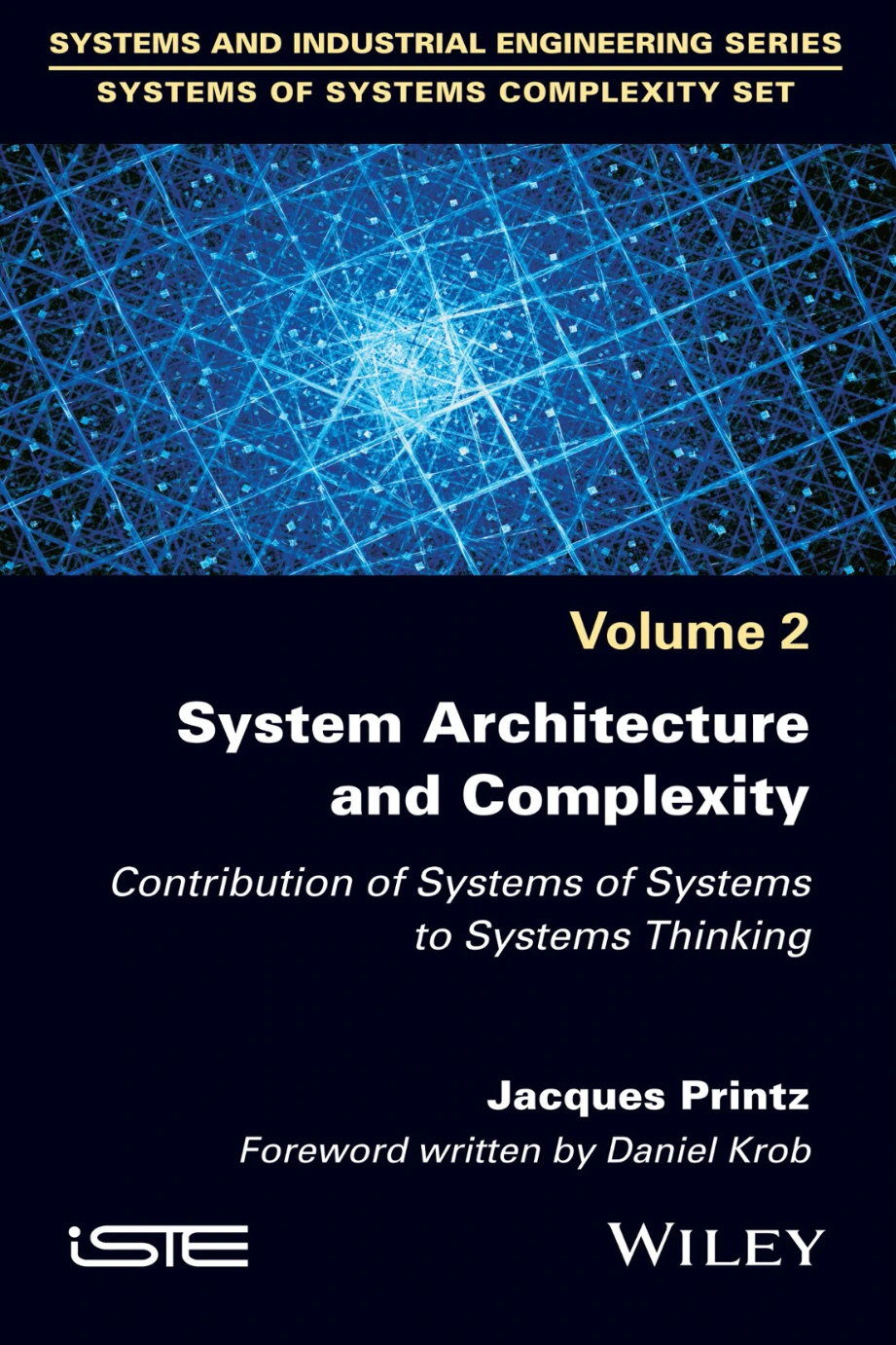
System Architecture and Complexity: Contribution of Systems of Systems to Systems Thinking
Original price was: $5.00.$2.50Current price is: $2.50.

Jacques Printz
Product Specs:
- File Type: PDF
- File Size: 14.2 MB
- Book Language: English
- Total Page Count: 298
- Instant Download
From Cybernetics to Systems of Systems
The modern world runs on interconnected systems, yet few resources explain how those systems come together without losing coherence. This book builds a careful bridge from the early cybernetic insights of Norbert Wiener to today’s pressing challenges in managing systems of systems. Jacques Printz places architecture at the center, treating integration as a design discipline rather than an afterthought.
Core Concepts: Integration, Invariants, and Layers
A recurring theme is that a system cannot be understood by examining its components alone. The book unpacks the role of invariants, the importance of layered organization, and the way meaning and control emerge at higher levels. Readers gain a working vocabulary for describing systems in terms of their structure, interactions, and boundaries.
Interoperability and the Dynamics of Process
Interoperability is presented not simply as a technical checkbox but as a fundamental condition for growth and cooperation. The chapters on process dynamics examine how systems evolve, how faults and noise arise, and how energy and information constraints limit what any architecture can achieve. The discussion of PESTEL factors connects engineering choices to the wider environment.
Fundamental Properties and Semantic Invariance
The later chapters introduce more advanced ideas, including semantic maps, recursive organization, and error control within systems of systems. These concepts help explain why some integrated systems remain stable under stress while others become brittle. Printz also explores the genealogy of systems, offering a historical perspective on how architectures have evolved.
Who Should Read This Book
Engineers, system architects, technical managers, and researchers who deal with large-scale technical or organizational systems will find this volume particularly useful. It is also suitable for advanced students in systems engineering, computer science, and industrial engineering who want a rigorous conceptual foundation. The writing assumes some technical literacy but does not require deep specialized knowledge.
A Thoughtful Contribution to Systems Engineering
As part of the Systems of Systems Complexity Set, this book fills an important gap between abstract systems theory and day-to-day design practice. It encourages readers to think beyond individual components and appreciate the emergent behaviour that makes modern systems both powerful and difficult to master. For anyone responsible for architecture, integration, or governance of complex systems, it offers a valuable and enduring reference.
User Reviews
Be the first to review “System Architecture and Complexity: Contribution of Systems of Systems to Systems Thinking”
You must be logged in to post a review.
Original price was: $5.00.$2.50Current price is: $2.50.





There are no reviews yet.