

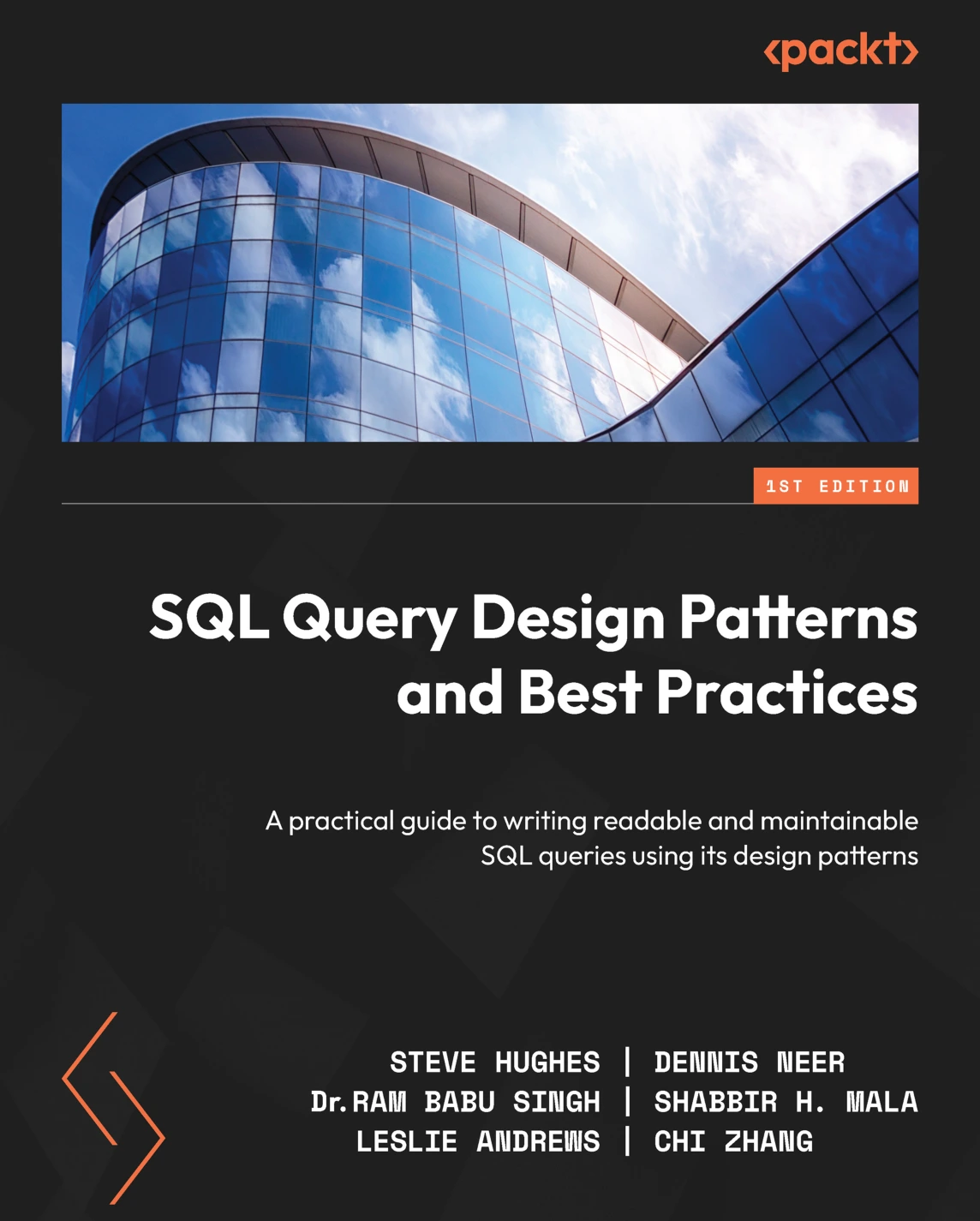
SQL Query Design Patterns and Best Practices: A practical guide to writing readable and maintainable SQL queries using its design patterns
Original price was: $5.00.$2.50Current price is: $2.50.

Steve Hughes
Product Specs:
- File Type: PDF
- File Size: 14.7 MB
- Book Language: English
- Total Page Count: 270
- Instant Download
Why Query Design Patterns Matter
Writing SQL that works is one thing. Writing SQL that stays readable, performant, and easy to maintain as business requirements change is a different challenge. This book focuses on that second skill—the thoughtful application of recurring solutions to common query problems. It moves beyond basic syntax and into the patterns that experienced developers use to keep their code clean and their results reliable.
Build Queries That Are Easier to Read and Maintain
The opening chapters concentrate on reducing unnecessary rows and columns, aggregating data efficiently, and formatting output for human consumption. You’ll see how small choices—like which columns to include or which function to use—can improve clarity without sacrificing performance. The authors explain why certain patterns exist and when to apply them, so you’re not just memorizing code.
Move Beyond Basic SELECT Statements
Later sections tackle more advanced patterns that solve complex business problems. You’ll explore common table expressions (CTEs), including recursive CTEs, and learn how window functions can analyze data without throwing away detail. The book also covers reshaping data with PIVOT and UNPIVOT, plus how SQL Server security settings can unexpectedly filter your result sets.
Practical Techniques You Can Apply Right Away
- Reduce rows and columns to get only the data you need
- Aggregate data with AVG, SUM, COUNT, MAX, and MIN—and know when each is appropriate
- Format dates and numbers using FORMAT, CONVERT, CAST, ROUND, and CEILING
- Use CASE expressions to control query logic in SELECT, ORDER BY, UPDATE, and HAVING clauses
- Create CTEs and recursive CTEs for hierarchical data
- Analyze trends with window functions like ROW_NUMBER, RANK, and running totals
- Pivot and unpivot data for reporting and analysis
- Understand how SQL Server permissions can hide rows from your result set
Who Will Benefit Most
This guide is written primarily for developers and analysts who already have some experience writing SQL and want to improve the quality of their queries. Database administrators and data engineers will also find value in the performance-focused discussions and the security chapter. If you work with Microsoft SQL Server, the examples will feel immediately familiar—and if you’re used to another platform, many concepts still transfer.
A Foundation for Better SQL Habits
Rather than presenting isolated tips, the book builds a coherent way of thinking about query design. Each pattern is tied to a realistic business scenario, helping you recognize when to use a technique and why it works. The result is more than a reference—it’s a mindset shift toward writing SQL that others will want to inherit and maintain.
User Reviews
Be the first to review “SQL Query Design Patterns and Best Practices: A practical guide to writing readable and maintainable SQL queries using its design patterns”
You must be logged in to post a review.
Original price was: $5.00.$2.50Current price is: $2.50.

There are no reviews yet.