

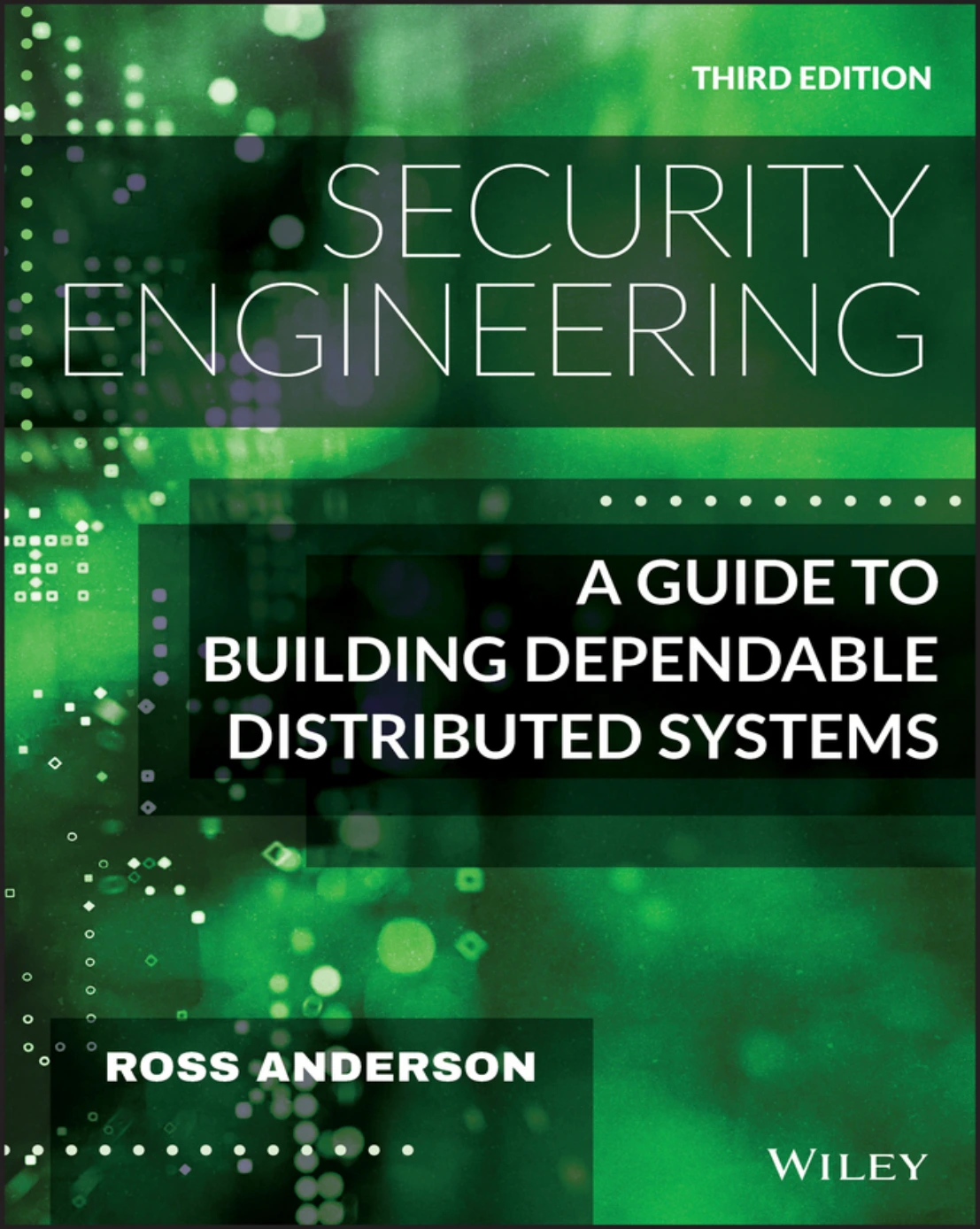
Security Engineering: A Guide to Building Dependable Distributed Systems, Third Edition
Original price was: $5.00.$2.50Current price is: $2.50.

Ross Anderson
Product Specs:
- File Type: PDF
- File Size: 8.4 MB
- Book Language: English
- Total Page Count: 1235
- Instant Download
A Systems Approach to Security
Most security failures happen not because a single cryptographic algorithm is weak, but because the system as a whole was not designed with adversary behavior, human psychology, and economic incentives in mind. This third edition of Security Engineering explores that larger terrain. Ross Anderson walks through the technical foundations, but he consistently connects them to the practical realities of building dependable distributed systems.
What Makes This Edition Different
Anderson’s approach is deliberately broad. He covers cryptography, access control, protocols, and side channels, but he also examines the economics of information security and the psychology of both attackers and defenders. The book draws heavily on real-world case studies, many of which Anderson encountered as a consultant and expert witness. That case-driven perspective turns abstract security principles into lessons that can be applied directly to modern systems.
From the Lab to the Real World
The third edition reflects more than two decades of evolution in both the technology and the discipline. Anderson discusses the rise of cybercrime, the importance of collecting data on online attacks, and the need to understand security as a human and organizational problem as much as a technical one. His perspective is shaped by work at Cambridge, Google, and Carnegie Mellon, giving the book a pragmatic, research-grounded voice.
Who This Book Serves
Security engineers, software architects, system administrators, and advanced students will find the material directly relevant. The book does not shy away from complexity, but it explains concepts clearly enough for readers who need to understand how security mechanisms fit together in a complete system. Managers and policy professionals who need a deeper understanding of why security fails will also benefit from the economic and behavioral sections.
Security as an Ongoing Practice
Anderson emphasizes that security is not a checkbox. It is a continuous process of understanding threats, designing systems that fail safely, and learning from every incident. This edition reinforces that message with updated examples and a more refined framework for thinking about dependability across distributed systems. The result is a reference that belongs on the shelf of anyone serious about building systems that can withstand hostile environments.
User Reviews
Be the first to review “Security Engineering: A Guide to Building Dependable Distributed Systems, Third Edition”
You must be logged in to post a review.
Original price was: $5.00.$2.50Current price is: $2.50.

There are no reviews yet.