

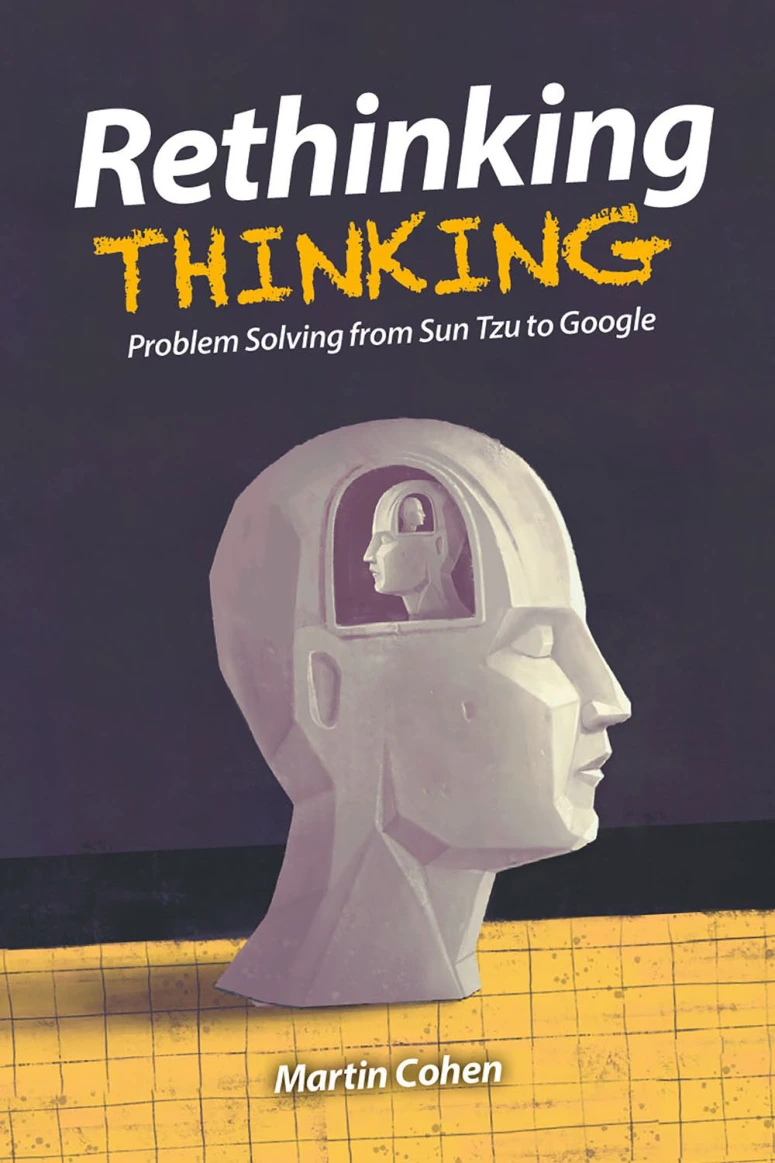
Rethinking Thinking: Problem Solving from Sun Tzu to Google
Original price was: $5.00.$2.50Current price is: $2.50.

Martin Cohen
Product Specs:
- File Type: PDF
- File Size: 7.6 MB
- Book Language: English
- Total Page Count: 211
- Instant Download
Most of us think all day long. Very little of that thinking is deliberate. The gap between the mental noise of an ordinary day and the focused, inventive thinking that actually solves problems is the territory Martin Cohen sets out to map. Borrowing the span of its own subtitle, Rethinking Thinking travels from the strategic psychology of Sun Tzu’s The Art of War — written some 2,500 years ago — to the ways designers, scientists and technologists frame the difficulties in front of them. The interest throughout is in the underlying pattern that makes a strategy work, not the surface detail that makes it look impressive.
Why the Questions Matter More Than the Answers 🧠
Cohen’s starting point is refreshingly blunt. Thinking is a tool, one that evolution shaped to help us make sense of, and flourish within, our environment — and yet schools reward recall over originality while workplaces often reward routine over invention. His illustration is a small, memorable story about a garden equipment firm whose engineers were asked for a new kind of lawn mower. Asked to improve the existing machine, they produced refinements. Asked to think about maintaining lawns instead, they arrived somewhere else entirely: the strimmer. The moral, as he puts it, is that the answers you find depend on the questions you ask.
Nine Chapters, Nine Lenses
The book is built as a sequence of thinking strategies rather than a single argument. Four of those lenses are introduced in the opening chapters:
- Thinking like a Chinese General — what a medieval military treatise still offers modern business, negotiation and everyday decision making, and why the greatest victory is the one that requires no battle.
- Thinking like a Designer — an attempt to reunite the rational and the apparently irrational, giving sensation, emotion and aesthetic judgement a legitimate place alongside evidence and logic.
- Thinking like a Biologist — what cognitive science and neuroscience suggest about how the brain builds new connections through experience, and what that means for anyone who assumes the mind stops growing.
- Thinking like a Scientist Ought to Think — the thought experiment as a tool we use whenever we imagine how the world might be.
Further chapters continue the sequence, followed by an appendix and a substantial notes and sources section for readers who want to follow the ideas back to their origins.
From the Battlefield to the Boardroom
Sun Tzu’s reappearance in management literature can look like a gimmick. Cohen treats it as something more interesting: a demonstration that a text about tactics survives because it is really about human psychology and social life. The same instinct drives the rest of the book — sources are quarried from design and engineering, social science, business studies and computer science, with the aim of finding practical strategies rather than airy commentary about great thinkers.
Where Reason Meets Intuition
One of the book’s more provocative threads is its defence of the so-called irrational. Rational thinking presents itself as universal and impersonal, but it is precisely the emotional, sensory and individual side of thought that allows self-awareness and originality to enter the room. Cohen’s case is that good thinking is broader than a tidy inner dialogue, and that ignoring that breadth costs us the very creativity we are trying to cultivate.
A Book Built for Dipping Into 💡
This is not a volume that demands a linear march from cover to cover. The chapters are modular, and within them sit distinct elements such as fact boxes marking out interesting asides and detail boxes offering a closer look at something in the main text. The structure borrows self-consciously from the accessible reference style popularised by the “For Dummies” series — Cohen notes he has written two titles in that series, one on philosophy broadly and one on critical thinking. His stated aim is to distil a great deal of material into a short space and give readers a good return on their time.
Who It Suits
Readers who enjoy philosophy but want it applied will find the most here, as will students, managers, designers and anyone who suspects that their usual patterns of thought have become a rut. The tone is sceptical, conversational and occasionally contrarian, and the emphasis stays on strategies you can test rather than rules you must accept. If you have ever finished an argument and realised you were only defending a position you never chose, this book is addressed to you.
User Reviews
Be the first to review “Rethinking Thinking: Problem Solving from Sun Tzu to Google”
You must be logged in to post a review.
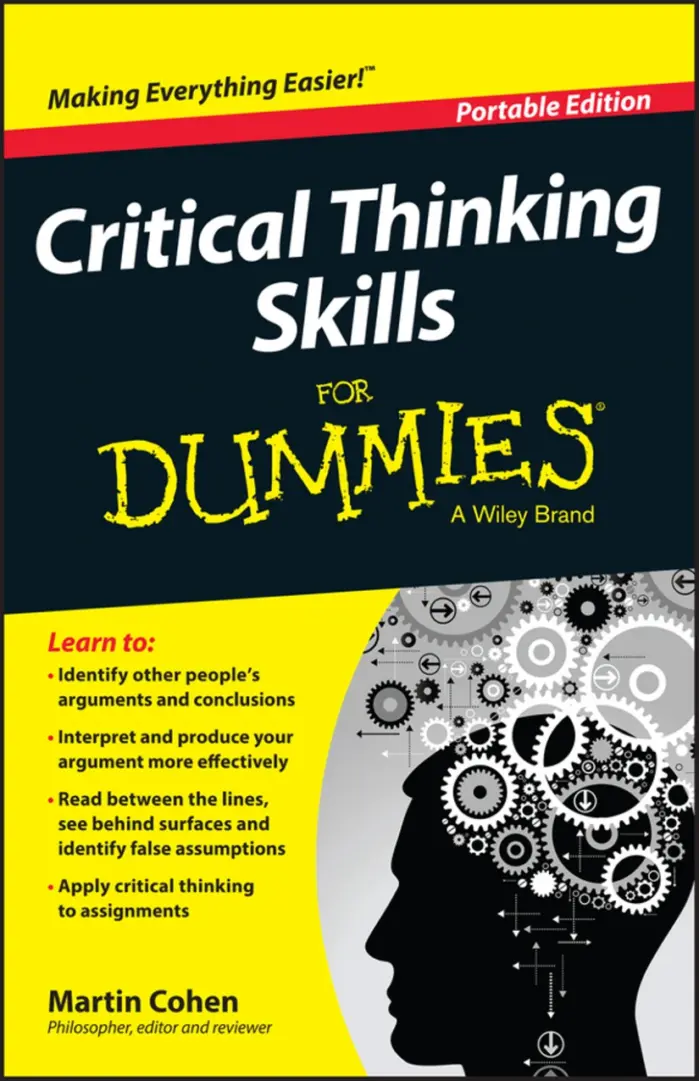
Critical Thinking Skills For Dummies
Sold by Martin Cohen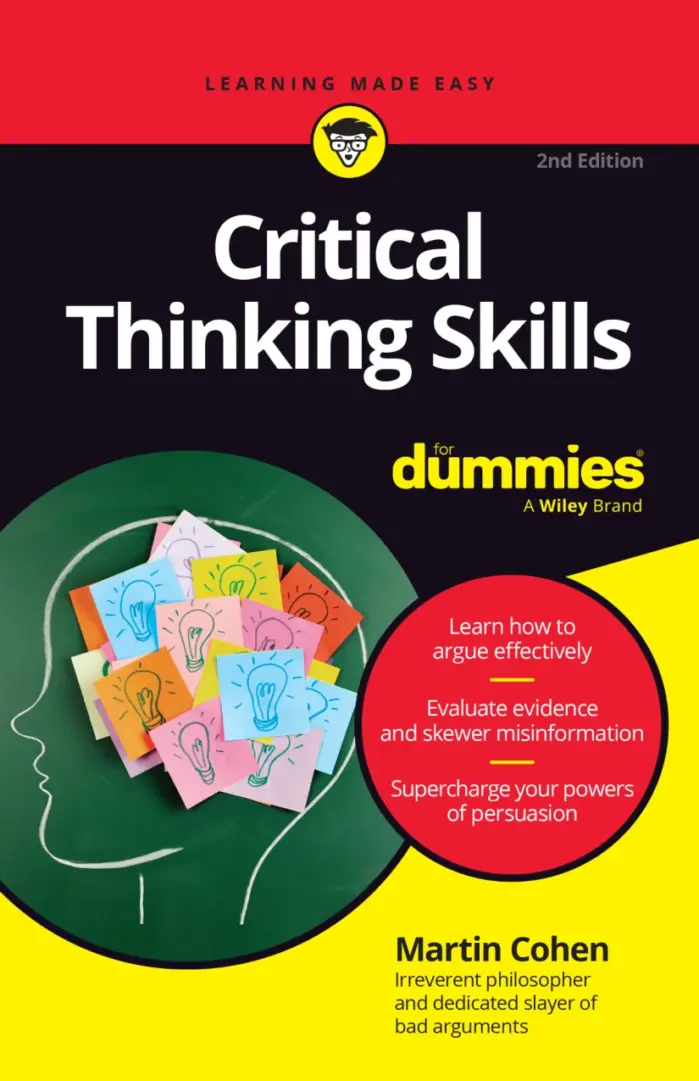
Critical Thinking Skills For Dummies, 2nd Edition
Sold by Martin Cohen Original price was: $5.00.$2.50Current price is: $2.50.





There are no reviews yet.