

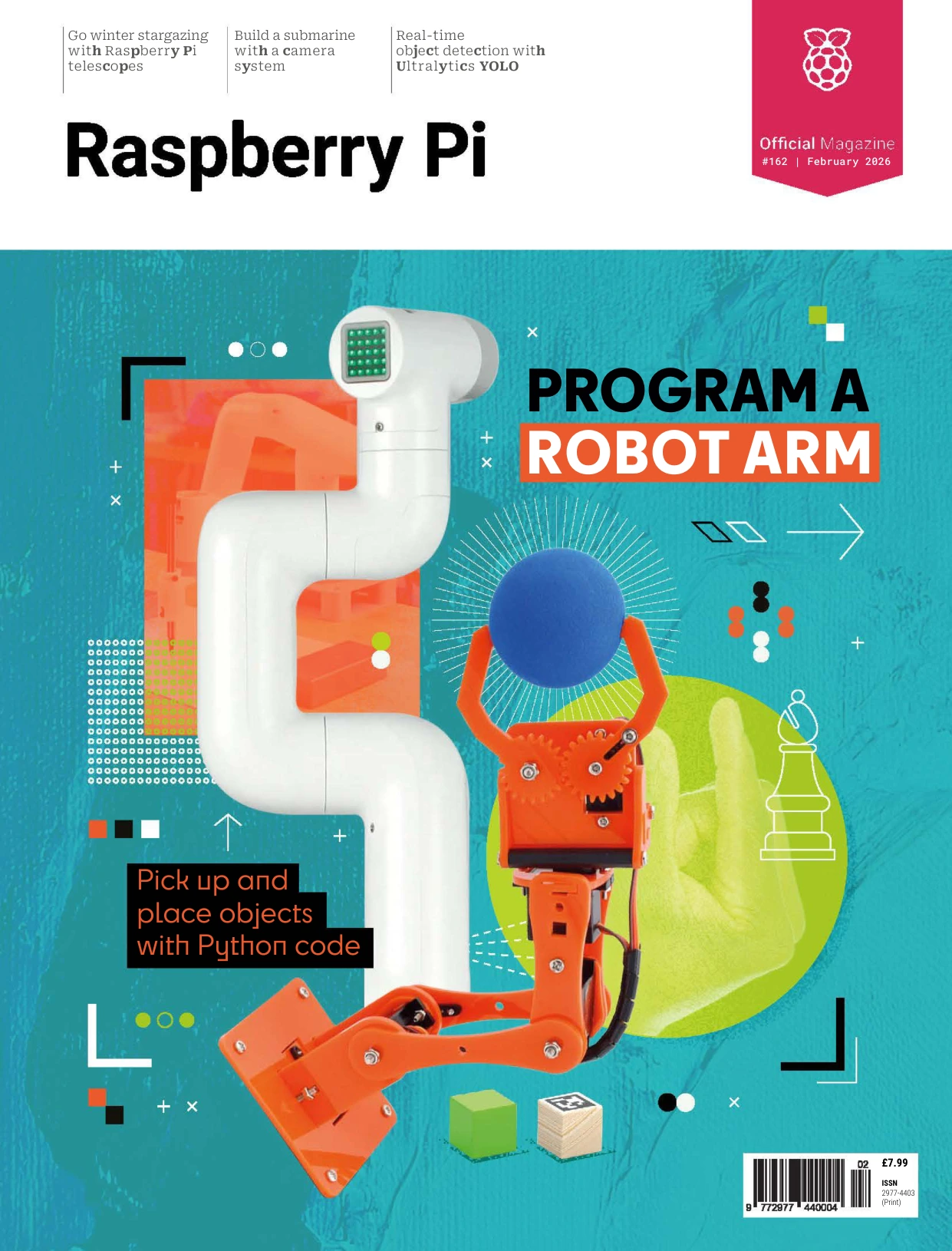
Raspberry Pi #162 (February 2026)
Original price was: $10.69.$5.34Current price is: $5.34.

Raspberry Pi
Product Specs:
- File Type: PDF
- File Size: 175.8 MB
- Book Language: English
- Total Page Count: 130
- Instant Download
Raspberry Pi #162: Where Code Meets the Physical World
The February 2026 issue of Raspberry Pi magazine arrives with a clear theme: making things move, see, and explore. From a Python-programmed robot arm that picks up and places objects to an underwater rover built on a budget, this issue is packed with projects that turn a single-board computer into a tool for real-world interaction. There’s also a strong cosmic thread, with stargazing projects that use the Raspberry Pi High Quality Camera and a telescope to automate tracking and capture the night sky.
Inside This Issue
- Program a robot arm – control an artificial limb with Python code and learn how robotics works under the hood.
- Detect objects with Ultralytics YOLO 11 – set up real-time object detection using a Raspberry Pi camera system.
- Stargazing with Raspberry Pi – automate telescope tracking, record celestial objects, and decipher what’s out there.
- Build a capable underwater rover on a budget – part two of a DIY marine exploration project.
- Design objects with Python in FreeCAD – part two of a series on parametric 3D modeling.
- Make a Pioreactor – a compact bioreactor project for lab-style experimentation.
Robotics, AI, and the Tools to Build Them
Robot arms are where code meets reality, and this issue offers a practical tour of how automation works. You’ll find guidance on using Python to control servo-driven limbs, pick up and place objects, and understand the engineering trade-offs between cheap beginner builds and more advanced arms. Meanwhile, the YOLO 11 tutorial brings modern computer vision to the Raspberry Pi, showing how to run real-time object detection locally — no cloud required. The AI HAT+ 2 launch is also covered, with details on running LLMs and VLMs on Raspberry Pi 5.
Explore the Night Sky with a Raspberry Pi
Astronomy projects in this issue show how a Raspberry Pi can become the brain of a backyard observatory. By pairing the High Quality Camera with a telescope, you can automate tracking, capture long-exposure images, and even use code to identify objects in the field of view. It’s a rewarding way to connect programming with the natural world, and the feature includes practical advice for getting started without a huge budget.
Regular Columns and Community
Beyond the main features, the issue includes tutorials on simple electronics with GPIO Zero, conquering the command line, and using unusual tools like marine epoxy. The reviews section looks at the Fusion HAT+, Pitower Gen 1, and power solutions for Raspberry Pi projects. There’s also an interview with Richard Kirby, community news, letters, and a competition to win a 16GB Raspberry Pi 5.
Who This Issue Is For
If you enjoy building things that interact with the world — robots, cameras, sensors, and telescopes — this issue has plenty to keep you busy. The projects range from beginner-friendly introductions to more involved builds, making it suitable for hobbyists, makers, students, and anyone curious about combining Python with hardware. Whether you’re new to Raspberry Pi or looking for your next ambitious project, this issue offers a solid mix of inspiration and practical instruction.
User Reviews
Be the first to review “Raspberry Pi #162 (February 2026)”
You must be logged in to post a review.

Raspberry Pi Official Magazine #165, May 2026
Sold by Raspberry Pi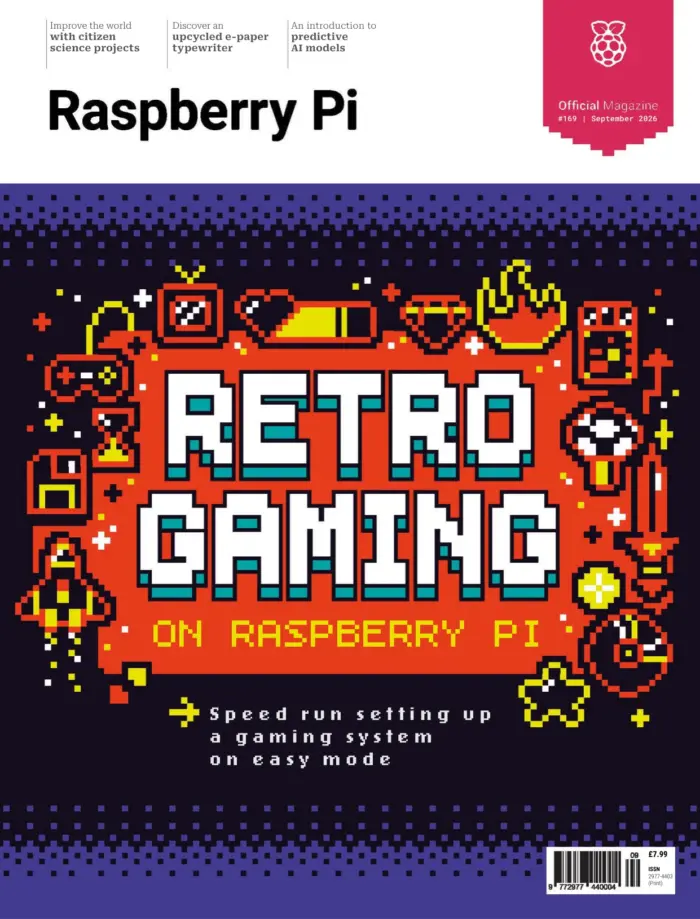
Raspberry Pi Official Magazine – Issue 169
Sold by Raspberry Pi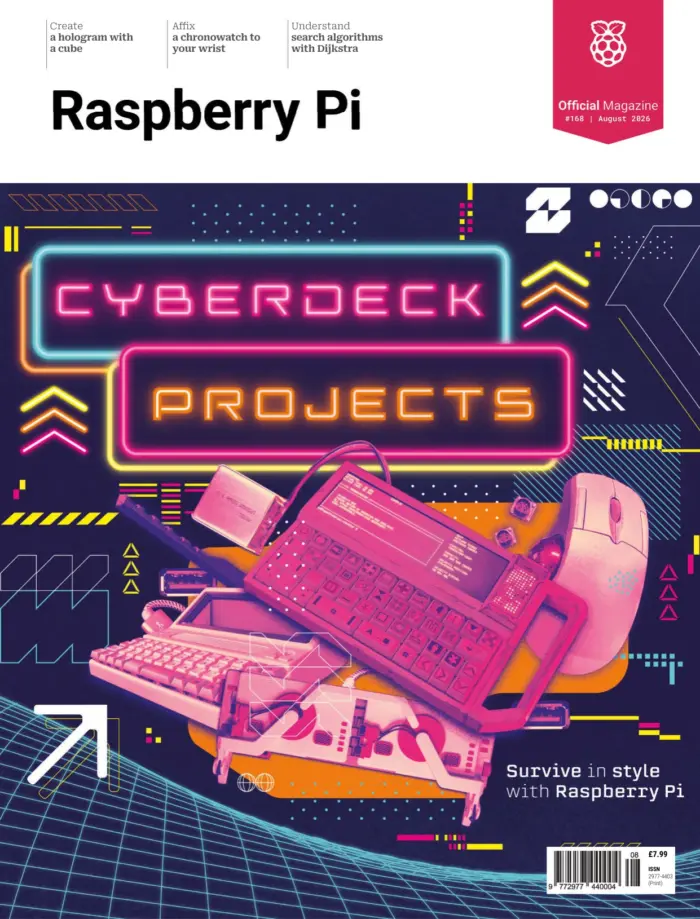
Raspberry Pi Official Magazine #168 (August 2026)
Sold by Raspberry Pi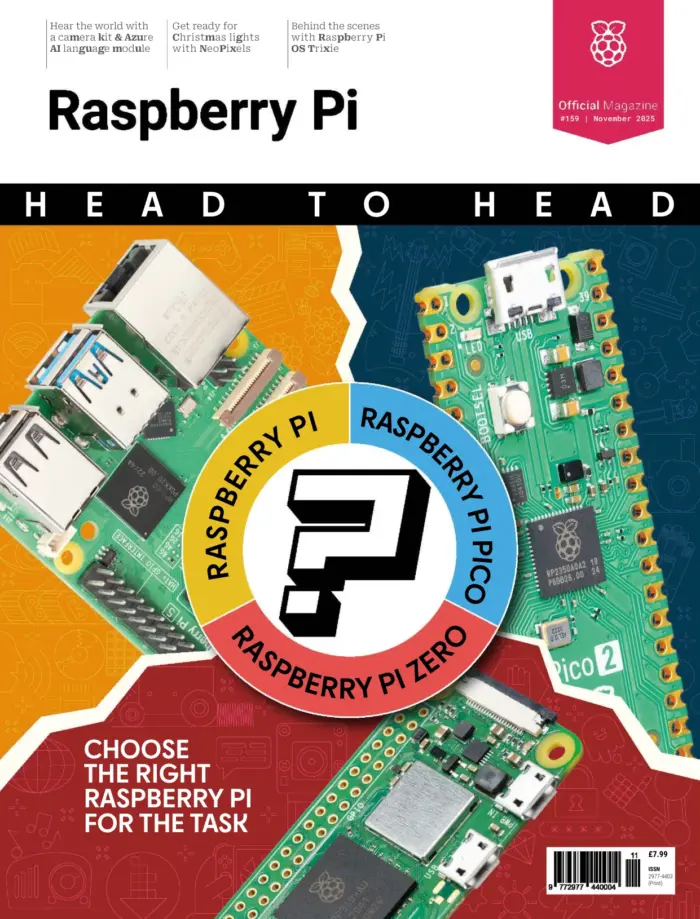
Raspberry Pi #159
Sold by Raspberry Pi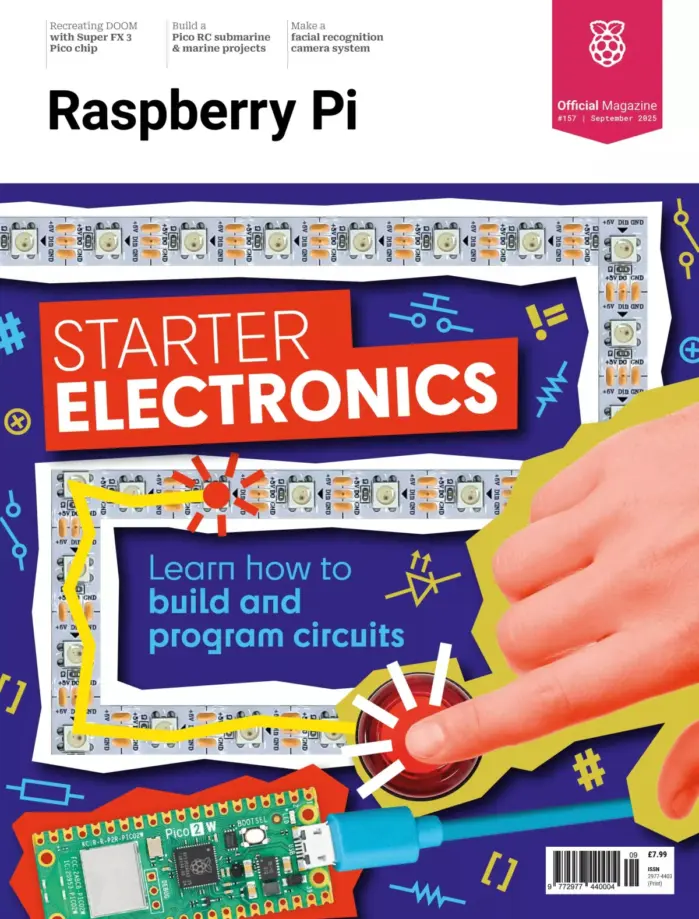
Raspberry Pi Official Magazine – September 2025
Sold by Raspberry Pi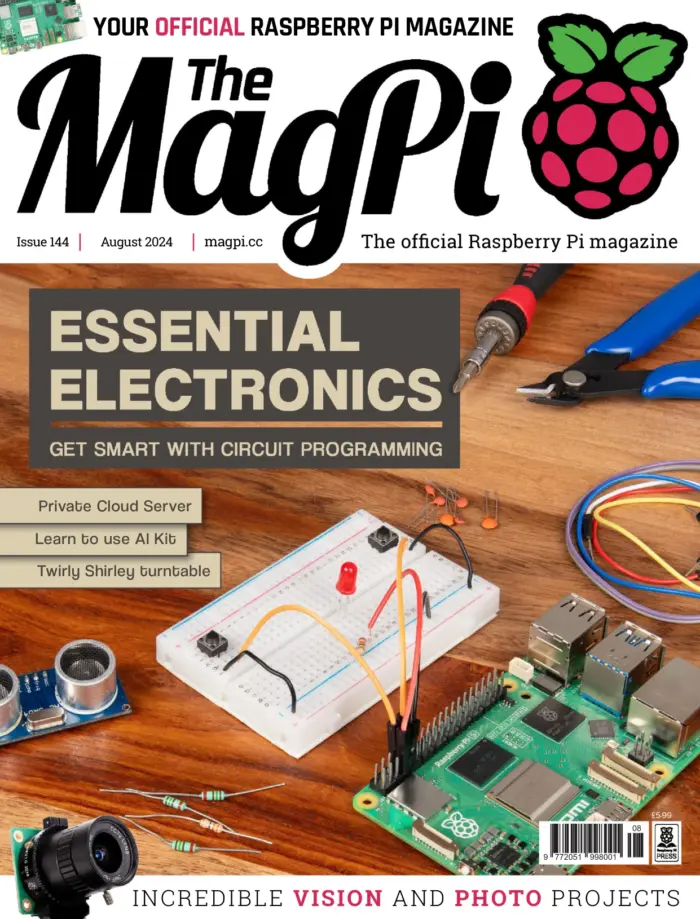
The MagPi – Issue 144, August 2024
Sold by Raspberry Pi Original price was: $10.69.$5.34Current price is: $5.34.






There are no reviews yet.