

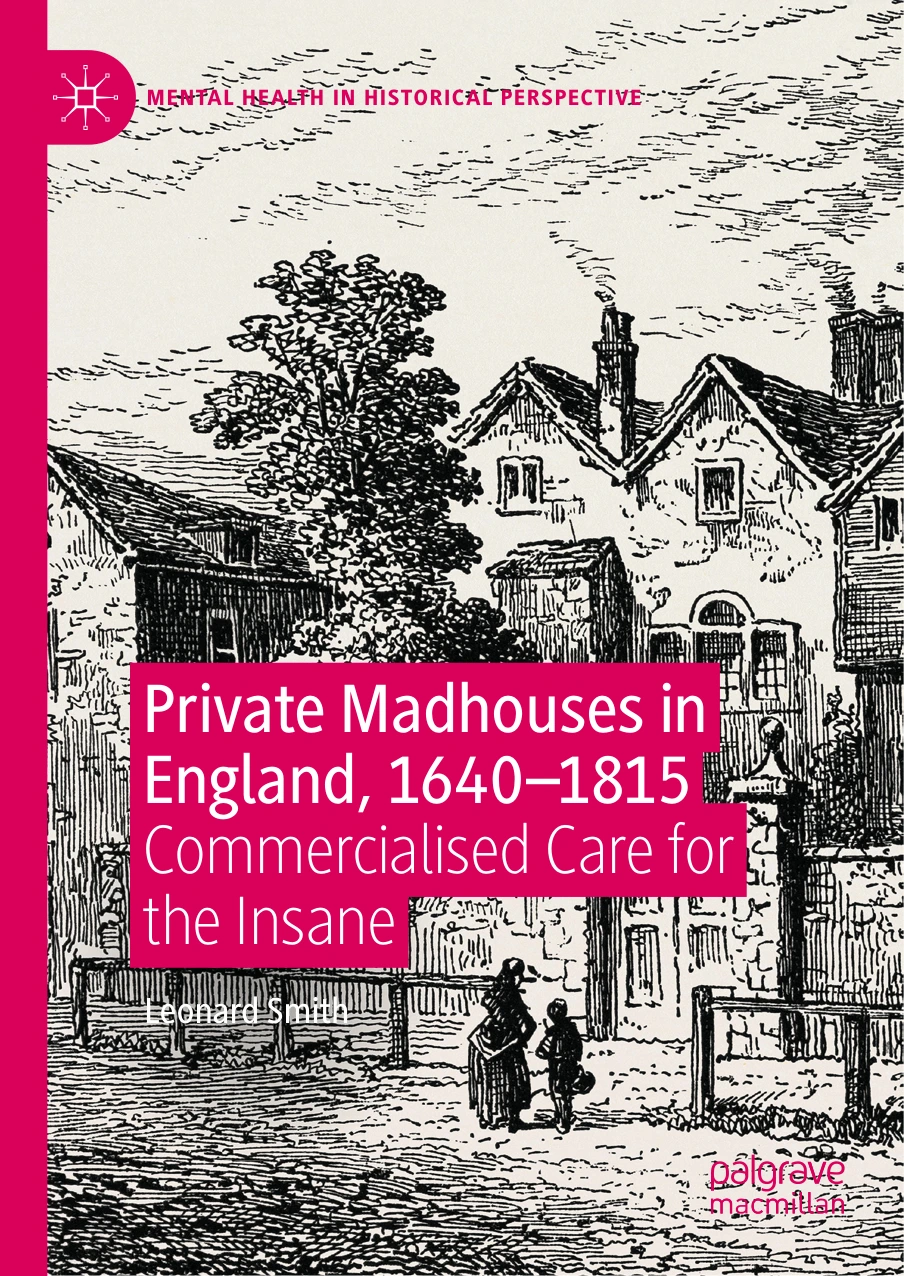
Private Madhouses in England, 1640–1815: Commercialised Care for the Insane
Original price was: $5.00.$2.50Current price is: $2.50.

Leonard Smith
Product Specs:
- File Type: PDF
- File Size: 7.3 MB
- Book Language: English
- Total Page Count: 332
- Instant Download
A Hidden History of Care and Commerce
Between 1640 and 1815, England’s response to mental distress was shaped as much by private enterprise as by medical theory. Private Madhouses in England, 1640–1815 follows the rise of small, often family-run institutions that took paying and pauper patients into their own homes and purpose-built houses. These establishments formed a market long before the Victorian asylum became the dominant model, and their story reveals how care, profit, reputation, and regulation tangled together.
From Domestic Arrangements to a National Network
Leonard Smith begins with the earliest houses for the distracted in the seventeenth century and traces their expansion through the London region, the provinces, and into the early nineteenth century. He shows how proprietors responded to local demand, how families sought placements, and how the madhouse trade became an established part of English life. The book pays close attention to regional differences, from the West and South-West to the Midlands and the North, and to the state interventions that began to reshape the sector after 1775.
The People Behind the Walls
Who entered these institutions, and why? Smith examines inmate numbers, places of origin, and the circumstances that led families and parishes to seek admission. Pauper lunatics appear alongside private patients, and the book considers the admission process, the characteristics and presentations of those confined, and the difficult decisions made by relatives and officials. The result is a patient-centred history that keeps the experiences of individuals in view while analysing the wider system.
Proprietors, Treatments, and Daily Management
The madhouse was also a business. Chapters on madhouse entrepreneurs explore the medical men and lay proprietors who ran these establishments, the reputations they built, and the competitive market in which they operated. Smith then turns to therapeutics: the principles that guided care, the medical and physical treatments used, the role of coercion and restraint, and the everyday ‘management’ that structured life inside. These sections show how treatment and commercial pressure could intersect, sometimes in troubling ways.
Controversy and the Wrongful Confinement Question
Private madhouses attracted both praise and fierce criticism. Smith considers favourable perceptions alongside documented defects and shortcomings, and he devotes sustained attention to the fear of wrongful confinement. The image of the madhouse proprietor as a ‘gaoler of the mind’ raised questions about power, profit, and the vulnerability of patients—questions that echoed through public debate and helped prompt calls for oversight.
Why This Study Matters
Part of the Mental Health in Historical Perspective series, this book places the private madhouse at the centre of the history of mental health provision. It is a detailed, archive-based account that will be valuable to historians of medicine, psychiatry, and social policy, as well as to mental health professionals and readers interested in how care for the insane was organised before the age of the large public asylum.
User Reviews
Be the first to review “Private Madhouses in England, 1640–1815: Commercialised Care for the Insane”
You must be logged in to post a review.
Original price was: $5.00.$2.50Current price is: $2.50.






There are no reviews yet.