

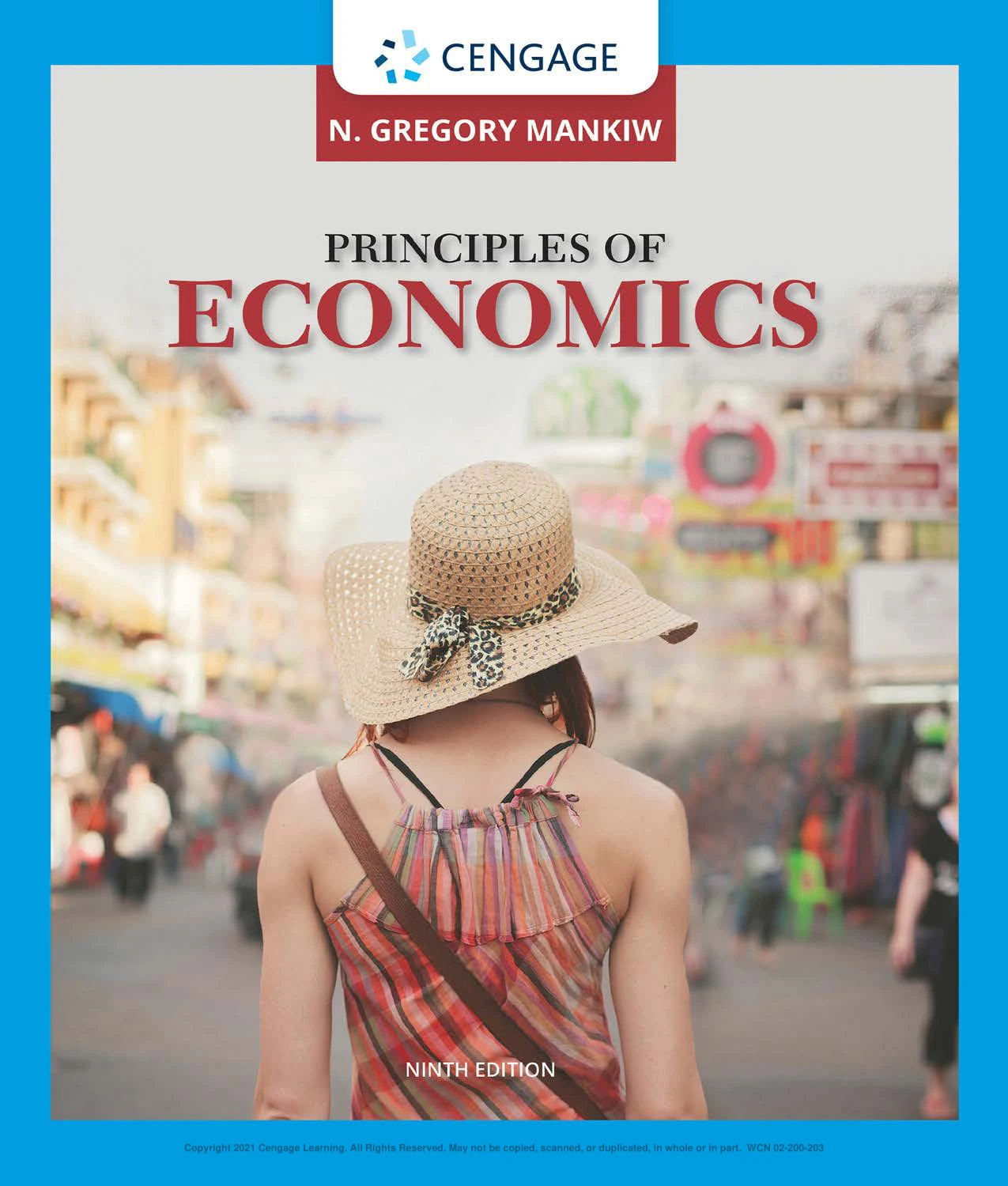
Principles of Economics, Ninth Edition
Original price was: $5.00.$2.50Current price is: $2.50.

N. Gregory Mankiw
Product Specs:
- File Type: PDF
- File Size: 26.1 MB
- Book Language: English
- Total Page Count: 855
- Instant Download
A Clear Framework for Economic Reasoning
N. Gregory Mankiw’s Principles of Economics has long served as a structured introduction to the ideas and methods that economists use to understand the world. The ninth edition continues that tradition, guiding readers from foundational concepts to the analytical tools needed for both microeconomics and macroeconomics.
The book is built around a simple premise: economics is a way of thinking. It begins with ten central principles—trade-offs, opportunity cost, incentives, marginal thinking, trade, markets, government, productivity, inflation, and the short-run trade-off between inflation and unemployment—and then applies those ideas consistently across the rest of the text.
How the Ninth Edition Is Organized
The chapters move through a logical sequence, allowing readers to build understanding step by step:
- Introduction: ten principles, thinking like an economist, and the gains from trade.
- How markets work: supply and demand, elasticity, and government policies.
- Markets and welfare: consumer and producer surplus, taxation, and international trade.
- The public sector: externalities, public goods, common resources, and tax system design.
- Firm behavior: production costs, competitive markets, monopoly, monopolistic competition, and oligopoly.
- Labor markets: factor markets, earnings and discrimination, income inequality, and poverty.
- Further microeconomics: consumer choice and frontiers of microeconomics.
- Macroeconomic data: measuring national income and the cost of living.
- The real economy in the long run: production and growth, saving, investment, finance, and unemployment.
- Money and prices: the monetary system, money growth, and inflation.
- Open economies: basic concepts and a macroeconomic theory of the open economy.
- Short-run fluctuations: aggregate demand and aggregate supply, monetary and fiscal policy, and the inflation-unemployment trade-off.
- Final thoughts: six debates over macroeconomic policy.
Micro and Macro in One Coherent Volume
Rather than treating microeconomics and macroeconomics as unrelated subjects, this edition shows how they connect. The microeconomic chapters examine how households and firms make decisions, how markets allocate resources, and when government intervention can improve outcomes. The macroeconomic chapters then zoom out to national income, growth, unemployment, money, inflation, and the forces that shape short-run economic fluctuations.
What the Ninth Edition Adds
This edition updates the book with new case studies and applications that tie economic reasoning to contemporary issues. Examples include technology companies hiring economists, debates over carbon taxes and climate policy, antitrust scrutiny of large platforms, immigration and labor markets, tax data on wealth inequality, poverty trends, economic growth in sub-Saharan Africa, cryptocurrencies, hyperinflation in Venezuela, trade deficits, and the Federal Reserve’s approach to inflation targeting.
Who This Edition Serves
The text is designed primarily for students in introductory college economics courses, whether they are taking a one-semester survey or a full-year principles sequence. It can also serve readers who want a systematic foundation in economic ideas—those who prefer a textbook’s structure, examples, and chapter-by-chapter progression over a purely popular treatment.
Why It Remains a Standard Introduction
By pairing clear explanations with real-world applications, Principles of Economics, Ninth Edition helps readers develop a durable framework for thinking about incentives, trade-offs, markets, and policy. It is a substantial, carefully organized text for anyone beginning a formal study of economics.
User Reviews
Be the first to review “Principles of Economics, Ninth Edition”
You must be logged in to post a review.
Original price was: $5.00.$2.50Current price is: $2.50.






There are no reviews yet.