

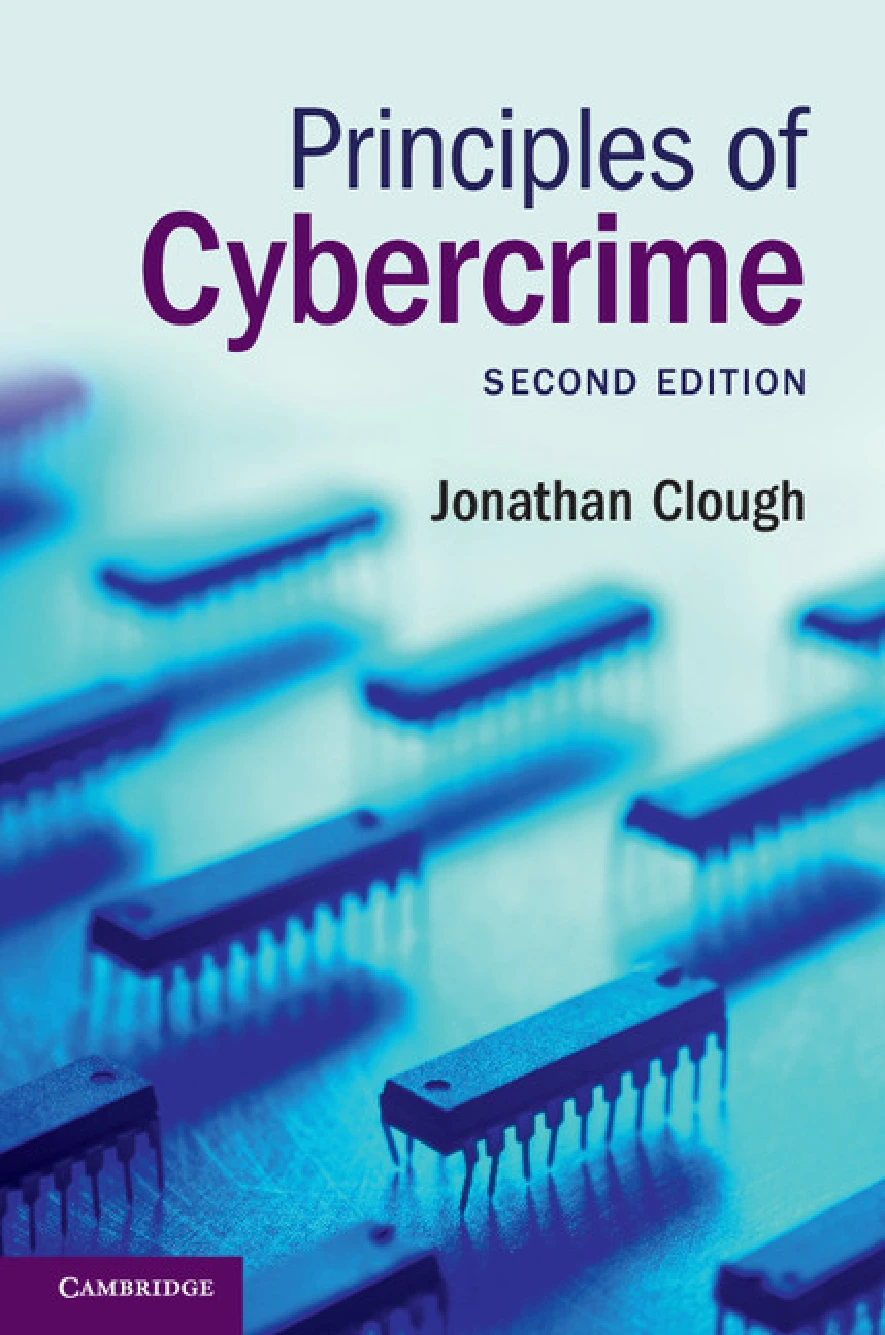
Principles of Cybercrime, Second Edition
Original price was: $148.64.$74.32Current price is: $74.32.

Jonathan Clough
Product Specs:
- File Type: PDF
- File Size: 2.9 MB
- Book Language: English
- Total Page Count: 581
- Instant Download
Cybercrime Law Across Four Jurisdictions ⚖️
Digital technology has reshaped how crimes are committed, investigated, and prosecuted. Jonathan Clough’s Principles of Cybercrime offers a rigorous comparative analysis of the legal principles that courts and legislatures apply when cybercrime crosses borders. This second edition, published by Cambridge University Press in 2015, updates the original 2010 work with new case law, legislation, and international developments, including the growing influence of the Council of Europe Convention on Cybercrime.
Rather than treating cybercrime as a single phenomenon, the book examines distinct offence categories and the legal frameworks that govern them in Australia, Canada, the United Kingdom, and the United States. These four common law jurisdictions provide a rich set of comparisons: sometimes their approaches converge, and sometimes they diverge in instructive ways.
What the Second Edition Covers
The book is organised into six parts, guiding readers from foundational definitions to specific offences and jurisdictional questions. Key areas include:
- Computer as target: unauthorised access, modification or impairment of data, misuse of devices, and interception of communications.
- Fraud and related offences: online fraud, identity theft, criminal copyright infringement, and spam.
- Content-related offences: child pornography, including production, distribution, possession, and defences.
- Offences against the person: grooming, harassment, and voyeurism in digital contexts.
- Jurisdiction: prescriptive, adjudicative, and enforcement jurisdiction when crime crosses national borders.
Each chapter begins with background on the offence type, then surveys the legislative environment in each jurisdiction before analysing key principles. This structure makes the book useful both for readers focusing on a single country and for those seeking comparative insight.
Why This Comparative Approach Matters
Cybercrime rarely respects national boundaries. A single incident may involve a perpetrator in one country, a victim in another, and data stored in a third. By placing the laws of Australia, Canada, the UK, and the USA side by side, Clough highlights how legal systems grapple with common problems—often arriving at similar solutions, but sometimes adopting quite different legal tests and definitions.
The second edition pays particular attention to changes since 2010. Terms such as cyberbullying, sexting, and trolling have entered mainstream legal discussion. Technologies like peer-to-peer networks and botnets continue to evolve, enabling offences ranging from copyright infringement to child exploitation. New offences have been enacted, existing ones amended, and courts have continued to confront the interface between legal doctrine and technological change.
Who Will Find This Book Useful
Written for readers who want a deeper understanding of cybercrime law, this book is relevant to academics, legal practitioners, law enforcement officers, and students. It assumes no prior specialist knowledge of cybercrime, but it does engage seriously with legal doctrine and comparative method. The preface notes that, apart from jurisdictional issues, the book does not address criminal investigation, procedure, or evidence—its focus remains firmly on the substantive legal principles applied to cybercrimes.
Jonathan Clough is a professor in the Faculty of Law at Monash University, Australia, where he teaches and researches criminal law, evidence, and cybercrime. His expertise in the field informs a text that is both scholarly and accessible.
An Evolving Field, Mapped with Precision
If you need a clear, well-structured account of how four major common law systems define and prosecute cybercrime, this second edition provides exactly that. It is a reference work that rewards careful reading, whether you are researching a specific offence, preparing for practice, or trying to understand the broader legal landscape of the internet age.
User Reviews
Be the first to review “Principles of Cybercrime, Second Edition”
You must be logged in to post a review.
Original price was: $148.64.$74.32Current price is: $74.32.


There are no reviews yet.