

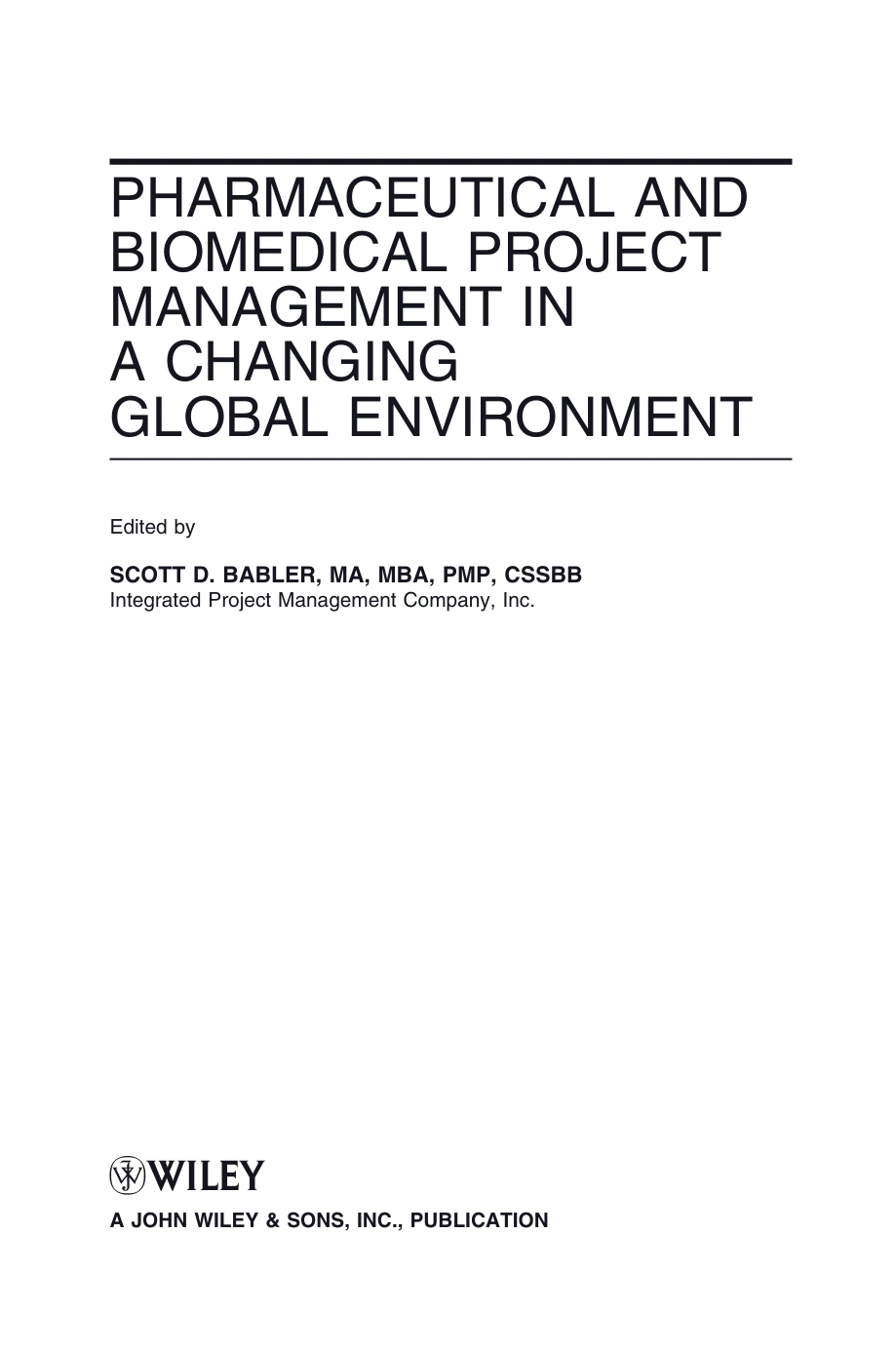
Pharmaceutical and Biomedical Project Management in a Changing Global Environment
Original price was: $5.00.$2.50Current price is: $2.50.

Scott D. Babler
Product Specs:
- File Type: PDF
- File Size: 1.5 MB
- Book Language: English
- Total Page Count: 398
- Instant Download
A Practical Guide to Biomedical Project Leadership
Managing a drug or medical-device project is rarely a straight line. It runs through regulatory deadlines, clinical trial risks, supplier alliances, shifting portfolios, and teams scattered across countries. Pharmaceutical and Biomedical Project Management in a Changing Global Environment gathers contributors from across the biomedical industries to examine how project leaders keep those moving parts aligned.
Edited by Scott D. Babler and published by John Wiley & Sons as part of the Wiley Series on Technologies for the Pharmaceutical Industry, this volume treats project management as a central discipline in pharmaceutical and biomedical product development—not a support function bolted on after the science is done.
What the Book Explores
The chapters move from broad leadership questions to specific lifecycle challenges. Early material looks at project leadership for biomedical industries. Later sections turn to medical devices, in vitro diagnostics, and drug development, showing how project management adapts when the product, regulatory pathway, or development model changes.
Business relationships get serious attention: outsourcing project activities, alliance projects, technology transfers, multifunctional product teams in international settings, and lessons from inter-organizational collaboration. Case studies, including project management in non-profit drug development, help connect the frameworks to real working environments.
From Clinical Trials to Portfolio Decisions
Part of the book’s value is its range. It looks at clinical trials and project management, quality planning throughout the product lifecycle, regulatory strategies and submissions, and practical risk management. Then it widens the lens to portfolio creation, R&D pipelines, resource planning, and stage-gate product development processes.
The final chapters consider where biomedical project management may be heading, with a look at the future of medical devices and the next wave of managing biomedical projects. Readers can move through the book part by part or focus on the chapters most relevant to their current role.
Who May Find It Useful
This is a professional reference for project managers, team leaders, consultants, and specialists working in pharmaceutical, biotechnology, and medical-device organizations. Regulatory, quality, and clinical professionals who collaborate with project teams may also find the cross-functional perspective useful. Graduate students and educators in biomedical management or pharmaceutical business programs can use it to study how project decisions play out across the product lifecycle.
Because the book is an edited volume rather than a single-voice textbook, readers get a range of practitioner viewpoints. Some chapters are strategic; others are closer to operational case studies. Together they map the project-management territory without pretending that one method fits every biomedical project.
Why This Topic Matters
Biomedical development is expensive, regulated, and highly interdependent. A project can involve internal scientists, external partners, contract manufacturers, regulators, clinicians, and commercial teams. Understanding how to lead, plan, resource, and govern that work is not optional for organizations bringing new therapies and devices forward. This volume gives readers a structured way to think about those challenges and the vocabulary to discuss them across functions.
Digital Delights is pleased to offer this Wiley volume as a digital ebook for professionals and students who want a practical, chapter-based reference on pharmaceutical and biomedical project management.
User Reviews
Be the first to review “Pharmaceutical and Biomedical Project Management in a Changing Global Environment”
You must be logged in to post a review.
Original price was: $5.00.$2.50Current price is: $2.50.





There are no reviews yet.