

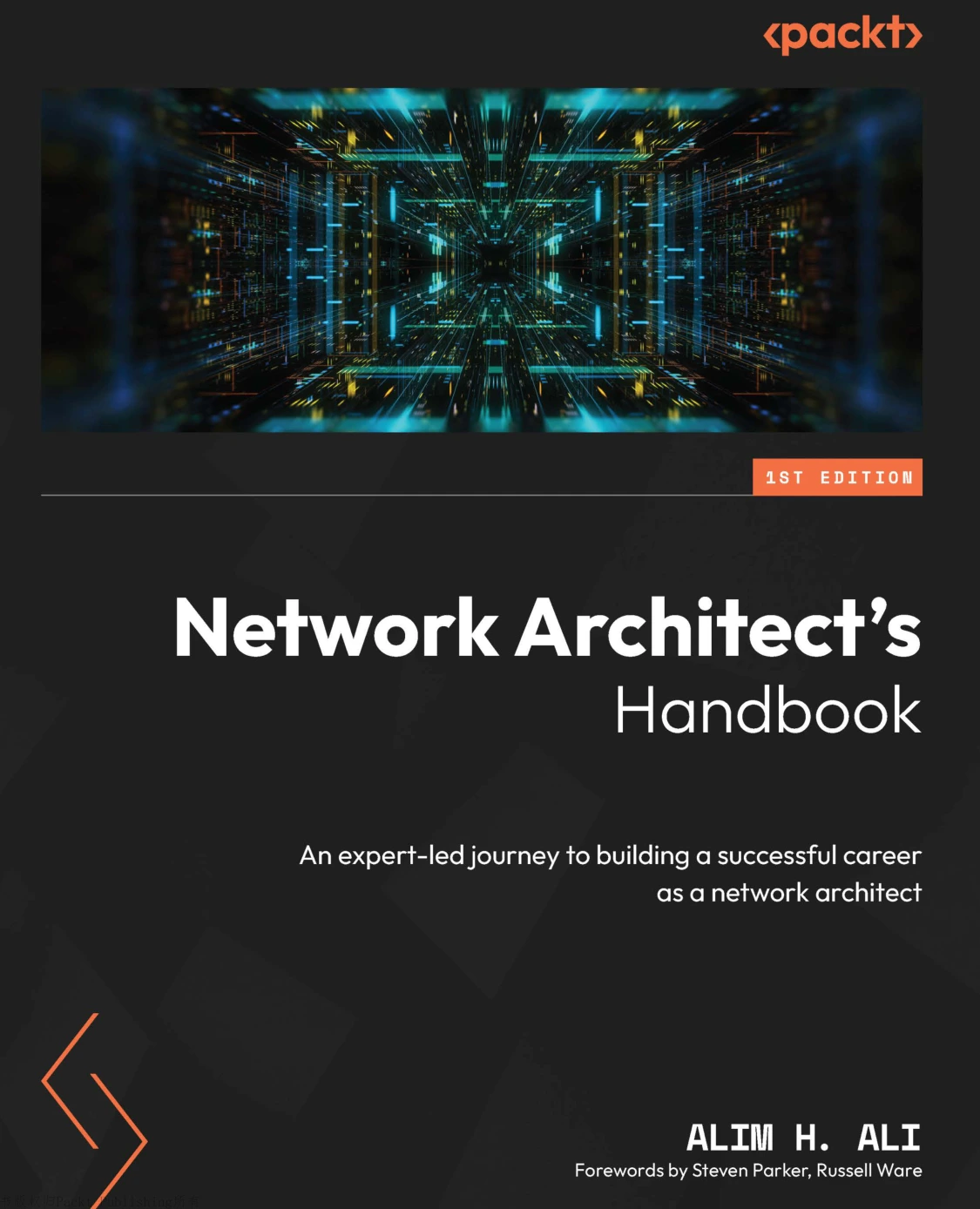
Network Architect’s Handbook
Original price was: $5.00.$2.50Current price is: $2.50.

Alim H. Ali
Product Specs:
- File Type: PDF
- File Size: 10.4 MB
- Book Language: English
- Total Page Count: 418
- Instant Download
A Guide to the Role Behind the Network
Network architecture is often described through diagrams, protocols, and platforms. The harder part is the judgment: knowing which design will serve the business, how to defend it, and how to keep it working as conditions change. Network Architect’s Handbook addresses that wider view. Alim H. Ali writes for professionals who want to understand not only what network architects build, but how they think, plan, and operate inside real organizations.
From Engineering Tasks to Architectural Responsibility
The book opens by defining the network architect’s role and placing it alongside related positions such as solutions architects, storage architects, database architects, enterprise architects, cloud architects, and technical architects. That comparison matters because architecture is not a single job title; it is a set of responsibilities that shifts with the organization. Readers get a clear framework for understanding where network architecture fits and what distinguishes it from adjacent roles.
Architecture Models in Context 💻
Instead of treating design patterns as abstract theory, the handbook introduces major models—client/server, peer-to-peer, hierarchical, hybrid, and spine-leaf—as approaches with different trade-offs. The goal is to help readers recognize when a pattern suits a requirement and when it creates new problems. This is especially useful for engineers who can configure devices but want to make better decisions at the design level.
Working on Projects That Matter
A network architect’s work is rarely confined to a lab. It involves planning, designing, installing, upgrading, and maintaining network projects across their lifecycles. The handbook explores these activities in organizational context, including how to handle upgrades and maintenance, make recommendations that improve infrastructure, reduce operational costs, and support choices with cost-benefit analysis. The emphasis is practical: architecture has to survive contact with budgets, timelines, and business priorities.
Who This Handbook Is For
This book is relevant to network engineers preparing for architecture responsibilities, IT professionals considering a move into network architecture, and practicing architects who want a broader perspective on the role. It can also help technical leaders understand how network decisions connect to wider enterprise goals. Because the material combines career guidance with architectural concepts, it is useful both as a structured read and as a reference for conversations about role development and project planning.
Experience-Led Perspective
Alim H. Ali brings more than 28 years in the IT industry to the subject. His credentials include 2x CCIE, CISSP, and CCSI, and his background spans Fortune 100 companies, telecom, financial services, healthcare, cloud, and data infrastructure. That experience shapes the book’s tone: direct, pragmatic, and focused on the situations architects actually face. The forewords from Steven Parker and Russell Ware add further context on the author’s professional journey and the growing strategic importance of network architecture.
Why It Belongs on Your Shelf
Network Architect’s Handbook does not promise that a single book can make someone an architect. It offers something more useful: a map of the role, the decisions, and the organizational realities that define the work. For readers ready to move beyond device-level troubleshooting and toward design, strategy, and influence, this handbook provides a thoughtful place to begin. Available as a digital edition from Digital Delights.
User Reviews
Be the first to review “Network Architect’s Handbook”
You must be logged in to post a review.
Original price was: $5.00.$2.50Current price is: $2.50.






There are no reviews yet.