

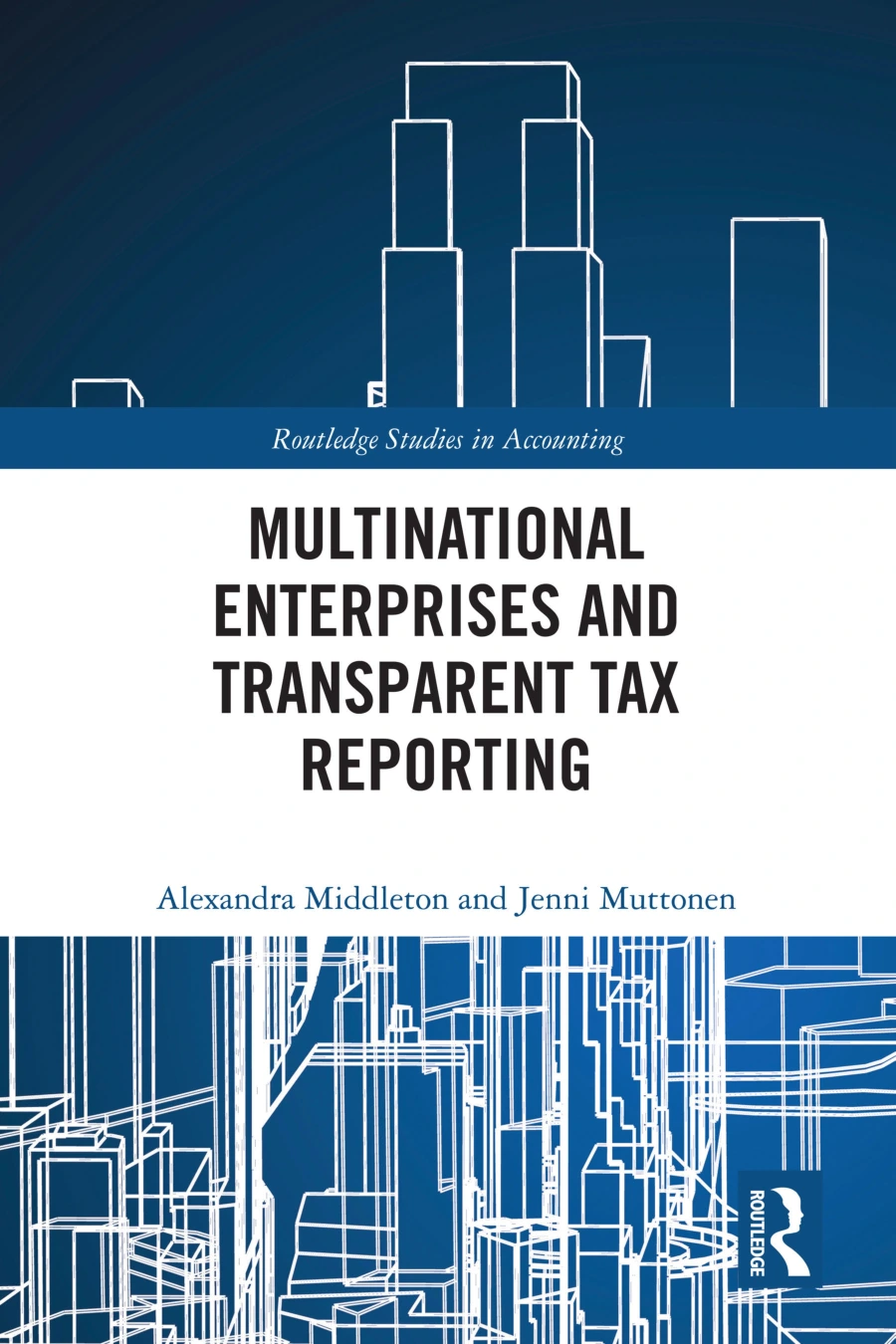
Multinational Enterprises and Transparent Tax Reporting
Original price was: $5.00.$2.50Current price is: $2.50.

Alexandra Middleton
Product Specs:
- File Type: PDF
- File Size: 1.5 MB
- Book Language: English
- Total Page Count: 143
- Instant Download
Tax Transparency in the Corporate Responsibility Conversation
Tax has moved from a technical footnote to a central question in corporate responsibility. This Routledge Studies in Accounting volume examines how multinational enterprises disclose tax information voluntarily, why such transparency matters, and how it differs from tax planning, avoidance, and evasion. Alexandra Middleton and Jenni Muttonen bring legal, regulatory, and reputational context to a topic that often becomes blurred in public debate.
From Panama Papers Headlines to Reporting Practice
The book places tax transparency in historical context, considering revelations such as the Panama and Paradise Papers and the public dissatisfaction that followed. It traces legislative and policy responses, including the OECD base erosion and profit shifting project, European Commission initiatives, and national-level reforms. Rather than treating transparency as an abstract ideal, it asks what drives companies to disclose numerical tax data—such as taxes paid by country—and other tax-related information.
Theories That Explain Disclosure Decisions
Middleton and Muttonen draw on socio-economic theories—stakeholder, legitimacy, institutional, and reputation risk management—alongside economic theories including agency, signalling, and proprietary costs. Information overload theory adds another lens, raising questions about the quality of disclosure as much as its quantity. Together, these frameworks help readers analyse why some firms volunteer tax information while others hold back.
Evidence from Five Countries, 2012–2017
The book presents examples from the largest multinational enterprises in France, Germany, the UK, Finland, and the USA over six years. This period saw intensified media coverage of tax matters and significant movement in the OECD and the European Union. The empirical chapters examine how tax transparency developed and how companies responded after tax scandals.
Quality, Assurance, and the Future of Tax Reporting
Later sections explore quality characteristics for transparent tax reporting, accountability, and country-by-country reporting, including critiques and benefits. The authors also consider what artificial intelligence may mean for tax stakeholders and CSR practice. For managers, tax and CSR specialists, assurance professionals, regulators, scholars, and students, the book offers a structured way to distinguish between tax transparency, planning, avoidance, and evasion—and to think carefully about how high-quality tax reporting can be designed and assessed.
User Reviews
Be the first to review “Multinational Enterprises and Transparent Tax Reporting”
You must be logged in to post a review.
Original price was: $5.00.$2.50Current price is: $2.50.


There are no reviews yet.