

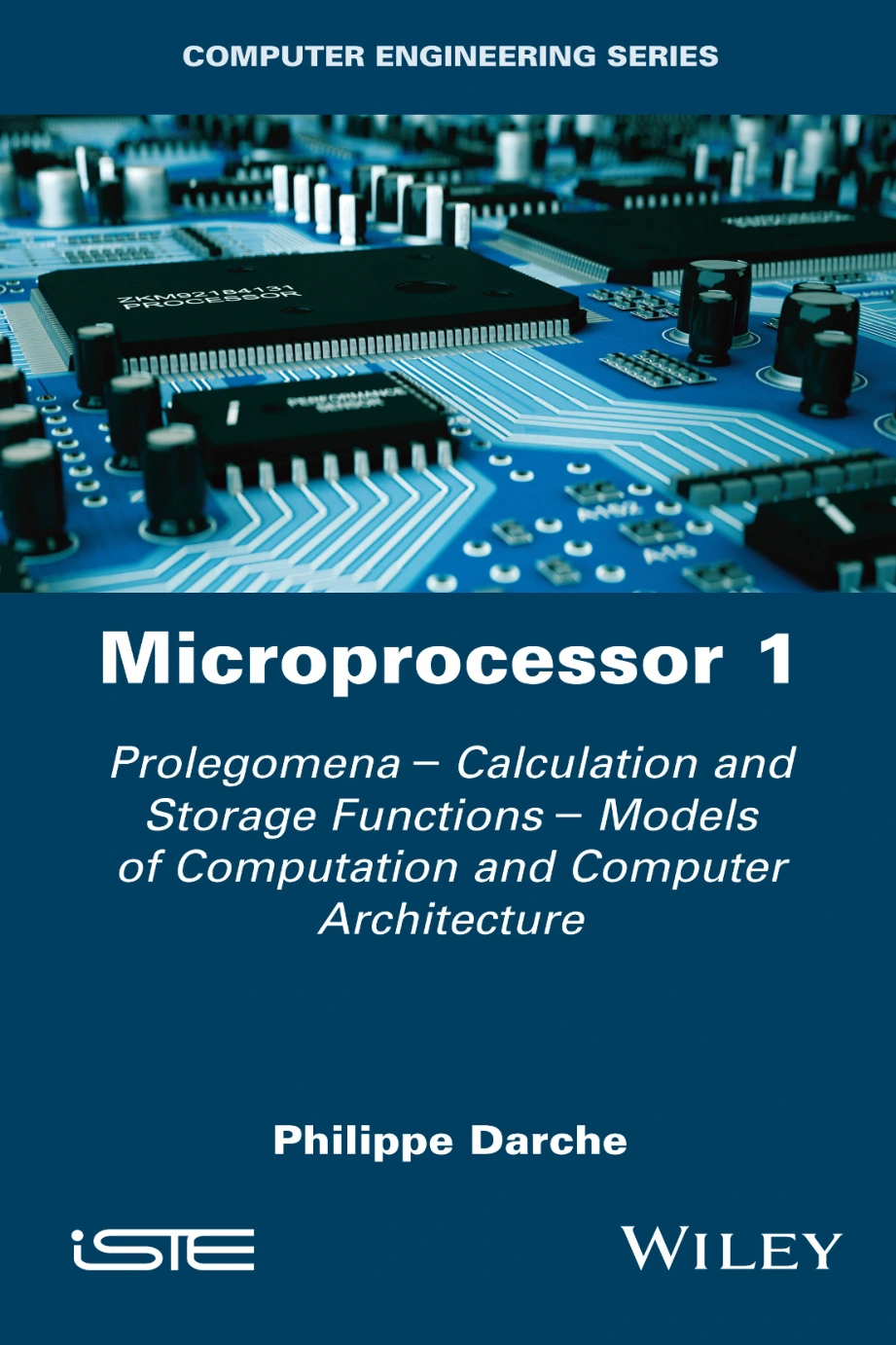
Microprocessor 1: Prolegomena – Calculation and Storage Functions – Models of Computation and Computer Architecture
Original price was: $5.00.$2.50Current price is: $2.50.

Philippe Darche
Product Specs:
- File Type: PDF
- File Size: 13.1 MB
- Book Language: English
- Total Page Count: 209
- Instant Download
Foundations of the Microprocessor
Microprocessor 1 opens Philippe Darche’s five-volume series with a deliberate return to first principles. Rather than starting with today’s multi-core processors, the book looks closely at the first two generations of programmable microprocessors, the 4-bit and 8-bit devices that established the pattern for everything that followed. The historical angle is not nostalgia; it is a way to see the core ideas clearly, without the conceptual overload of modern machines. This first volume introduces the general operating principles of the microprocessor and the two functions it performs: computation and storage.
What This Volume Explores
The material is organised into three substantial chapters. Each one builds a layer of understanding that supports the later volumes on buses, hardware, software, and development systems.
The Function of Computation
The opening chapter asks what computation actually means in a machine. It surveys classes of computers, the relationship between hardware and software, and the limits of integration. By placing these topics together, the book shows how architectural choices and physical constraints shape one another rather than existing as separate concerns.
The Function of Memory
Storage is the second essential function. This chapter introduces memory concepts and related ideas, including a focused discussion of endianness. That detail matters because byte order affects how data is interpreted across systems, from instruction encoding to data transfer. The treatment remains grounded in the early microprocessor context while pointing toward issues that persist in modern architectures.
Computation Models and the von Neumann Approach
The final chapter connects computation models to computer architecture. It begins with the idea of a program and then examines control and data flows, the semantic gap, and the original von Neumann machine. Later sections describe modern von Neumann machines, abstraction levels, base execution outlines, possible transfers, and the advantages and disadvantages of the model. The chapter also covers classification by bus, Harvard architectures, instruction set architecture, storage components, data format and type, instruction sets, and execution modes. A concluding summary defines the basic terms used throughout the series.
A Pedagogical Approach with Historical Depth
Darche writes for readers who want both practical and theoretical grounding. Concrete examples from former and current technologies illustrate the theory. Exercises appear where they help clarify a mechanism, and each volume ends with bibliographic references, a list of acronyms, and an index covering the whole work. The preface notes that the series draws on over thirty years of experience in the electronic, microelectronic, and computer worlds.
Who May Find This Volume Useful
Students of computer engineering and computer science will find a structured introduction to microprocessor fundamentals. Engineers and technicians who work with embedded systems may appreciate the historical context and the clear explanations of memory and computation models. Hobbyists and self-learners who want to understand what happens beneath the abstraction layers will also find the book approachable, provided they are comfortable with technical material. The book assumes an interest in hardware and software, but it does not require prior expertise in microprocessor design.
Begin with the Basics
Microprocessor 1 is designed as the entry point to a larger study. It establishes the vocabulary and concepts that the later volumes expand upon, including buses, commercial microprocessor families, instruction set architecture, and development chains. For readers who prefer to understand a system from its foundations upward, this volume offers a rigorous and readable starting line.
User Reviews
Be the first to review “Microprocessor 1: Prolegomena – Calculation and Storage Functions – Models of Computation and Computer Architecture”
You must be logged in to post a review.
Microprocessor 2: Core Concepts – Communication in a Digital System
Sold by Philippe Darche
Microprocessor 3: Core Concepts – Hardware Aspects
Sold by Philippe Darche Original price was: $5.00.$2.50Current price is: $2.50.






There are no reviews yet.