

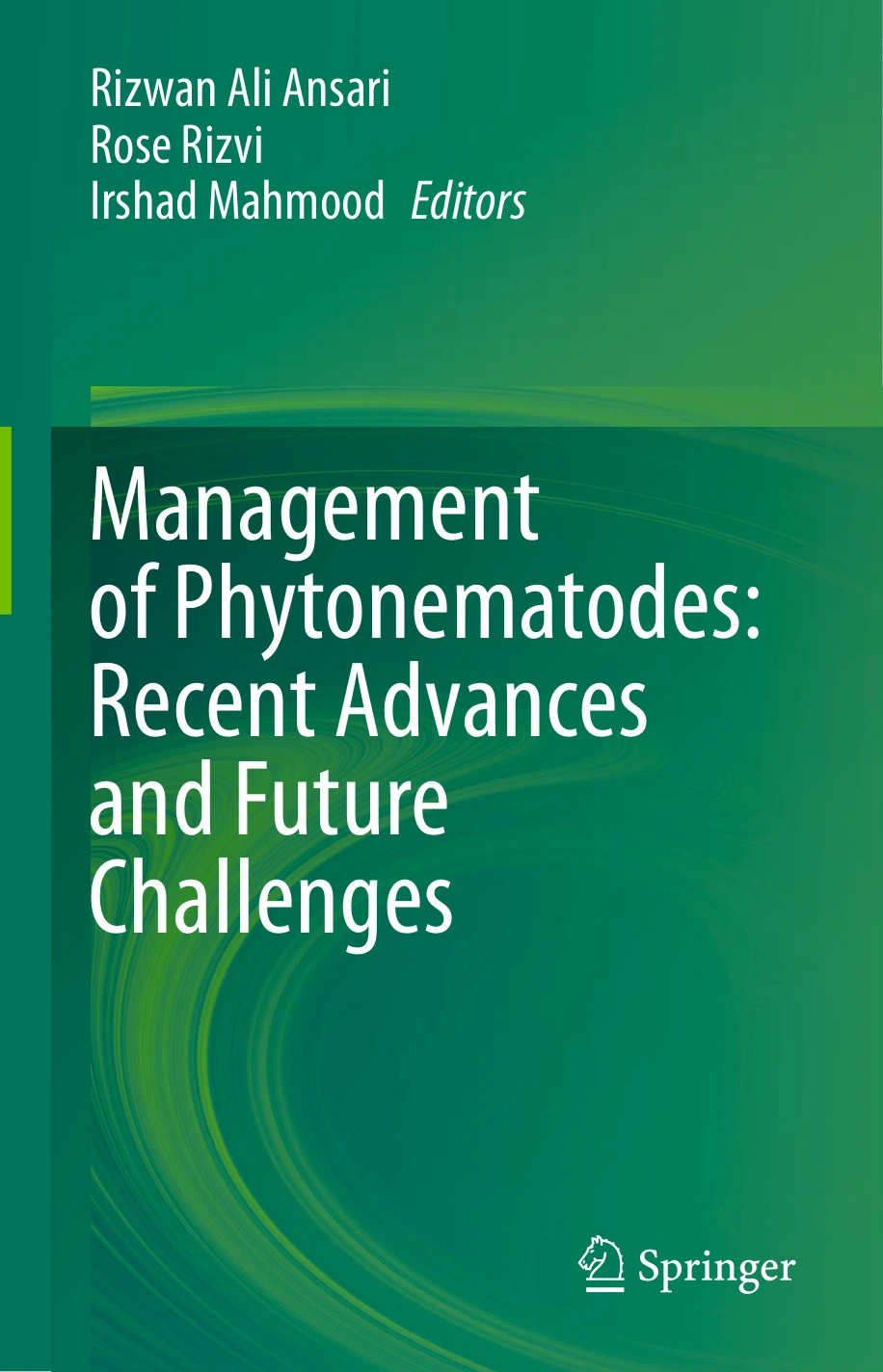
Management of Phytonematodes: Recent Advances and Future Challenges
Original price was: $5.00.$2.50Current price is: $2.50.

Rizwan Ali Ansari
Product Specs:
- File Type: PDF
- File Size: 5.7 MB
- Book Language: English
- Total Page Count: 401
- Instant Download
A Research-Level Guide to Managing Plant-Parasitic Nematodes
Plant-parasitic nematodes are among the quietest but most persistent threats to crop health. They attack roots, reduce nutrient uptake, and open the door to secondary infections, often without obvious above-ground symptoms until yields have already suffered. Management of Phytonematodes: Recent Advances and Future Challenges gathers current scientific thinking on how to meet that challenge through integrated, sustainable strategies rather than a single quick fix.
What the Volume Covers
Published by Springer Nature Singapore in 2020, this edited collection brings together sixteen chapters from researchers working across nematology, plant pathology, microbiology, and agricultural biotechnology. The editors—Rizwan Ali Ansari, Rose Rizvi, and Irshad Mahmood—have organized the material to offer a coherent overview of both established and emerging management options.
Across the chapters, readers encounter biological control, biopesticides, organic additives, manures, phytoextracts, and biogenic nanoparticles. The book also examines plant-growth-promoting rhizobacteria (PGPR), Trichoderma species, endophytic microbiomes, and metagenomic approaches that are reshaping how researchers understand nematode interactions with plants and soil organisms.
Sustainable Strategies in Focus
A central theme is sustainability. Rather than relying solely on chemical control, the volume explores how organic amendments, microbial inoculants, and natural products can be integrated into crop protection programs. Chapters discuss compost, biopesticides, and beneficial microorganisms, while others consider the role of nanoparticles and phytoextracts as newer tools in the management toolkit.
Integrated management receives sustained attention, including strategies for specific crops and for mushroom production. The result is a reference that connects laboratory research with practical agricultural concerns, while acknowledging the challenges that remain.
Who Will Find It Useful
This is a specialist scientific volume rather than a home gardening manual. It is likely to be most valuable to nematologists, plant pathologists, agricultural scientists, extension professionals, and postgraduate students who need a research-level overview of phytonematode management. Readers with a background in plant science or agriculture will find the chapters accessible, while the breadth of topics makes the book useful for both focused study and broader reference.
Why This Collection Matters
Crop losses to nematodes are difficult to measure and easy to underestimate. By bringing together diverse approaches—from beneficial microbes to biogenic nanoparticles—this volume helps readers see how multiple management tools might work together. It reflects the direction of modern nematology: more integrated, more biological, and more attentive to long-term soil health.
For researchers and practitioners looking for a current, multi-author overview of phytonematode management, this Springer volume offers a substantial and carefully organized resource.
User Reviews
Be the first to review “Management of Phytonematodes: Recent Advances and Future Challenges”
You must be logged in to post a review.
Original price was: $5.00.$2.50Current price is: $2.50.






There are no reviews yet.