

Make: Volume 36
Original price was: $14.99.$7.50Current price is: $7.50.

Mark Frauenfelder
Product Specs:
- File Type: PDF
- File Size: 29.3 MB
- Book Language: English
- Total Page Count: 164
- Instant Download
MAKE Magazine, Volume 36: Boards, Builds, and Bright Ideas ⚙️
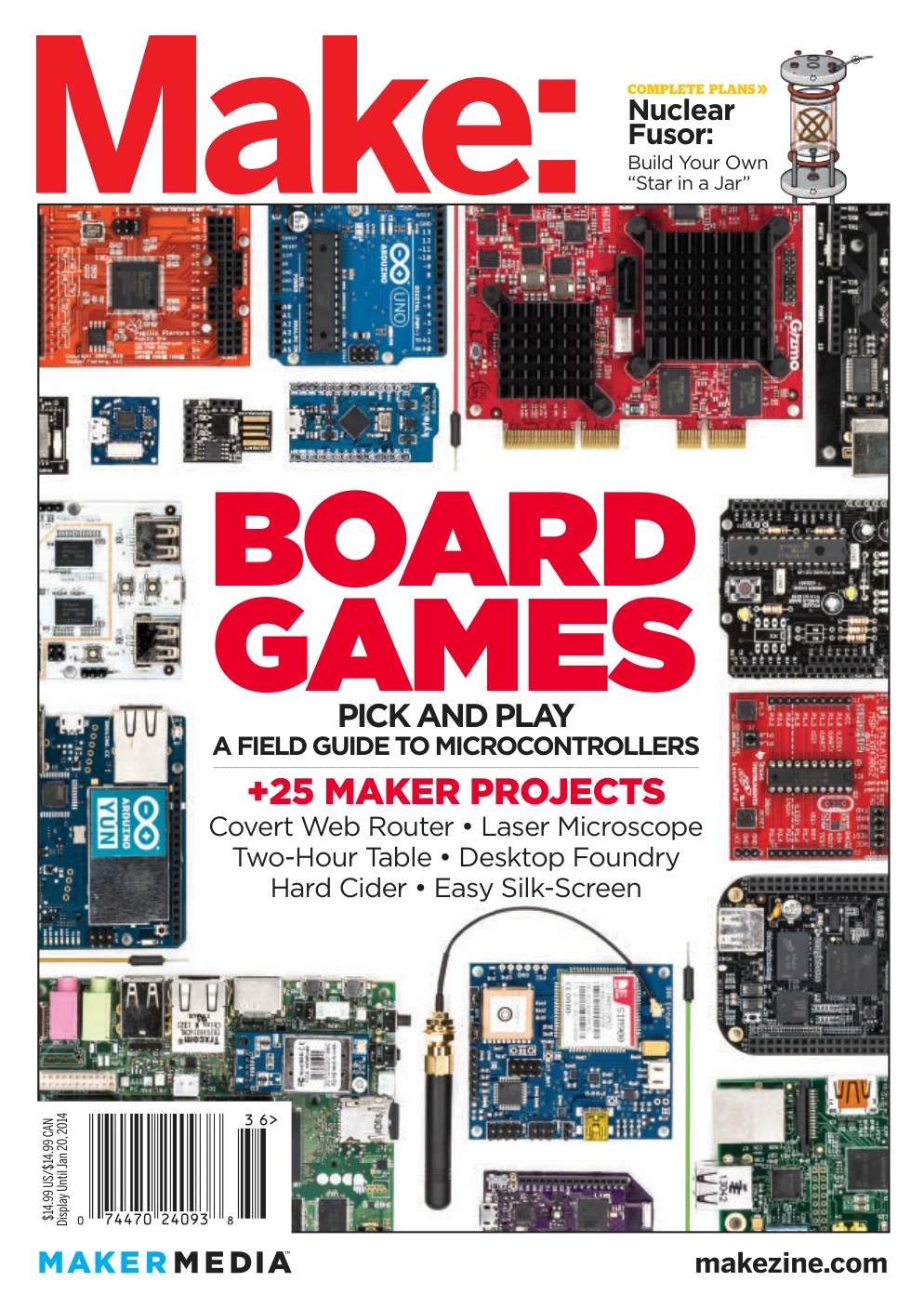
Published in October 2013, MAKE Volume 36 arrives at a moment when tiny, affordable boards were changing what a home workshop could do. This 164-page issue gathers projects, profiles, and practical know-how for makers who like to solder, code, build, and tinker. The cover points to a field guide of microcontrollers, but the issue ranges widely — from a nuclear fusor that creates a “star in a jar” to a two-hour table and a batch of kitchen-table cider.
A Field Guide to Microcontrollers 💻
At the heart of Volume 36 is a detailed look at the boards that were competing for space on workbenches. You’ll find a comparison of platforms in “Which Board Is Right for Me?”, Matt Richardson’s illustrated board glossary, and a survey of nine new boards in “The Board Room.” The issue also follows the Pinoccio board from idea to production and offers four starter projects for Arduino newcomers. If you’ve ever wondered how Arduino, Raspberry Pi, or BeagleBone differ — or what to build first — this section gives you a solid map.
Projects for the Workbench 🔧
Beyond the board guide, Volume 36 is packed with step-by-step builds that span electronics, metalwork, crafting, and food. Highlights include:
- Nuclear Fusor: Build a “star in a jar” and explore nuclear fusion on your workbench.
- Desktop Foundry: Cast small metal items with a DIY miniature foundry.
- Laser Projection Microscope: Turn a laser pointer and a drop of water into a microbial movie theater.
- Capstan Kite Winder: Make a powerful kite line winder from a lawnmower wheel.
- Shrink-Film Gaming Minis: Create custom figures faster than painting miniatures.
- Two-Hour Table: Build a tasteful tapered table in an afternoon.
- Vinyl Silk-Screen Printing: Silk-screen without chemicals or a darkroom.
- Kitchen-Table Cider: Ferment a batch of grown-up juice using a centrifugal juicer.
- Lite-Brite LED Clock: Assemble a programmable Arduino-powered desk clock.
Columns, Profiles, and Community
The issue also checks in with makers around the world. You’ll meet Peter Lynn, the New Zealand kite maker whose designs hang from a string; follow a kick scooter startup trying to scale from maker to manufacturer; and read how a London Zoo tiger gate project proved more onerous than expected. Other columns cover wearable tech, the Internet of Things, and a R/C plane video series built by a 17-year-old maker. It’s a snapshot of maker culture in 2013, full of the curiosity and resourcefulness that define the community.
Who Will Enjoy MAKE Volume 36?
This issue speaks to electronics hobbyists, Arduino and Raspberry Pi users, DIY crafters, woodworkers, and anyone who likes to understand how things work by building them. The projects assume a range of skill levels, from beginner-friendly board introductions to more ambitious builds like the nuclear fusor. Teachers, makerspace organizers, and parents looking for hands-on STEM inspiration may also find useful starting points. If you missed this volume when it first appeared, the digital edition preserves the full mix of instructions, illustrations, and maker stories.
Digital Delights is pleased to offer this issue for makers who want a practical, idea-rich reference on their screen. Whether you’re choosing a first board or looking for your next weekend project, Volume 36 has plenty to keep your hands busy and your mind curious.
Original price was: $14.99.$7.50Current price is: $7.50.






There are no reviews yet.