

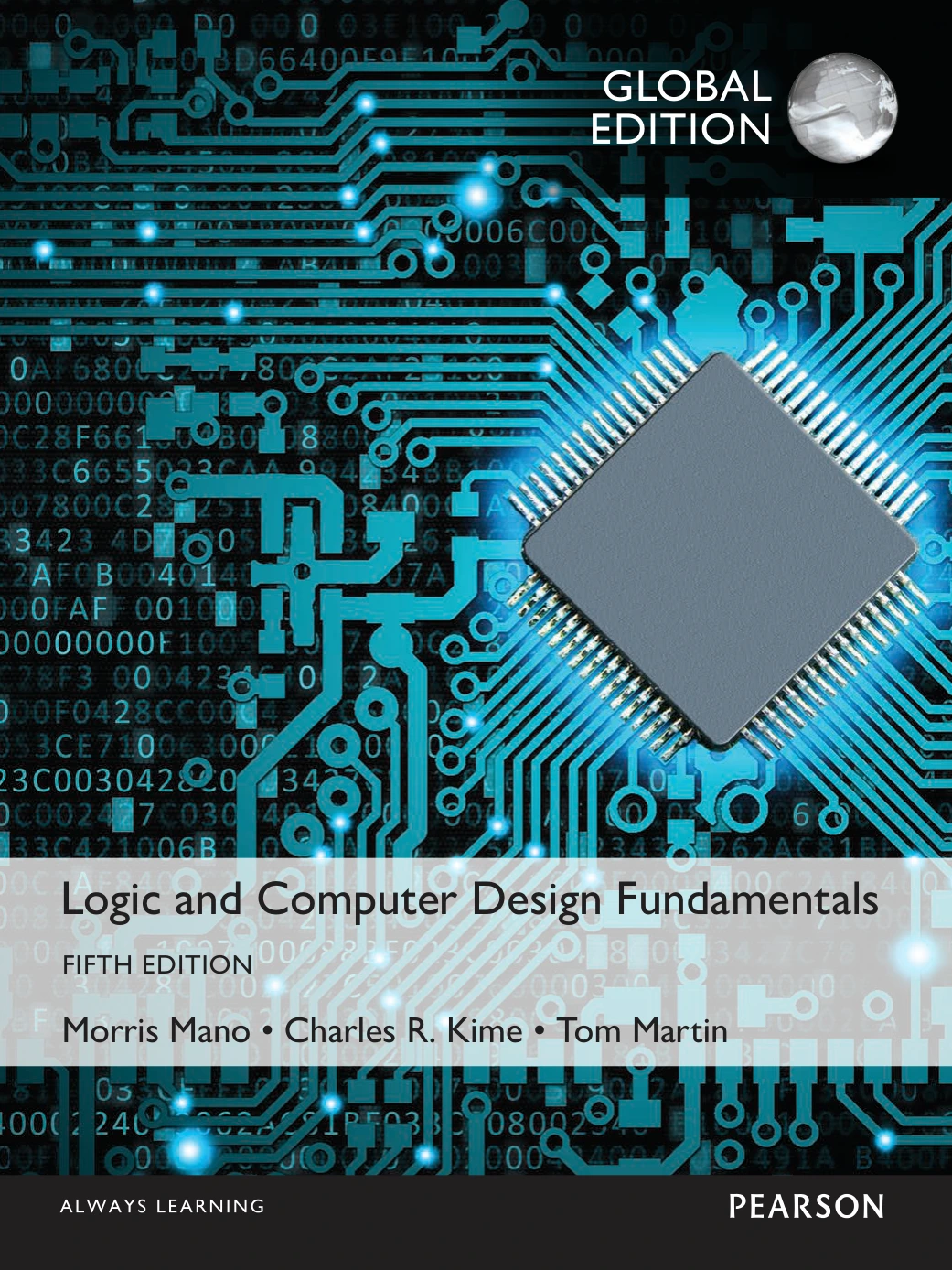
Logic and Computer Design Fundamentals, Global Edition
Original price was: $58.42.$29.21Current price is: $29.21.

M. Morris Mano
Product Specs:
- File Type: PDF
- File Size: 5.6 MB
- Book Language: English
- Total Page Count: 674
- Instant Download
Digital computers begin with simple building blocks: bits, logic gates, and rules for combining them. Logic and Computer Design Fundamentals, Global Edition follows those ideas as they grow into circuits, processor datapaths, instruction sets, and complete computer systems. Its fifth edition offers a structured foundation for readers studying how digital hardware is designed and organized.
From Boolean logic to digital circuits
The early chapters establish the essential language of digital design. Number systems and information representation lead into binary logic, Boolean algebra, standard forms, and the analysis and optimization of combinational circuits. The text then develops practical components such as decoders, encoders, multiplexers, and adders—showing how logical relationships take shape as circuit designs.
Understand circuits that remember
Sequential circuits add state and timing to the picture. Coverage includes latches and flip-flops, state tables and diagrams, circuit design, synchronization, metastability, and timing. This progression helps connect a circuit’s behavior at a given moment with the sequence of events that brought it there.
Connect hardware components to computer architecture
Later chapters turn to registers and register transfers, microoperations, counters, memory, datapaths, arithmetic/logic units, and control. The book continues into instruction-set architecture, RISC and CISC processors, input-output and communication, and memory systems. Together, these topics trace a path from individual digital components to the organization of a computer.
HDLs alongside the design concepts
VHDL and Verilog representations appear in the logic and sequential-circuit material, as well as in discussions of registers and counters. Their inclusion places hardware description languages in the context of circuit design rather than treating them as detached topics.
A text for digital design and computer engineering study
The book’s breadth makes it relevant to coursework in logic design, digital systems, and computer design. Students can use its chapter sequence to build foundational understanding, while instructors can draw on its broad coverage when shaping a course around particular levels or topics.
For readers who want to see how the logic inside a computer scales into its architecture, this text lays out the connections one design layer at a time.
User Reviews
Be the first to review “Logic and Computer Design Fundamentals, Global Edition”
You must be logged in to post a review.
Original price was: $58.42.$29.21Current price is: $29.21.


There are no reviews yet.