

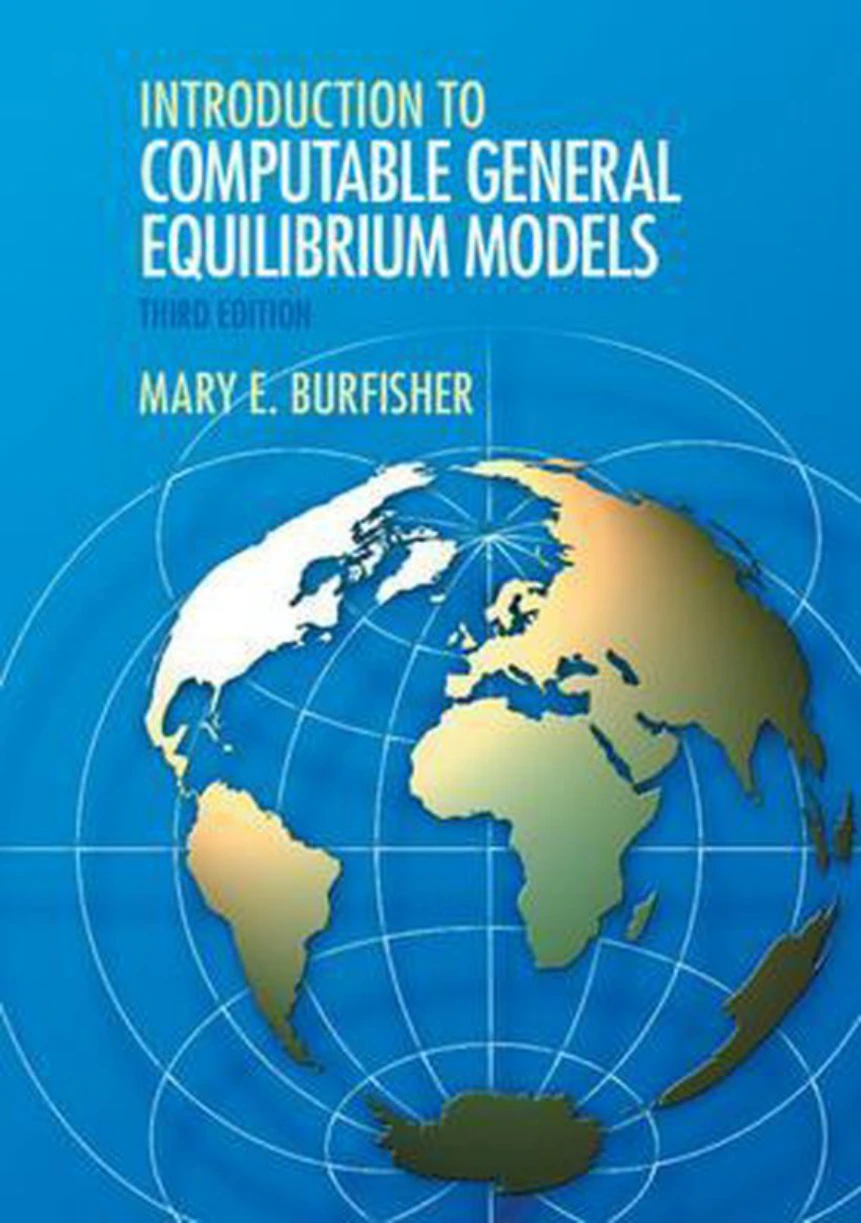
Introduction to Computable General Equilibrium Models
Original price was: $5.00.$2.50Current price is: $2.50.

Mary
Product Specs:
- File Type: PDF
- File Size: 6.2 MB
- Book Language: English
- Total Page Count: 507
- Instant Download
Trade, climate policy, taxation, and other economic questions rarely stay within the boundaries of a single market. Introduction to Computable General Equilibrium Models explains how CGE models represent those economy-wide connections—and how economists use them to examine the effects of policy and economic shocks.
See the economy as an interconnected system
Mary E. Burfisher builds the theory through a graphical approach, then uses results from small-scale models to show how economic assumptions connect to model outcomes. That pairing helps readers follow not just what a model produces, but the economic reasoning behind it.
From model foundations to policy questions
The book develops the components of CGE analysis across topics including model data, demand, supply, factors of production, trade, taxes, and regulation. Taken together, these subjects show how decisions by consumers and producers can add up to broader economic effects.
Practice with applied examples
Eleven hands-on exercises introduce modeling techniques through real-world economic problems. The exercises give readers a chance to work with the material rather than treating CGE analysis as a black box.
For students and readers of economic analysis
Designed as an undergraduate-level introduction, this third edition is suited to economics students building a foundation in computable general equilibrium modeling, as well as readers who produce or interpret CGE-based analysis. It offers a structured way to bring separate areas of economics into a broader, economy-wide perspective.
User Reviews
Be the first to review “Introduction to Computable General Equilibrium Models”
You must be logged in to post a review.
Original price was: $5.00.$2.50Current price is: $2.50.






There are no reviews yet.