

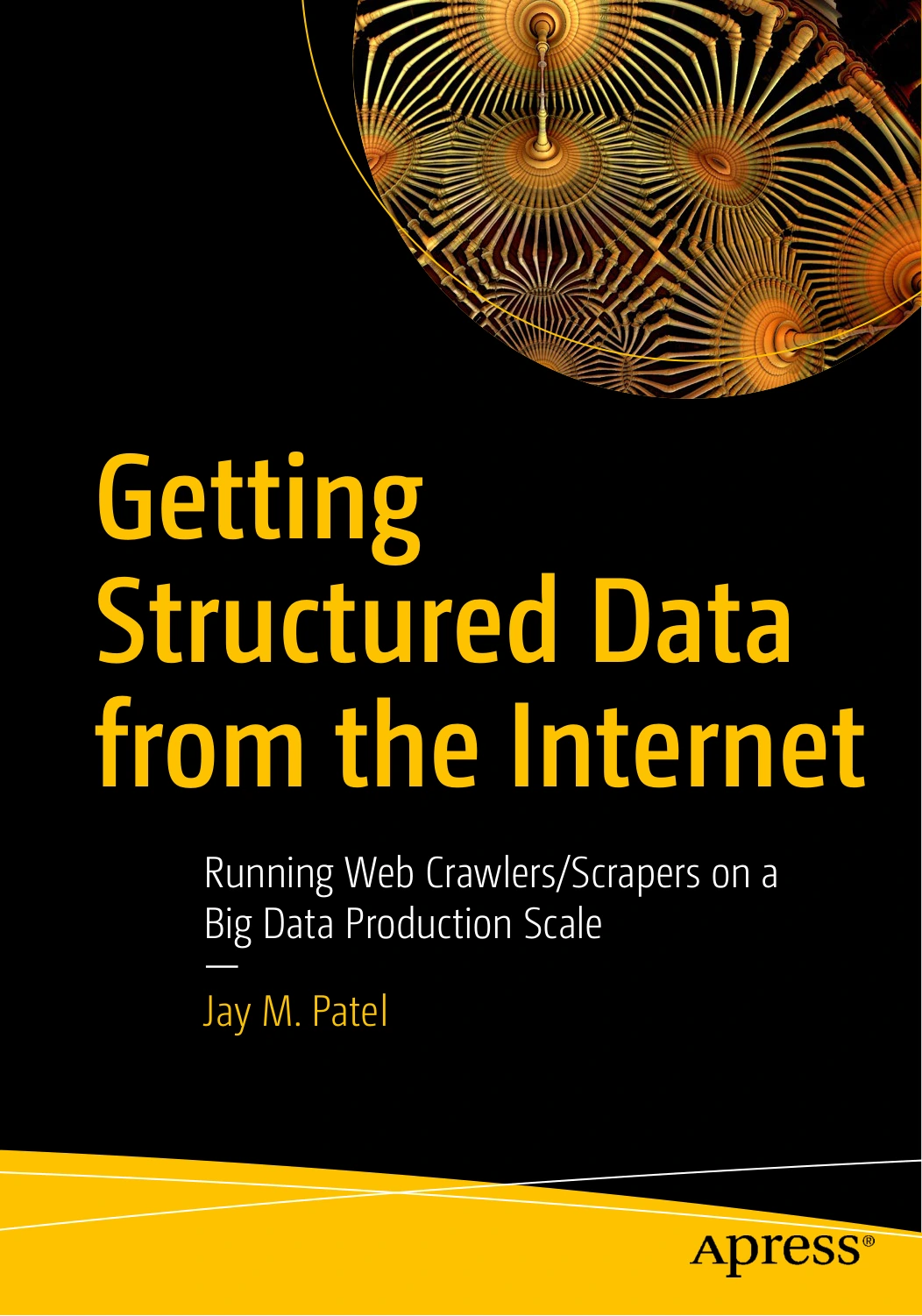
Getting Structured Data from the Internet: Running Web Crawlers/Scrapers on a Big Data Production Scale
Original price was: $44.99.$22.50Current price is: $22.50.

Jay M. Patel
Product Specs:
- File Type: PDF
- File Size: 8.3 MB
- Book Language: English
- Total Page Count: 408
- Instant Download
Turning web pages into usable datasets takes more than a scraping script. In Getting Structured Data from the Internet, Jay M. Patel traces the work from Python-based page extraction to cloud-supported crawling and large-scale processing, showing how collected web data can feed search, analysis, and business applications.
The book moves from practical scraping tools into the systems that support production-scale work: AWS services, text analytics, relational databases, and Common Crawl. Its broad scope makes it a useful technical read for understanding how web data moves from collection toward structured, searchable information.
Start with the practical work of web scraping
Early chapters introduce the applications of web scraping and demonstrate extraction with Python tools including Beautiful Soup and Selenium. The examples extend to ecommerce sites and JavaScript-enabled pages, giving readers a view of the challenges that appear when websites are more than static HTML.
Build the infrastructure around the crawler
Patel then turns to cloud computing and Amazon Web Services, including services such as EC2, S3, SNS, and SQS. The discussion connects crawling to the infrastructure needed to run jobs, move data, and support larger workflows.
Make collected text more useful
Coverage of natural language processing and text analytics includes entity recognition, tokenization, stemming, lemmatization, topic modeling, and text classification. These techniques show how scraped material can be examined for names, themes, and other patterns rather than left as a pile of pages.
Work with databases and web-scale collections
Chapters on relational databases and SQL introduce data schemas, PostgreSQL, SQLite, and full-text search. The book also explores Common Crawl and the processing of web crawl data at big-data scale, including structured web formats such as JSON-LD and RDFa.
From crawl processing to advanced strategies
The later material addresses distributed computing, search-engine construction, and advanced crawler strategies. It also considers the ethics and legality of web scraping, alongside operational topics such as proxy IP and user-agent rotation.
A technical guide for the whole data pipeline
This book may suit developers, data practitioners, and technically minded readers who want to connect Python scraping with cloud services, databases, NLP, and large-scale crawl processing. Rather than treating extraction as an isolated task, it examines the larger pipeline that turns web content into data that can be analyzed and applied.
User Reviews
Be the first to review “Getting Structured Data from the Internet: Running Web Crawlers/Scrapers on a Big Data Production Scale”
You must be logged in to post a review.
Original price was: $44.99.$22.50Current price is: $22.50.






There are no reviews yet.