

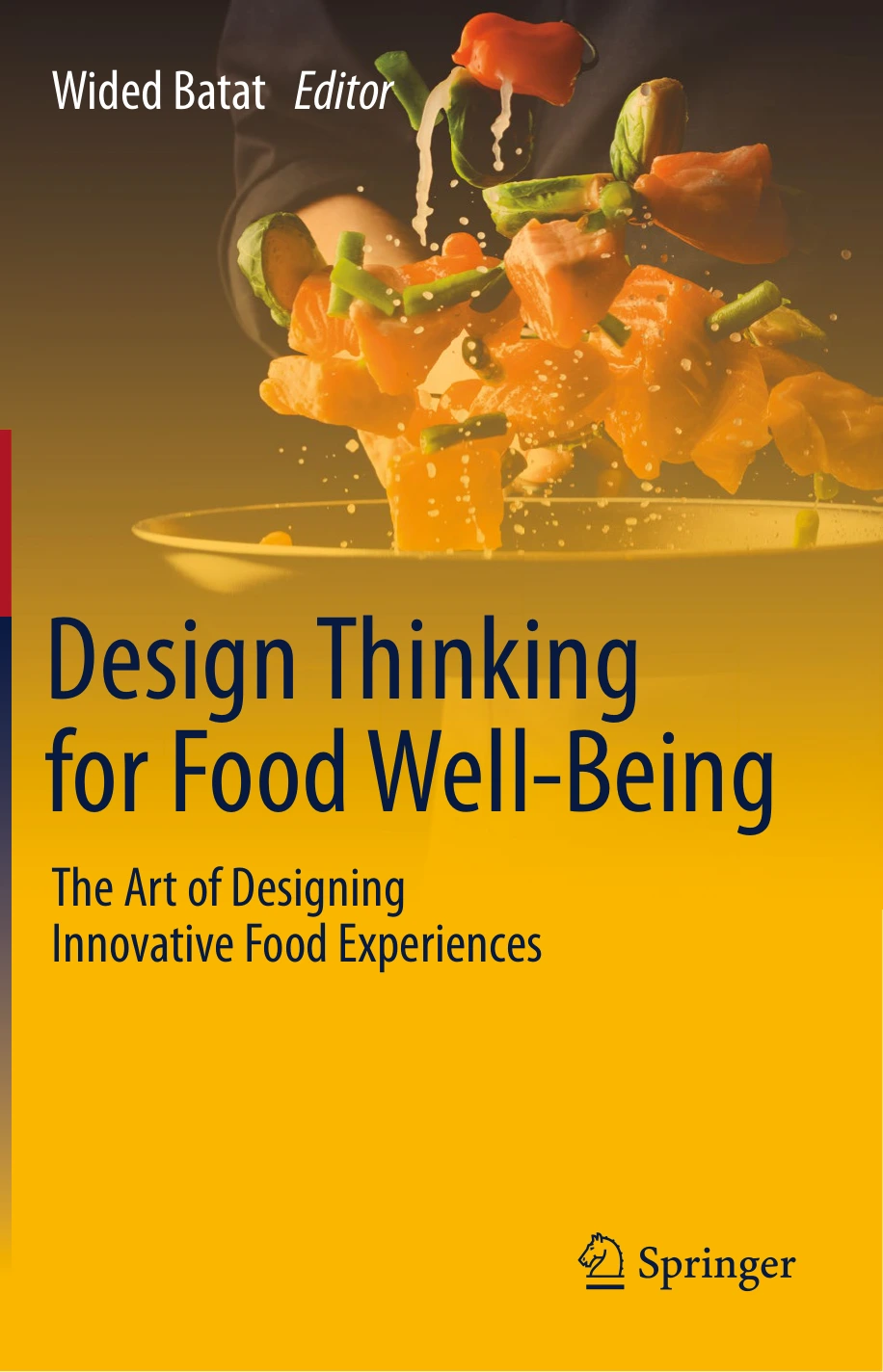
Design Thinking for Food Well-Being
Original price was: $135.20.$67.60Current price is: $67.60.

Wided Batat
Product Specs:
- File Type: PDF
- File Size: 6.3 MB
- Book Language: English
- Total Page Count: 299
- Instant Download
Food innovation is about more than what ends up on the plate. Design Thinking for Food Well-Being brings together researchers and practitioners to explore how the wider experience of food—from choices and emotions to dining spaces, services, and social settings—can be designed with well-being in mind.
Edited by Wided Batat, this multidisciplinary collection offers a perspective for readers interested in the meeting point of food design, consumer experience, and design thinking. Its central question is practical as well as conceptual: how can food experiences be made healthier and pleasurable, while also attending to the people and communities they affect?
From food products to food experiences
The book opens with the foundations of food design thinking and food well-being, including experiential design thinking, the history of the field, and frameworks for understanding consumer food choices. Rather than treating food as an isolated product, the chapters consider the context around eating and the needs—sometimes implicit—that shape people’s decisions.
Designing with people in mind
Empathy, co-creation, and consumer insight recur throughout the collection. Contributors explore how design approaches can engage vulnerable populations, respond to adolescents’ perspectives, and inform food experiences in settings such as college dining and luxury foodservice. These cases make the book relevant to readers thinking about how research and design practice can better account for varied needs and everyday contexts.
Emotion, taste, and the dining environment
Several chapters examine the ways food experiences reach beyond nutrition alone. Topics include the psychological mechanisms that can influence taste perception, the role of ambiance and food design, and the place of emotions in developing food experiences. Together, these perspectives invite readers to consider how surroundings, expectations, and feeling can interact with eating.
Health, sustainability, and what comes next
The later chapters take up questions around plant-based foods, consumer experience, precision retailing, and food-waste reduction. They also introduce the CEASE framework for engaging consumers in zero-waste food experiences and consider how design thinking can serve vulnerable populations. The result is a broad view of food innovation that connects individual choices with wider social and sustainability concerns.
For readers across food and design
This edited volume will interest students, scholars, designers, marketers, and food-industry professionals seeking an interdisciplinary view of food well-being. It is especially suited to readers who want to understand how design thinking can be applied not just to what people eat, but to the experiences and systems that shape their relationship with food.
User Reviews
Be the first to review “Design Thinking for Food Well-Being”
You must be logged in to post a review.
Original price was: $135.20.$67.60Current price is: $67.60.





There are no reviews yet.