

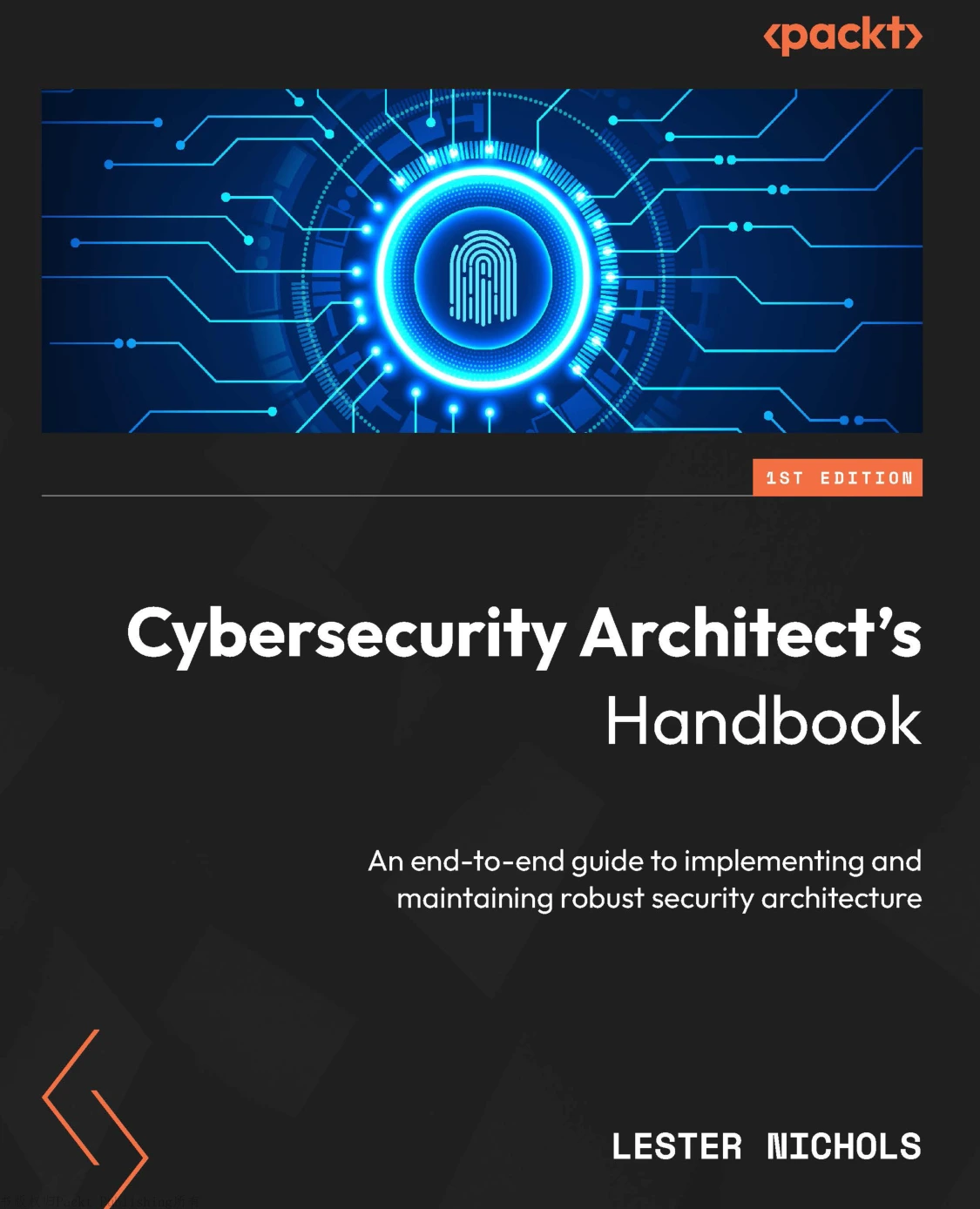
Cybersecurity Architect’s Handbook: An End-to-End Guide to Implementing and Maintaining Robust Security Architecture
Original price was: $57.59.$28.80Current price is: $28.80.

Lester Nichols
Product Specs:
- File Type: PDF
- File Size: 44.4 MB
- Book Language: English
- Total Page Count: 494
- Instant Download
Good security architecture has to serve two realities at once: the technical details of protecting systems and the business needs those systems support. In Cybersecurity Architect’s Handbook, Lester Nichols traces how security professionals can bring those perspectives together, from foundational controls to the broader decisions that shape an organization’s defenses.
The book is organized as a progression: first building a grounding in cybersecurity, then exploring the architect’s responsibilities, design principles, risk, governance, and implementation. Its combination of explanatory material, practical examples, and labs makes the subject concrete without reducing architecture to a checklist of products.
Start with the foundations 🛡️
Early chapters survey the building blocks an architect must weigh, including access control, network and communication security, cryptography, applications, physical security, and business continuity and disaster recovery. Governance, regulations, and compliance are part of this picture too, alongside the familiar confidentiality, integrity, and availability objectives. Taken together, these topics show how separate security domains contribute to a coordinated defense.
See the work through an architect’s lens
Rather than treating the cybersecurity architect role as purely technical, Nichols considers its place within the larger organization. The discussion addresses threat analysis, security frameworks, network, application, cloud, and mobile security, as well as vendor and third-party risk. It also considers how architects work with teams and connect security priorities to business objectives.
Design with risk and organizational needs in mind
Architecture principles, design, and analysis receive dedicated attention, including the use of governance documents to understand organizational goals and risk tolerance. This perspective is useful when a security decision must fit a real operating environment—not just an idealized diagram. The book also addresses threats, continual monitoring, and the need to revisit architecture as conditions evolve.
Who may find it useful?
Cybersecurity engineers and security professionals preparing for architecture responsibilities will find a structured introduction to the role and its range of concerns. Solution architects can use it to better understand how security architecture intersects with their work. Readers will benefit most with a basic grounding in computer and networking technologies.
For readers seeking to connect security fundamentals with the strategic and practical demands of architecture, this handbook offers a guided route through both.
User Reviews
Be the first to review “Cybersecurity Architect’s Handbook: An End-to-End Guide to Implementing and Maintaining Robust Security Architecture”
You must be logged in to post a review.
Original price was: $57.59.$28.80Current price is: $28.80.

There are no reviews yet.