

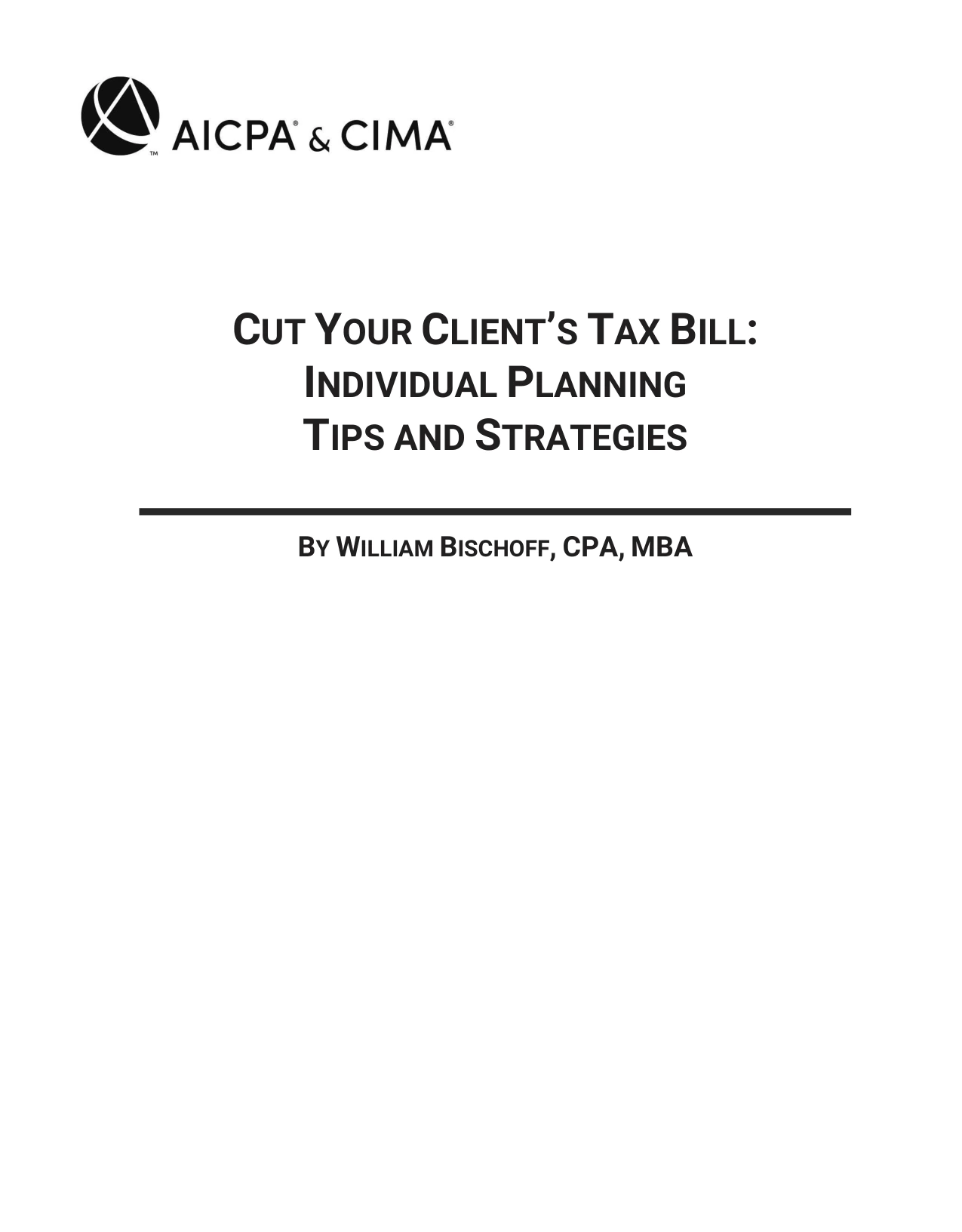
Cut Your Client’s Tax Bill: Individual Planning Tips and Strategies
Original price was: $5.00.$2.50Current price is: $2.50.

William Bischoff
Product Specs:
- File Type: PDF
- File Size: 3.0 MB
- Book Language: English
- Total Page Count: 273
- Instant Download
Tax planning touches far more than a year-end return. In Cut Your Client’s Tax Bill: Individual Planning Tips and Strategies, William Bischoff organizes individual-tax topics around the decisions that can shape a client’s tax position—from selling investments or property to managing a home-based business or paying for college. The course’s practical, adviser-focused perspective makes it a broad survey of planning considerations, not a substitute for checking current law.
Seven areas of individual tax planning
The chapters move through major personal and investment situations: capital-gain assets and real estate; employer stock options and restricted stock; personal residences; vacation homes, timeshares, and co-ownership; marital splits; self-employment; and college financing. That range gives tax and accounting professionals a structured way to revisit how different client circumstances raise distinct planning questions.
Property, investments, and major life decisions
Early chapters examine tax considerations involving capital gains, real-property transactions, employer shares, and residence sales. Later sections turn to vacation properties and marital transitions, including the tax issues that can accompany dividing assets. Together, these topics emphasize that the timing and form of a transaction can matter alongside the asset itself.
Business and education topics
The self-employment chapter addresses subjects including home-office deductions, health savings accounts, and the qualified business income deduction. The final chapter surveys college-financing topics such as education tax credits, student-loan interest, and education savings accounts. These sections broaden the course beyond investment and property planning to everyday client questions.
Designed for professional learning
The publication includes learning objectives, chapter introductions, a glossary, an index, and solutions to chapter questions. Its notice identifies it as continuing professional education material rather than a reference work, making it best approached as a course for reviewing the topics it covers.
A note on its tax-year context
This is a 2019 publication, and its discussion reflects the tax rules and examples of that period. Tax law changes, so use it for historical or educational context—not as current tax advice. Verify present-day rules and consult a qualified tax professional about specific situations.
User Reviews
Be the first to review “Cut Your Client’s Tax Bill: Individual Planning Tips and Strategies”
You must be logged in to post a review.
Original price was: $5.00.$2.50Current price is: $2.50.

There are no reviews yet.