

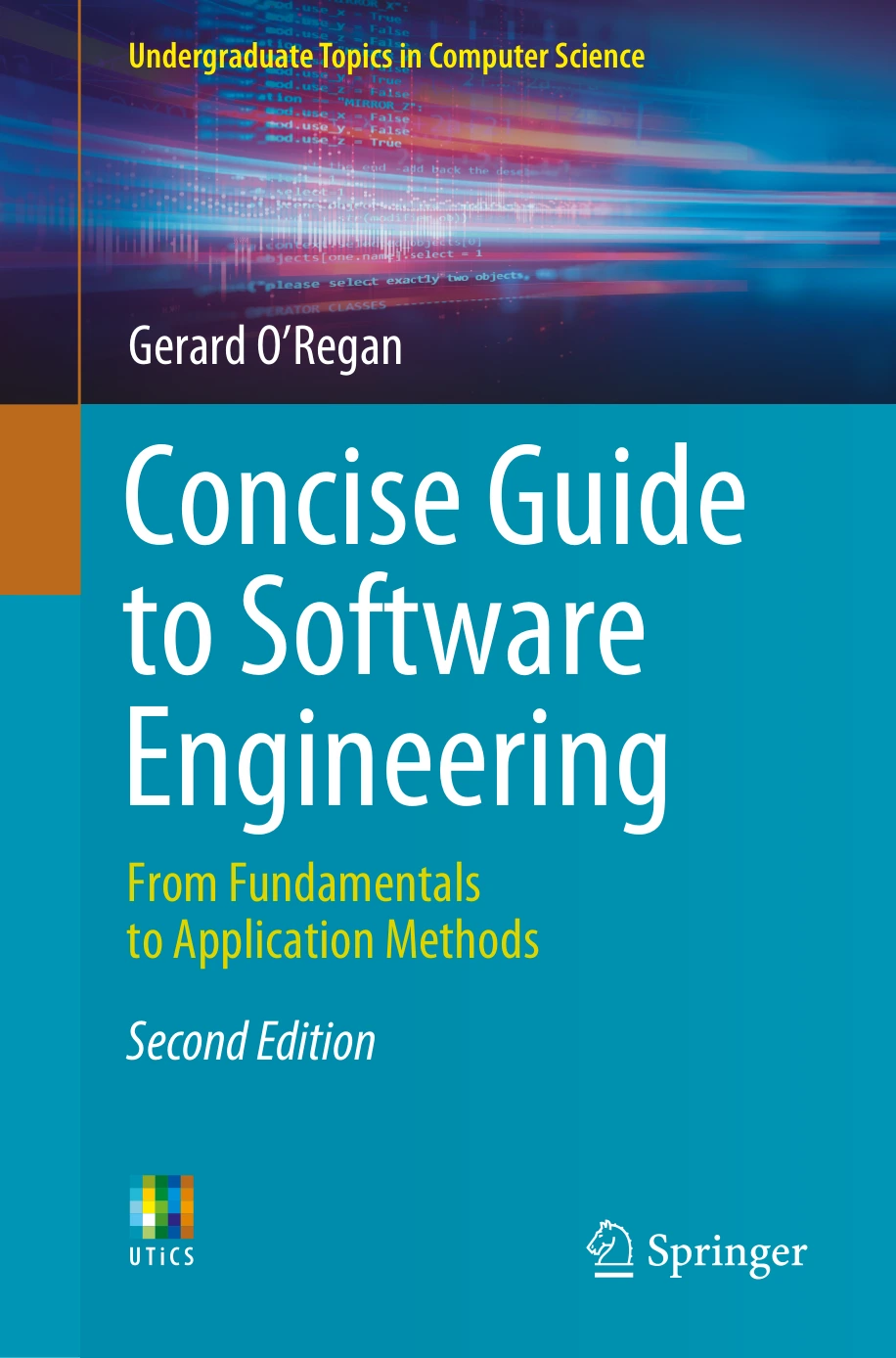
Concise Guide to Software Engineering: From Fundamentals to Application Methods
Original price was: $18.71.$9.36Current price is: $9.36.

Gerard O’Regan
Product Specs:
- File Type: PDF
- File Size: 12.4 MB
- Book Language: English
- Total Page Count: 457
- Instant Download
Software engineering is more than writing code: it involves defining the right problem, planning a workable approach, building carefully, and checking that the result is dependable. Gerard O’Regan’s Concise Guide to Software Engineering brings those concerns together in a structured introduction, linking core principles with the realities of developing software in an industrial environment.
This second edition ranges from requirements and project planning to testing, ethics, formal methods and cybersecurity. Its breadth makes it a useful map of the discipline for students and a considered refresher for people working in software teams.
Follow the work from requirements to maintenance
The early chapters trace the software lifecycle through requirements gathering and specification, design, implementation, testing and maintenance. Along the way, the book considers project estimation and scheduling, risk, communication, change management and the responsibilities that come with building software for others to use.
Coverage of requirements engineering, software inspections, configuration management and quality assurance shows how engineering decisions and development processes shape the finished product—not just the code itself.
Explore methods, models and tools
O’Regan introduces Agile alongside traditional project and development approaches, then turns to software metrics, problem-solving techniques, reliability and dependability. Readers will also encounter formal methods, the Z specification language and UML, as well as process-improvement frameworks including CMMI, ISO 9000, PSP and TSP.
The later chapters widen the lens further, addressing software tools, supplier selection, distributed systems, cloud computing, embedded systems, intellectual property and cybersecurity. Together, these topics show how software engineering connects technical practice with organizational, legal and social questions.
A structured guide for study and reference
Chapter summaries and review questions give students opportunities to revisit the material, while a glossary supports quick reference to key terms. The book is aimed chiefly at computer science students, and may also interest software engineers, quality professionals, software managers and motivated readers looking for a broad, organized introduction.
For readers who want to understand not only how software is built, but how it is specified, assessed and managed, this guide offers a clear route through the field’s central ideas.
User Reviews
Be the first to review “Concise Guide to Software Engineering: From Fundamentals to Application Methods”
You must be logged in to post a review.
Original price was: $18.71.$9.36Current price is: $9.36.
There are no reviews yet.