

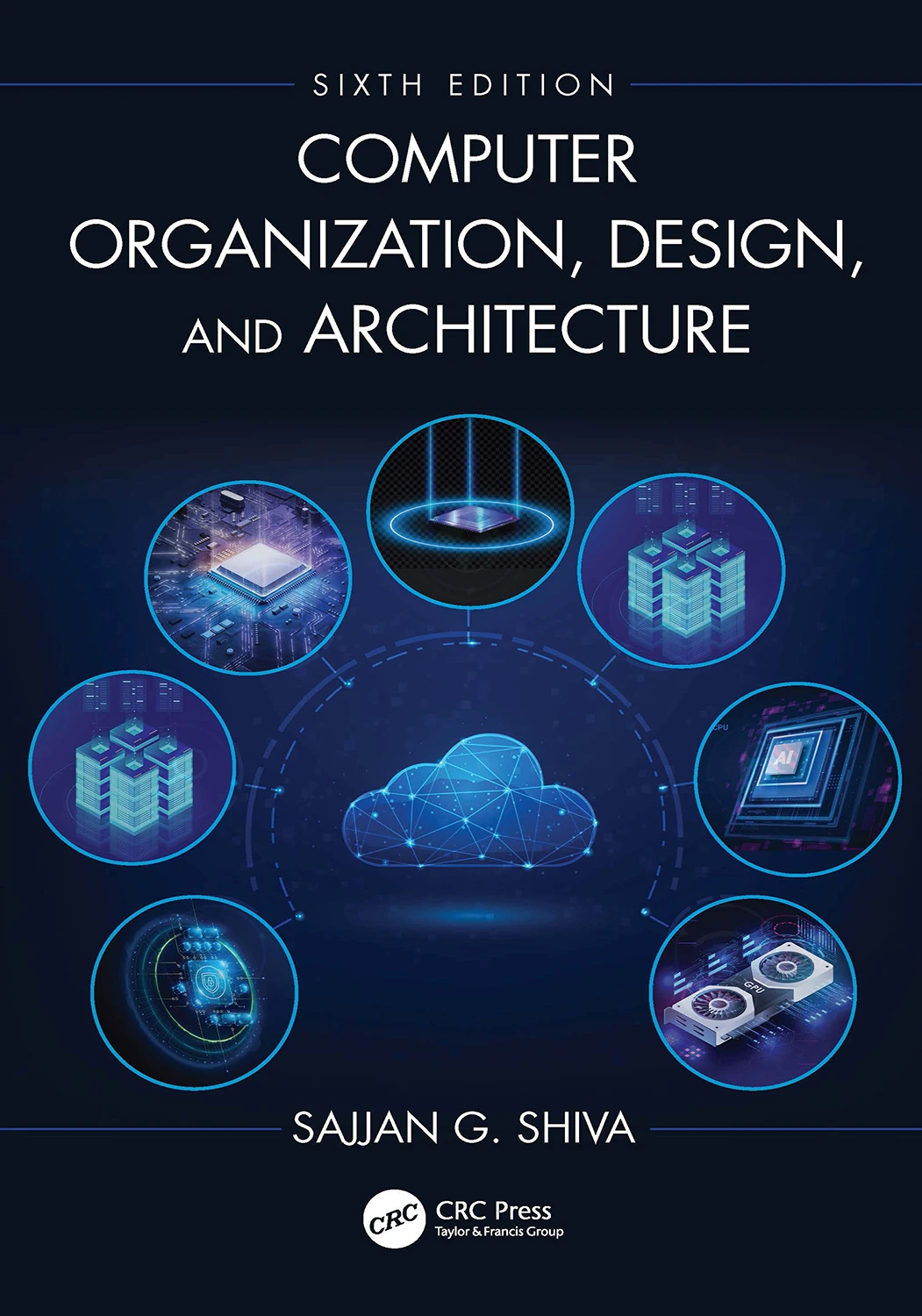
Computer Organization, Design, and Architecture
Original price was: $45.50.$22.75Current price is: $22.75.

Sajjan G. Shiva
Product Specs:
- File Type: PDF
- File Size: 93.2 MB
- Book Language: English
- Total Page Count: 808
- Instant Download
Computer systems become easier to understand when their logic, hardware, and instruction sets are studied as parts of one design. In Computer Organization, Design, and Architecture, Sajjan G. Shiva builds that picture from the ground up, first developing a complete hypothetical computer and then using it to introduce the architecture of real systems.
This sixth edition brings foundational concepts into conversation with newer developments, including GPUs, quantum computing, supercomputers, and the ARM and RISC-V instruction set architectures. The result is a substantial course text for readers who want to understand not only what computer systems contain, but how their parts fit together.
Follow a computer from logic to architecture
The book connects four closely related areas: logic design, computer organization, computer hardware, and computer system architecture. Early material covers number systems and codes, Boolean algebra, combinational circuits, and sequential circuits. Those building blocks lead into the organization, programming, and hardware design of the text’s simple computer.
See how instructions meet hardware
As the discussion moves into processor and instruction-set architecture, topics include data formats, instruction formats, addressing modes, and the relationship between registers and memory. Studying these ideas alongside the computer developed earlier helps make architectural choices less abstract: readers can relate an instruction’s form to the system that must interpret and execute it.
Explore memory and contemporary systems
Further coverage examines memory organization and other features of computer systems, while later updates address GPUs, quantum computing, current supercomputer systems, and ARM and RISC-V architectures. This breadth lets the book move between enduring foundations and topics that shape modern computer engineering.
For computer science and computer engineering study
Shiva presents the book for undergraduate or beginning graduate courses, with material suited to either a one- or two-semester course. Students and readers building a foundation in computer organization can use its step-by-step hypothetical computer as a thread connecting digital logic, programming, hardware, and architecture.
If you want a detailed, connected account of how computer systems are organized and designed, this sixth edition offers a clear path from circuits to contemporary architectures.
User Reviews
Be the first to review “Computer Organization, Design, and Architecture”
You must be logged in to post a review.
Original price was: $45.50.$22.75Current price is: $22.75.

There are no reviews yet.