

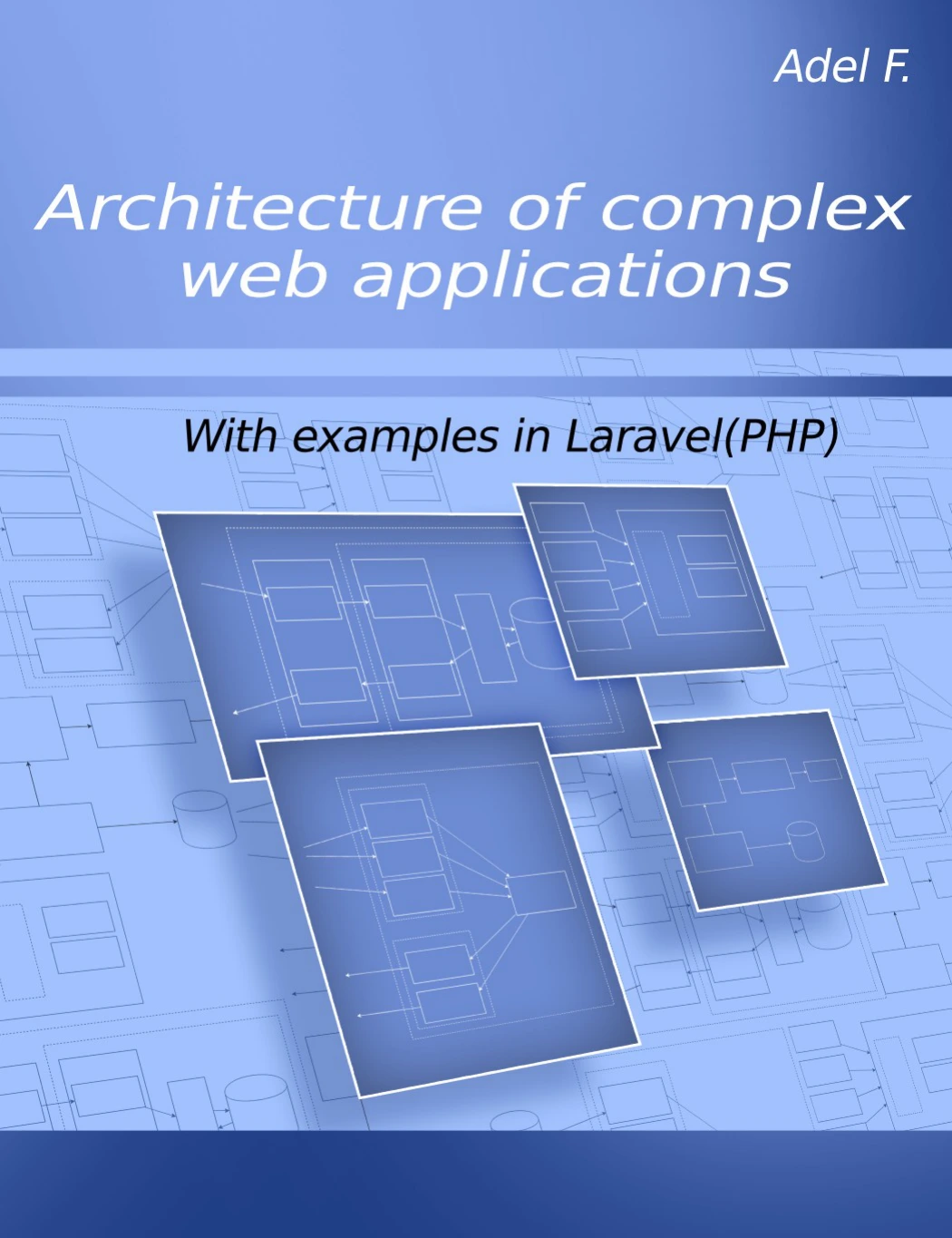
Architecture of complex web applications. Second Edition | Architecture of complex web applications. Second Edition.
Original price was: $5.00.$2.50Current price is: $2.50.

Adel F
Product Specs:
- File Type: PDF
- File Size: 1.0 MB
- Book Language: English
- Total Page Count: 257
- Instant Download
Architecture of complex web applications. Second Edition. looks at the point where a web project stops being “just CRUD” and starts demanding better structure, clearer responsibilities, and more disciplined decisions. Written with Laravel(PHP) examples, it focuses on the messy middle of real software work: controllers that grow too large, logic that spreads too far, and familiar shortcuts that become liabilities as the application evolves.
Why this book matters for working developers
Rather than treating architecture as a set of slogans, the book examines the trade-offs behind common choices. It discusses dependency injection, refactoring, application-layer design, validation, exceptions, testing, layered architecture, CQRS, and event sourcing in the context of changing project demands. That makes it especially relevant for developers who have already worked on a live codebase and want a more thoughtful way to judge when a pattern helps — and when it merely adds ceremony.
A practical view of complexity
The emphasis here is on how software actually grows. A project may begin with simple MVC conventions, then gradually accumulate file uploads, third-party integrations, database rules, and special-case behavior. This book follows that progression and shows how architectural decisions can keep pace with it without turning every feature into a tangle of duplicated code.
Topics covered
- Common “bad habits” in expanding web applications
- Single responsibility and dependency injection
- Refactoring toward cleaner application layers
- Validation, errors, and domain concerns
- Unit testing strategies for stateful and dependent classes
- CQRS and event sourcing as architectural options
Who it is for
This is not a beginner’s walkthrough. It is best suited to developers who have already built or maintained at least one project and want to understand why certain “best practices” work in some systems but not others. If you like architecture discussions that stay grounded in real code and real trade-offs, this ebook fits that brief well.
Read it for perspective, not just patterns
The book’s strength is its practical judgment. It does not promise a one-size-fits-all recipe. Instead, it helps readers think more clearly about structure, complexity, and the long-term health of a web application — a useful mindset for anyone working in Laravel or in framework-agnostic web development.
User Reviews
Be the first to review “Architecture of complex web applications. Second Edition | Architecture of complex web applications. Second Edition.”
You must be logged in to post a review.
Original price was: $5.00.$2.50Current price is: $2.50.




There are no reviews yet.