
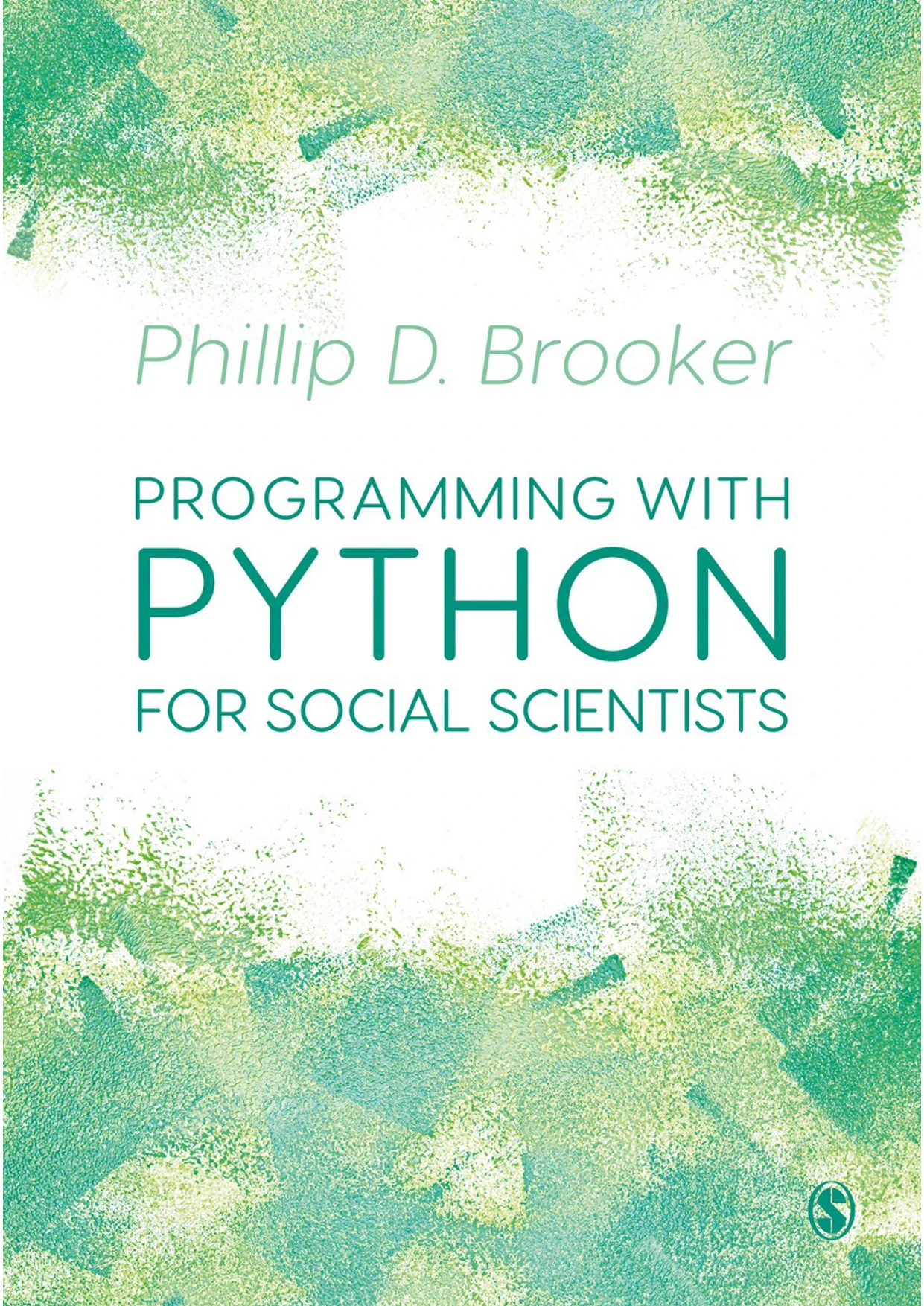
Programming with Python for Social Scientists
Original price was: $5.00.$2.50Current price is: $2.50.

Phillip D. Brooker
Product Specs:
- File Type: PDF
- File Size: 4.7 MB
- Book Language: English
- Total Page Count: 388
- Instant Download
Social science research increasingly involves working with digital data, and Programming with Python for Social Scientists offers a thoughtful bridge between coding and the questions that drive social inquiry. Phillip D. Brooker avoids treating programming as a purely technical add-on, instead framing it as a critical social science practice in its own right.
Why Python for Social Research?
Python has become a mainstay in data analysis, but this book is not a generic programming manual. It speaks directly to researchers, students, and academics who want to collect, decode, and visualize data while reflecting on the ethical and social dimensions of their digital methods. The early chapters introduce Python fundamentals—variables, flow control, lists, dictionaries, functions, classes, and modules—through examples that invite social science readers to connect code with research design.
Applied Skills for Real Data Work
The middle sections take those foundations into practical terrain. Readers can explore workflows for text files, social media APIs, web scraping with BeautifulSoup, and handling common data formats like CSV, JSON, and XML. The book also demonstrates data visualization using Pandas and Matplotlib, helping turn raw information into interpretable evidence.
A Critical Coding Mindset
Brooker’s “programming-as-social-science” approach runs throughout. The book asks how code can encode social injustices—and how researchers might use programming to challenge them. Ethical considerations, research design as a social scientific activity, and reflective practice are integrated with technical instruction rather than treated as an afterthought.
Whether you are designing a study, collecting social media data, or visualizing findings, this book supports a more reflexive and capable use of Python in the social sciences.
User Reviews
Only logged in customers who have purchased this product may leave a review.
Original price was: $5.00.$2.50Current price is: $2.50.
There are no reviews yet.