

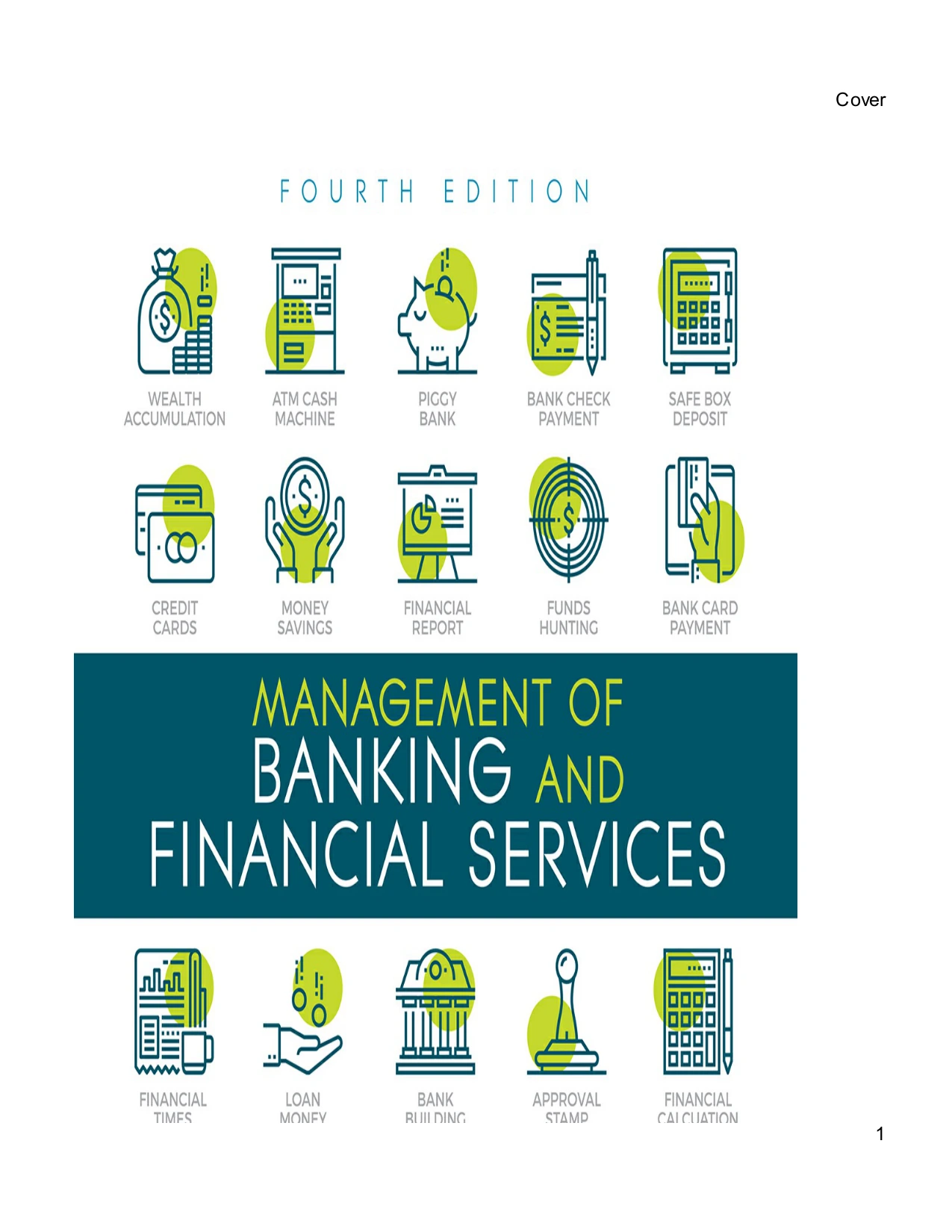
Management of Banking and Financial Services, Fourth Edition | Management of Banking and Financial Services
Original price was: $5.00.$2.50Current price is: $2.50.

Padmalatha Suresh
Product Specs:
- File Type: PDF
- File Size: 70.1 MB
- Book Language: English
- Total Page Count: 1193
- Instant Download
A Practical Guide to Modern Banking and Financial Services
Banking rarely stands still. Regulation shifts, technology rewrites customer expectations, and global markets transmit shocks faster than most institutions can respond. The fourth edition of Management of Banking and Financial Services examines this volatile landscape through the eyes of managers who must make decisions about capital, liquidity, lending, and risk. Padmalatha Suresh and Justin Paul combine a global perspective with a detailed focus on Indian banking, making the book useful for readers who need to understand both the wider financial system and its local institutional realities.
Global Finance After the Financial Crisis
The opening chapters revisit the 2007–08 crisis and ask what it changed. Topics include the causes of the crisis, the differences between investment, commercial, and universal banks, the role of trust in financial stability, and the regulatory agenda that followed. The discussion also turns to newer forces: fintech, digital currencies, and climate change as a financial-system concern. These are not treated as side issues; they are presented as part of the environment that contemporary bank managers must navigate.
India’s Banking Landscape in Detail
A substantial portion of the book maps the Indian financial system. It looks at public sector banks, private sector banks, small finance banks, payments banks, foreign banks, regional rural banks, non-banking financial institutions, housing finance companies, and co-operative credit institutions. Readers encounter the ownership and institutional structure of Indian banking, banking models, and the policy reforms that have shaped the sector since the early 1990s. For anyone working in or studying Indian finance, this section provides a structured way to see how the pieces fit together.
Monetary Policy and the Bank Balance Sheet
Monetary policy is treated as a management concern, not merely a macroeconomic abstraction. The book explains central bank tools, open market operations, reserve requirements, the repo rate, and the transmission of policy decisions to bank reserves and lending. It also covers how to read a bank’s financial statements: liabilities, assets, contingent liabilities, income statements, and the disclosures that Indian banks make. Later material introduces key performance indicators and analytical approaches such as Du Pont analysis, helping readers move from raw numbers to informed judgment.
Funds, Deposits, and the Lending Function
Where do banks get their money, and where does it go? The text examines deposit products, deposit insurance, pricing deposit services, non-deposit funding sources, and the legal framework around bank deposits and customer relationships. It then turns to the lending function: the bank’s role as financial intermediary, the gains from lending, and the practical considerations that shape credit decisions. Deposit schemes, recurring and fixed deposits, cash certificates, anti-money laundering guidelines, and know-your-customer practices are discussed with an eye to operational reality.
Case Studies, Annexures, and Analytical Tools
The fourth edition includes annexures and case studies that connect concepts to actual banking situations. Examples include the European Central Bank’s decision to bail out Greece, a Du Pont analysis of bank groups in India, and summaries of major policy and legal reforms. These supplementary materials give the book a working-reference quality, useful for readers who want to see how analytical frameworks are applied rather than only described.
Who Will Benefit from This Fourth Edition
Students of banking, finance, and management will find a clear structure that moves from the financial system to bank operations and performance analysis. Practicing bankers and financial professionals can use it to refresh their understanding of regulation, funding, and lending in the Indian context. Readers with an interest in financial stability, fintech, or the aftermath of the global crisis will also find substantial material on how institutions and regulators have adapted.
Why This Edition Matters
Banking and financial services are shaped by forces that change faster than most textbooks can keep up with. This fourth edition responds by bringing in digital currencies, fintech, climate-related financial risk, and post-crisis regulation alongside the core functions of bank management. The result is a detailed, current, and India-focused resource for anyone who needs to understand how banks raise funds, deploy them, report their performance, and operate within a complex regulatory system.
User Reviews
Only logged in customers who have purchased this product may leave a review.
Original price was: $5.00.$2.50Current price is: $2.50.






There are no reviews yet.