

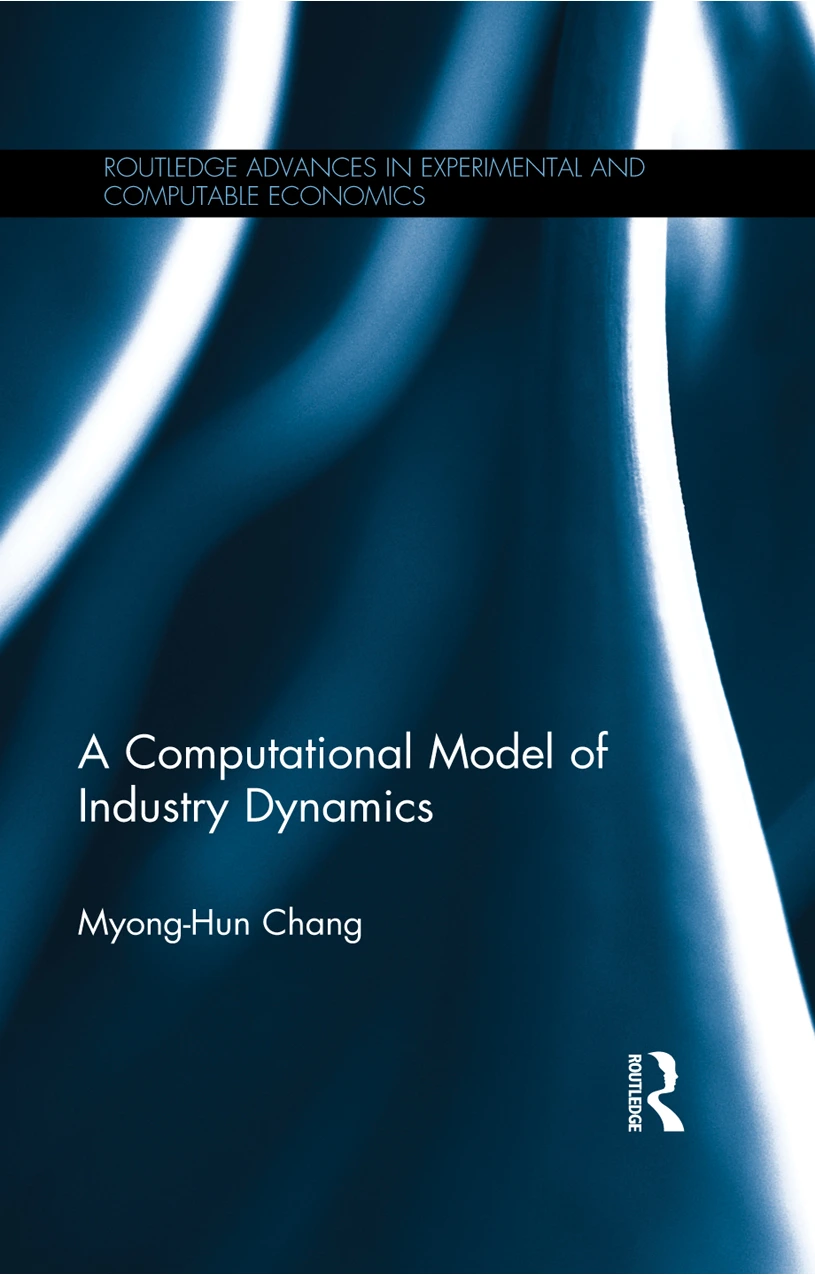
A Computational Model of Industry Dynamics
Original price was: $71.45.$35.73Current price is: $35.73.

Myong-Hun Chang
Product Specs:
- File Type: PDF
- File Size: 4.6 MB
- Book Language: English
- Total Page Count: 158
- Instant Download
How do industries take shape, and why do firms enter, adapt, or disappear as markets and technologies change? In A Computational Model of Industry Dynamics, Myong-Hun Chang uses agent-based simulation to examine these questions over time. Artificial industries grow in silico, giving readers a way to study patterns of competition and firm turnover that are difficult to capture with narrowly stylized models.
The book’s central idea is that firms need not be perfectly rational to respond to a changing environment. In Chang’s model, firms learn from experience and pursue improved technologies through research and development, while persistent and unexpected shocks keep the industry in motion.
Modeling competition as an evolving process
Chang first sets the computational approach in the context of other models of industry dynamics, then develops a model of Schumpeterian competition and explains how its firms make decisions. The emphasis is not only on constructing a simulation, but on examining whether its behavior can reproduce patterns observed in empirical industrial organization.
From industry formation to shakeouts
After describing how a simulated industry is grown, the book studies shakeouts: periods in which the number of firms falls sharply. It considers the roles of limited foresight, technological shocks, and changes in fixed costs, including recurrent shakeouts associated with technological change.
What happens in the steady state?
Later chapters explore firm and industry behavior once measured outcomes fluctuate around steady averages. Chang examines temporal patterns within an industry and differences between industries, as well as firm-level variation in technological diversity, market-share inequality, and lifespan. A final substantive chapter considers cyclical industrial dynamics under fluctuating demand.
For readers of computational and industrial economics
This book will be relevant to readers interested in agent-based computational economics, industrial organization, and the dynamics of firms and markets. Its value lies in connecting a detailed simulation framework with questions about entry, exit, technological adaptation, and industry evolution—and in showing how computational models can contribute to both positive and normative economic analysis.
User Reviews
Be the first to review “A Computational Model of Industry Dynamics”
You must be logged in to post a review.
Original price was: $71.45.$35.73Current price is: $35.73.




There are no reviews yet.