

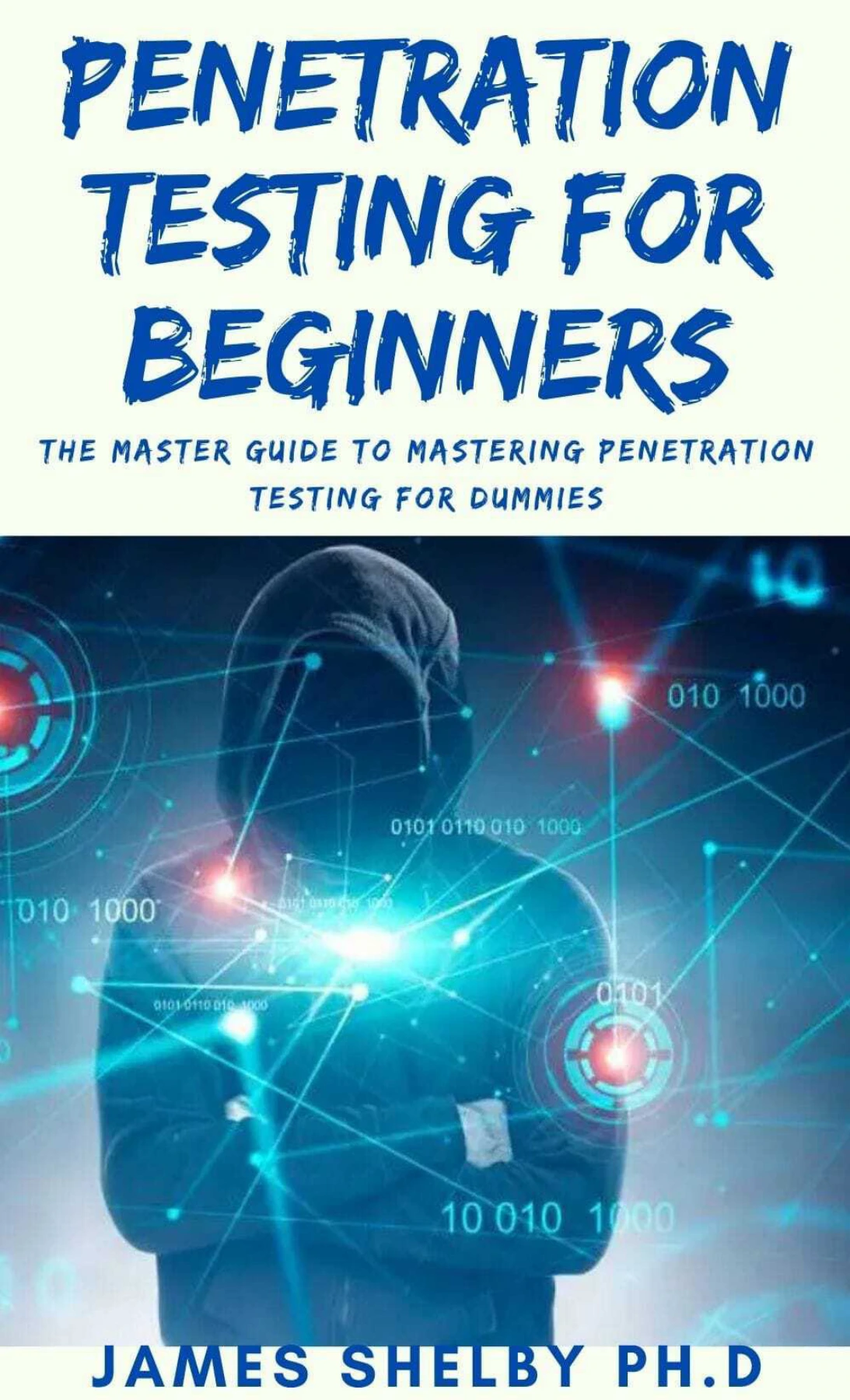
Penetration Testing for Beginners: The Master Guide to Mastering Penetration Testing For Dummies
Original price was: $5.00.$2.50Current price is: $2.50.

James Shelby PH.D
Product Specs:
- File Type: PDF
- File Size: 438.5 KB
- Book Language: English
- Total Page Count: 33
- Instant Download
A Clear Starting Point for Aspiring Pen Testers 🔐
Penetration testing can sound like a subject reserved for seasoned security professionals, but the core idea is straightforward: probe a system the way an attacker might, find weaknesses before they are exploited, and report what needs fixing. This beginner-focused ebook by James Shelby, Ph.D., sets out that idea in plain terms and builds a structured overview around it.
The guide, copyrighted in 2020, is aimed at readers who are new to cybersecurity and want a usable map of penetration testing vocabulary, workflows, and decisions. Rather than assuming prior offensive-security experience, it stays close to foundational questions: what pen testing is, why organizations request it, and how a test is planned and carried out.
What the Guide Covers 💻
- Core definitions: penetration testing, ethical hacking, and the purpose of simulated attacks.
- Business and security context: why testing is required, when it should be performed, and how it benefits an organization.
- Testing approaches: manual versus automated penetration testing, including their strengths, limits, and typical differences.
- Pen test types: open-box, closed-box, covert, external, and internal tests.
- Method and workflow: steps in a penetration testing method and how often testing may be needed.
- Tools and strategies: common penetration testing tools and approaches used during engagements.
- Roles and ethics: tester responsibilities, ethical hacking, and how penetration testing compares with ethical hacking.
- Infrastructure and WAFs: infrastructure penetration testing, its types, and the relationship between pen testing and web application firewalls.
- Career direction: six steps for readers interested in becoming a penetration tester.
Manual vs. Automated Testing
One of the guide’s practical threads is the difference between human-led and tool-led testing. Manual work can investigate context, chain smaller issues together, and adapt when results are inconsistent. Automated tools can move faster and handle repetitive checks. The book presents both sides so beginners can understand why real-world security work often combines them instead of treating either as a complete answer.
From Terminology to Testing Mindset
The contents move from definitions into methodology, then into infrastructure and tester roles. That order matters for newcomers. It gives readers a chance to learn the language of penetration testing before encountering the types of decisions a tester makes during an engagement. The material also touches on ethical hacking, which helps clarify the boundaries and intentions that separate authorized security testing from malicious activity.
Who May Find It Useful
This ebook is best suited to readers at the beginning of a cybersecurity path: students, IT support staff, junior administrators, self-taught learners, and anyone who wants a concise introduction before moving on to hands-on labs or certification study. It may also be useful to managers or non-technical professionals who need a clearer vocabulary for discussing security assessments with technical teams.
A Concise Foundation, Not a Full Exploitation Manual
With its definition-first approach and broad coverage of concepts, this is an orientation guide rather than a deep offensive-security playbook. Readers looking for advanced exploit development, extensive command-line walkthroughs, or certification-level labs may need additional resources. Those looking for a readable first pass through penetration testing fundamentals will find a guided route through the subject’s central ideas.
User Reviews
Be the first to review “Penetration Testing for Beginners: The Master Guide to Mastering Penetration Testing For Dummies”
You must be logged in to post a review.
Original price was: $5.00.$2.50Current price is: $2.50.






There are no reviews yet.