

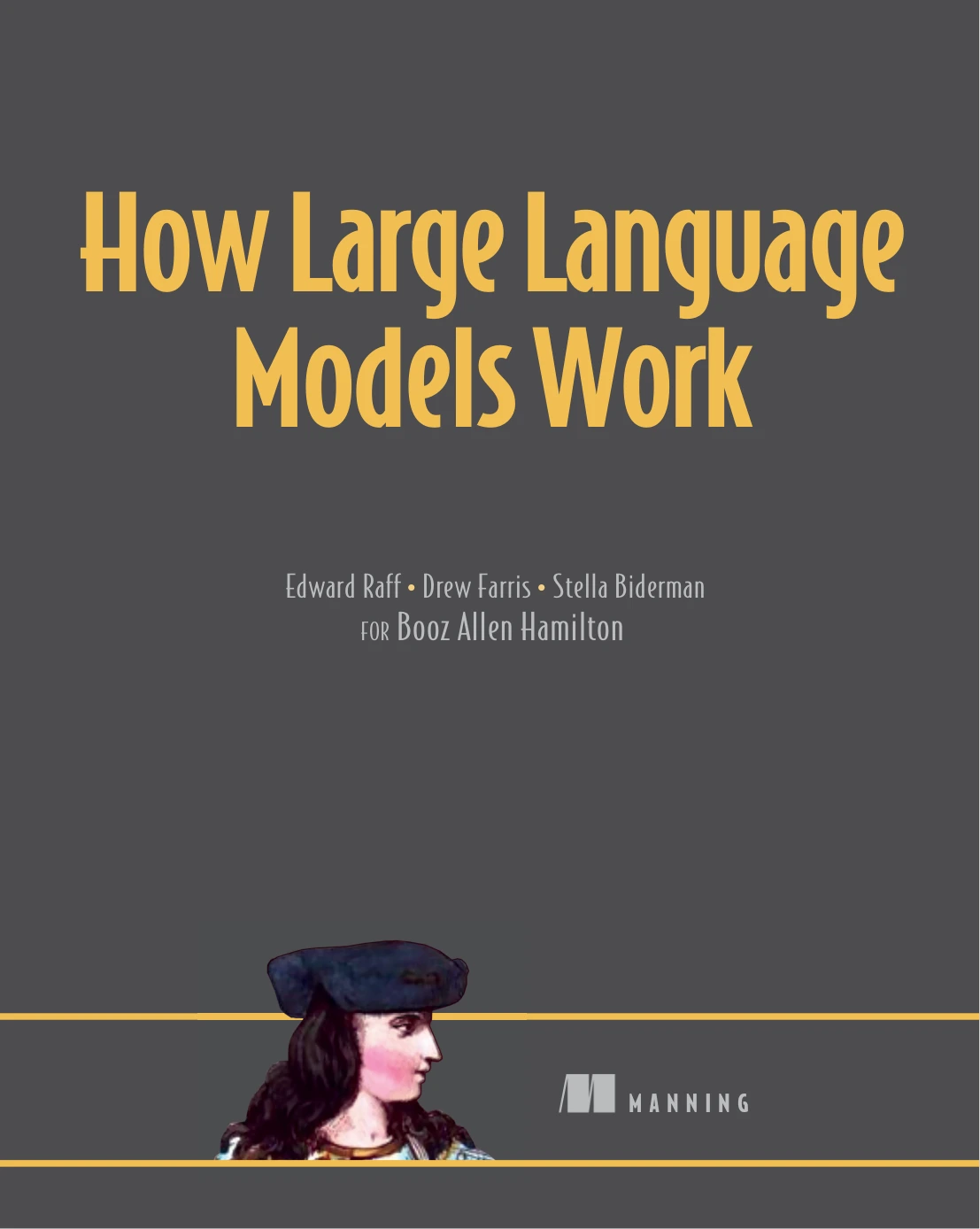
How Large Language Models Work
Original price was: $27.49.$13.74Current price is: $13.74.

Edward Raff
Product Specs:
- File Type: PDF
- File Size: 18.2 MB
- Book Language: English
- Total Page Count: 200
- Instant Download
Large language models can produce remarkably fluent text, but fluency alone does not explain how they work—or when their answers should be trusted. How Large Language Models Work offers a grounded tour of the technology, following the process from the tokens a model receives to the words it generates, and then looking at how models are trained, adapted, and put to use.
Edward Raff, Drew Farris, and Stella Biderman connect technical foundations with practical questions about reliability, limitations, and responsible design. The publisher presents the book for readers with no prior machine-learning or AI knowledge required.
From tokens to transformer outputs
The opening chapters explain how text is broken into tokens, how those tokens are represented, and how transformer layers help turn an input prompt into an output. This step-by-step framing gives readers a way to reason about what happens inside a language model without treating its responses as evidence of human-like understanding.
How models are trained—and steered
The book introduces the ideas behind LLM training, including gradient descent and the ways models learn patterns from human text. It then examines how developers can shape model behavior through fine-tuning, human feedback, changes to training data, and other approaches. Retrieval-augmented generation also appears in the discussion of integrating models into larger workflows.
Beyond chat: code, math, and images
Large language models are not limited to conversational text. Chapters explore their use in software development and formal mathematics, as well as transformer-based approaches to computer vision and multimodal systems. These examples help put the core ideas in context across different kinds of tasks.
A clear-eyed look at capabilities and limits
Alongside what LLMs can do, Raff, Farris, and Biderman consider where they struggle: misconceptions about their abilities, computational limits, and the risks of relying on outputs without suitable evaluation. The book also considers automation bias, system design, and ethical questions around building and using these tools.
For curious readers and practical decision-makers
This introduction may suit readers who want a conceptual understanding of modern language models, as well as people weighing how to use them in applications or organizational workflows. Its emphasis is on understanding the technology and its trade-offs—not on walking readers through coding an LLM from scratch. 📚
User Reviews
Be the first to review “How Large Language Models Work”
You must be logged in to post a review.
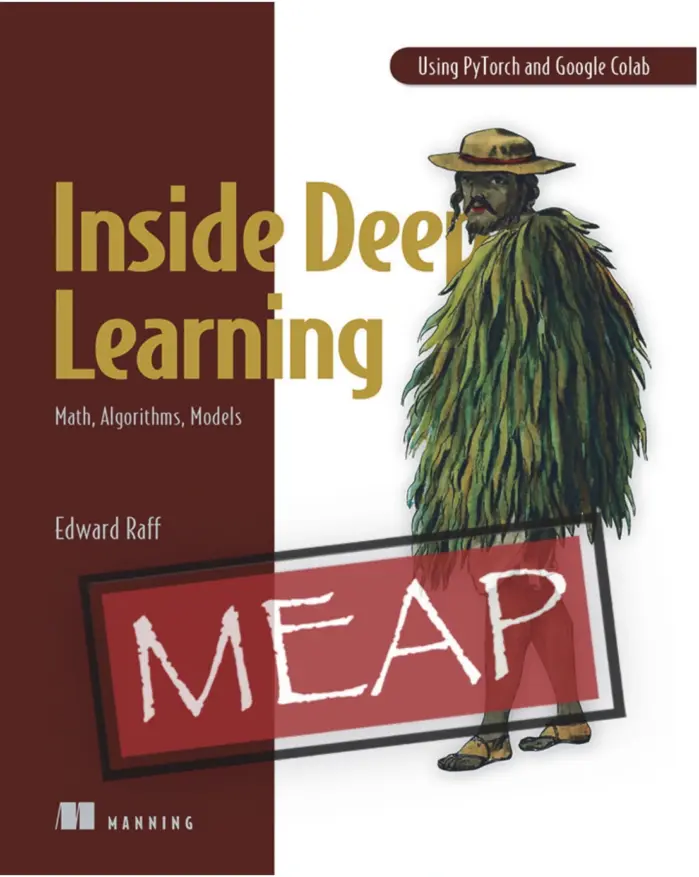
Inside Deep Learning: Math, Algorithms, Models
Sold by Edward Raff Original price was: $27.49.$13.74Current price is: $13.74.





There are no reviews yet.