
Description
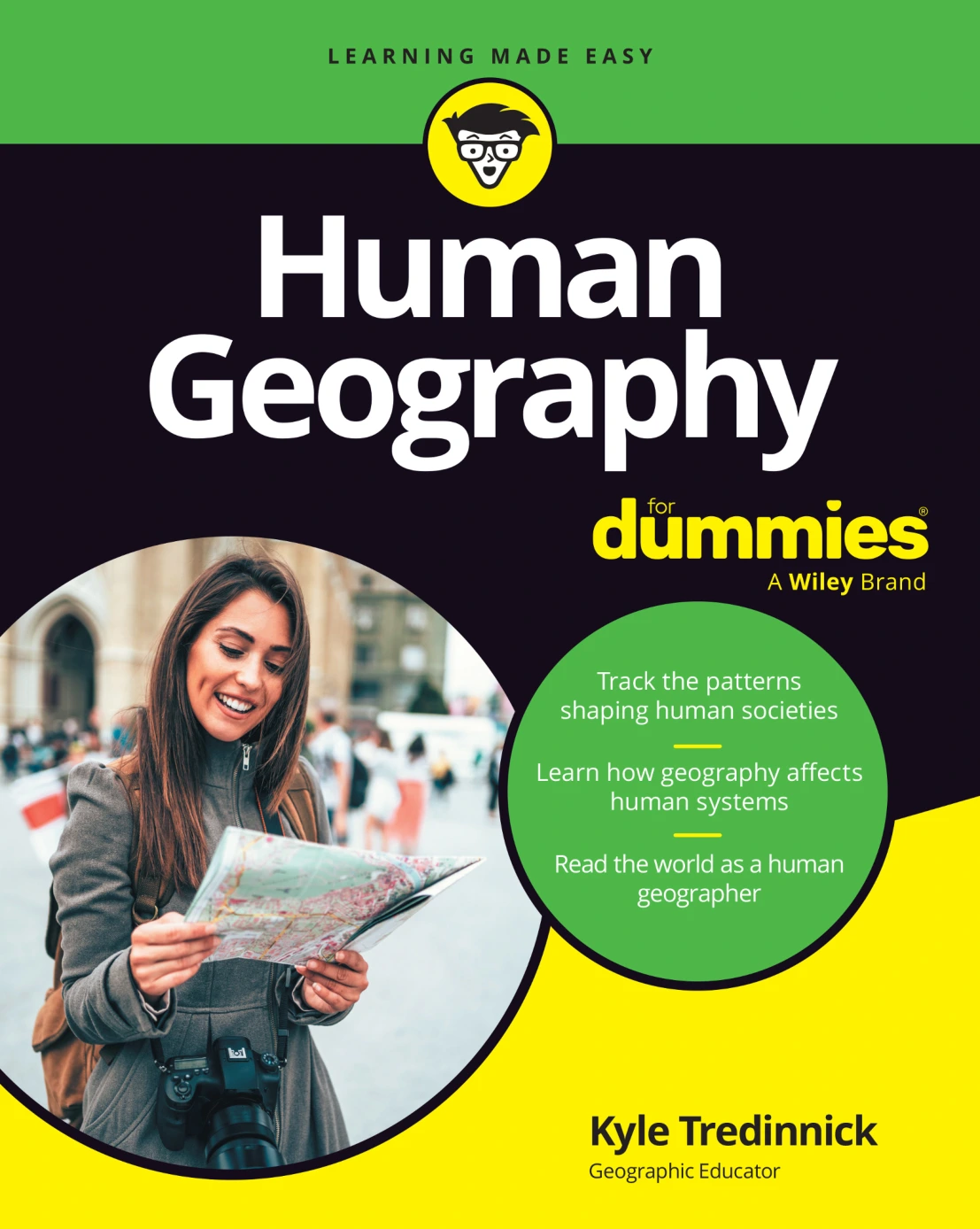
Why do people settle where they do, move across borders, build cities, form cultures, and organize economies in particular ways? Human Geography For Dummies offers an accessible introduction to the patterns behind those questions, linking the places people inhabit with the societies they create.
Kyle Tredinnick takes readers from foundational geographic ideas to the forces shaping human habitation, political systems, culture, and economic life. The result is a broad, course-friendly overview that helps make sense of how location and spatial relationships influence the human world.
Start with the ideas that make geography human
The opening section introduces the history and philosophies of human geography, its five central themes, and the ways geographers study place, location, regions, movement, and human-environment interaction. It also considers different perspectives on the discipline, including quantitative and humanistic approaches.
Follow the patterns of population and place
Explore population distribution and growth, migration and its causes, urbanization, and the differences between rural and city life. These chapters bring demographic patterns into focus and show how settlement is shaped by both movement and the characteristics of particular places.
See how culture and power take shape across space
The book examines how cultures develop and spread, how landscapes reflect human activity, and how states form and respond to forces within and beyond their borders. Topics include cultural diffusion, nationalism, regional autonomy, state relations, and the connections between countries in a wider world system.
Connect geography with economic and environmental questions
Later chapters turn to the spatial organization of human economic systems, beginning with agriculture and extending into economic opportunities, goods and services, and environmental concerns. Together, these subjects show how everyday needs and larger systems are tied to particular places and resources.
A useful overview for study and curiosity
With its wide-ranging, clearly organized introduction, this book can support readers beginning human geography coursework or anyone looking for a structured way to understand how people and places shape one another. It offers a map of the discipline’s major themes—and plenty of real-world questions to consider along the way.


Reviews
There are no reviews yet.