
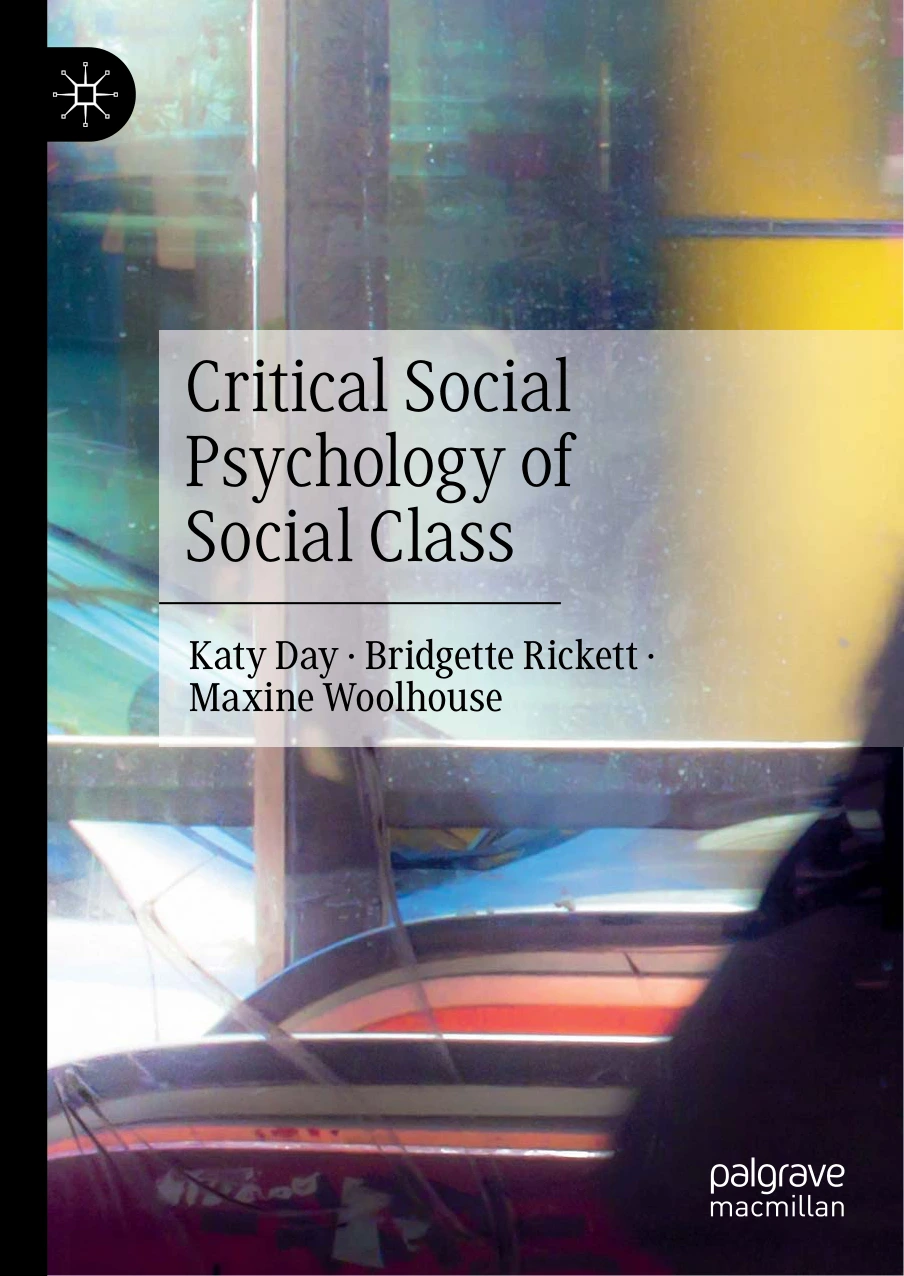
Description
Social class is more than a measure of income or occupation. It shapes how people are represented, treated, and understood—and psychology itself has not stood outside those forces. Critical Social Psychology of Social Class brings class back into psychological inquiry, examining both material inequality and the meanings and identities built around it.
Across seven chapters, Katy Day, Bridgette Rickett, and Maxine Woolhouse trace how class is defined, discussed, and lived. Their critical perspective connects psychological research with feminist thought, sociology, and other critical scholarship, offering readers a way to question not only class inequality but also the assumptions that can make it seem natural.
From social categories to lived experience
The book opens with the question of what social class is and why it matters. It then examines psychology’s construction of the working-class “Other” and develops a critical social-psychological approach to class. The chapters bring those ideas into discussions of media discourse, classed identities, and real-world applications.
Class, identity, and power
Rather than treating class as a fixed label, the authors explore how class meanings are produced and negotiated. Topics include authenticity, resistance, and the ways class intersects with gender, race, ethnicity, and sexuality. This broader lens helps readers consider how social categories operate together in everyday life and in institutional settings.
Why this perspective matters
The book challenges psychology’s relative neglect of social class and asks how the discipline can examine its own role in surveillance, regulation, and the pathologising of working-class people. Its final chapter takes up ongoing debates, limitations, and possible directions for future work.
For critical study and discussion
With its progression from foundational questions to applied analysis, this volume will interest students and academics in critical social psychology, feminist psychology, sociology, and the study of class and inequality. It offers a considered framework for readers who want to understand how class operates not only through economic conditions, but also through discourse, identity, and power.



Reviews
There are no reviews yet.