
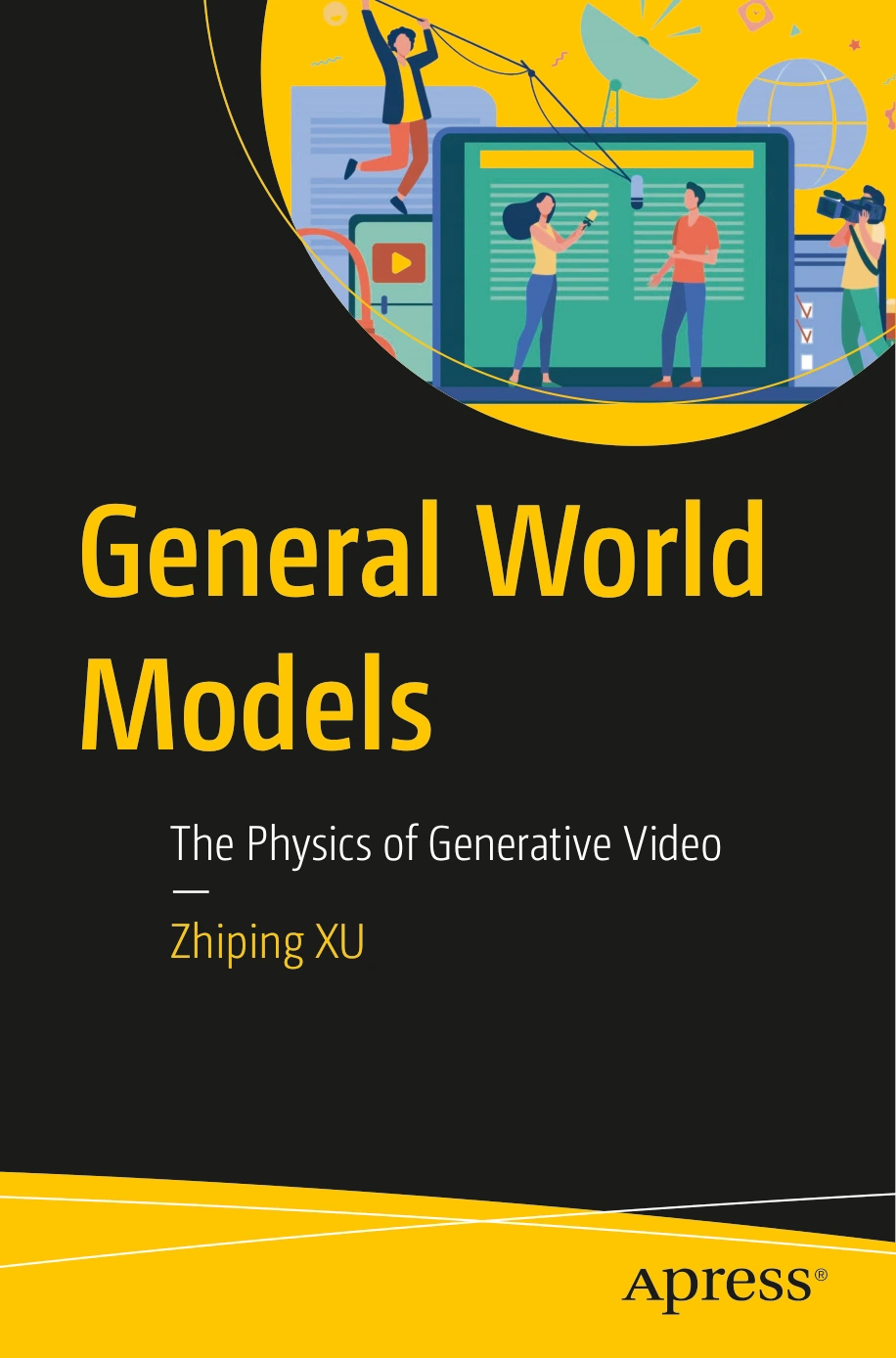
Description
Generative video asks more of a prompt than a list of visual details: it asks the creator to direct motion, camera, light, timing, and feeling. In General World Models: The Physics of Generative Video, Zhiping Xu presents a practical way to think about that work—learning the creative logic behind the tools so changing interfaces do not dictate the entire process.
The focus is both technical and cinematic. Prompts become a means of shaping shots and sequences, while physical behavior, visual rhythm, and narrative intent help guide what appears on screen.
Direct the scene, not just the sentence
The book introduces prompt construction through film language: camera choices, light and color, emotional tone, and the movement from an individual shot to a sequence. Its physics-first approach considers how language can guide motion, fluids, lighting, texture, and pacing. The emphasis is on making creative decisions legible to a generative system—not on memorizing one fixed interface.
From a single shot to a short story
Several chapters explore compact visual storytelling, including three-beat structures, visual symbols, transitions, tension, and the careful use of time. These ideas are applied to brief scenes and professional formats such as advertising and music videos. A commercial storyboard case study examines how a sequence can be organized across an eight-second timeline.
Work across tools and references
Alongside its discussion of Gemini Omni workflows, the book covers prompt portability, multimodal production, character references, and cross-model pipelines. It also addresses practical matters around identity, consent, privacy, and resemblance when reference material is used to bring characters into a scene. Exercises, templates, and checklists give readers ways to work through the topics.
For creators building a generative-video practice
Filmmakers, video and social-media creators, digital artists, educators, students, and others curious about AI-assisted storytelling may find the book relevant. It treats the technology as part of a creative workflow, while keeping attention on the enduring craft choices: what the camera sees, how a scene moves, and what the viewer is meant to feel.


Reviews
There are no reviews yet.