

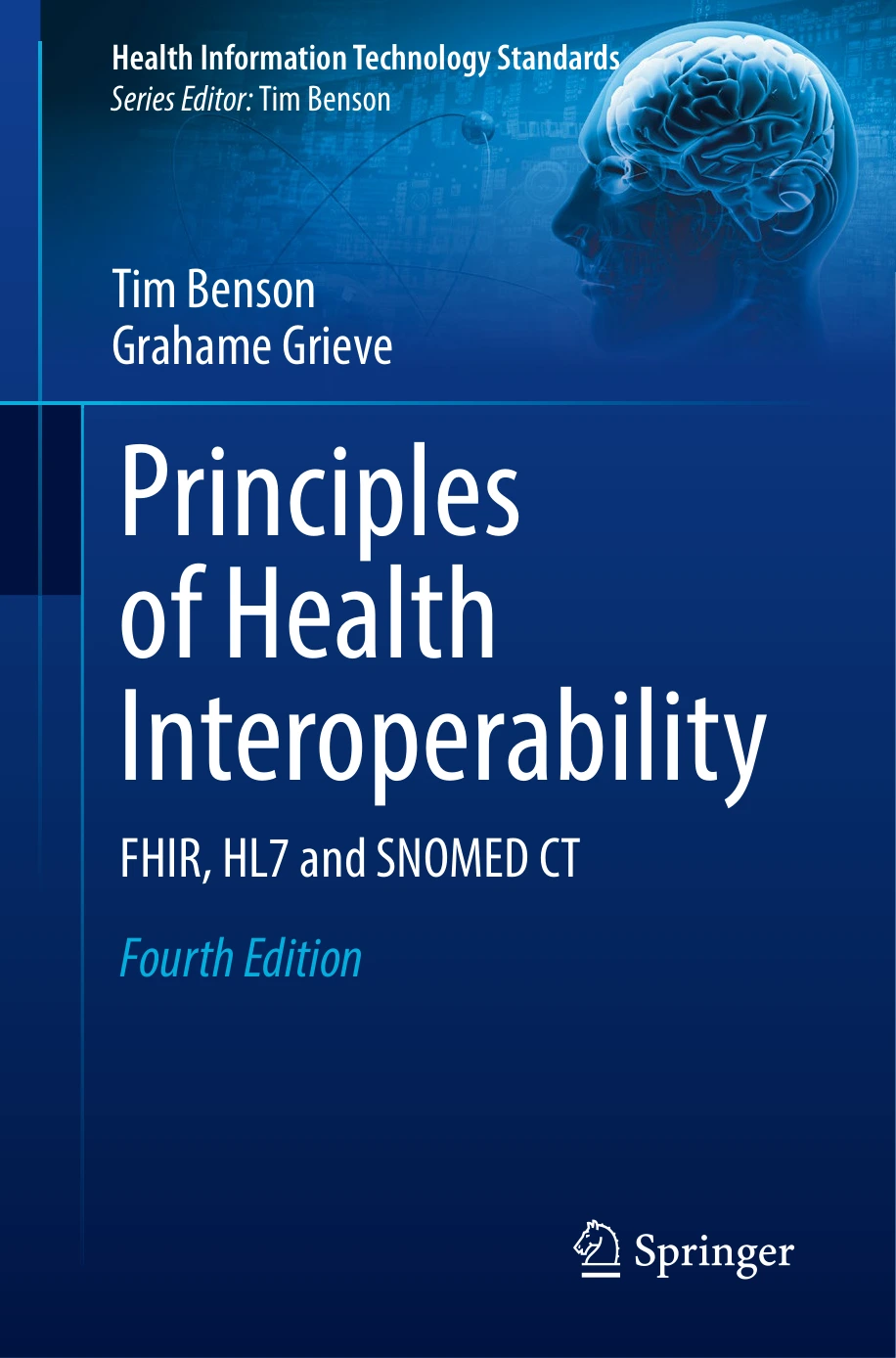
Principles of Health Interoperability: FHIR, HL7 and SNOMED CT, Fourth Edition
Original price was: $5.00.$2.50Current price is: $2.50.

Tim Benson
Product Specs:
- File Type: PDF
- File Size: 10.3 MB
- Book Language: English
- Total Page Count: 482
- Instant Download
Where Healthcare Data Meets the Real World
Getting clinical systems to speak the same language is one of the most stubborn problems in modern healthcare. Principles of Health Interoperability takes that problem seriously, but it does not drown readers in acronyms for their own sake. Tim Benson and Grahame Grieve guide you through the standards, design choices, and implementation realities that make health data exchange possible—and explain why it remains so difficult.
This fourth edition has been updated, reordered, and revised for the 2020s, with a clear emphasis on HL7 FHIR. It introduces the core principles that change slowly, while acknowledging that implementation guides evolve quickly. The result is a reference for people who need to understand both the big picture and the details that decide whether systems actually connect.
FHIR at the Center of the Fourth Edition
FHIR (Fast Healthcare Interoperability Resources) has moved from promising specification to large-scale mandate in countries including the USA and the UK. This edition reflects that shift. FHIR chapters have been extended, updated for Release 4, and moved forward in the book, giving the resource-based approach a central place in the discussion.
Readers encounter the ideas behind FHIR resources, references between resources, and the practical questions that arise when FHIR meets real clinical workflows. It is not just a tour of the specification; it is an explanation of how the pieces fit together.
Terminology, Safety, and the Details That Matter
Interoperability depends on more than transport. It depends on meaning. The book gives clinical terminology an early and substantial role, including SNOMED CT and a full chapter on LOINC. A new chapter on safety highlights how complexity can create errors, and why careful design is a patient-safety concern as much as a technical one.
Later sections address privacy, models, UML, BPMN, XML and JSON, standards development organizations, and HL7 v3. These topics are not treated as isolated appendices; they are part of the larger argument about how health information systems can be made to work together.
A Practical Reference for a Complex Field
The writing is concise and focused, suited to readers who need to understand the stable principles behind interoperability standards without reading through every page of a lengthy implementation guide. The authors bring deep involvement in the standards themselves, which shows in the way they explain design decisions and trade-offs.
Health informatics professionals, system architects, developers, clinical informaticians, and students will find material here that connects policy ambitions to technical implementation. If your work touches electronic health records, data exchange, or the standards that underpin modern health IT, this edition offers a clear and current route into the subject.
Why This Edition Matters
Healthcare is moving toward systems where patients expect to be stewards of their own data, where clinical information flows across organizations, and where RESTful APIs and FHIR are becoming common ground. This book helps make sense of that transition—not as hype, but as a set of principles, standards, and choices that must be understood to build anything that lasts.
User Reviews
Only logged in customers who have purchased this product may leave a review.
Original price was: $5.00.$2.50Current price is: $2.50.



There are no reviews yet.