

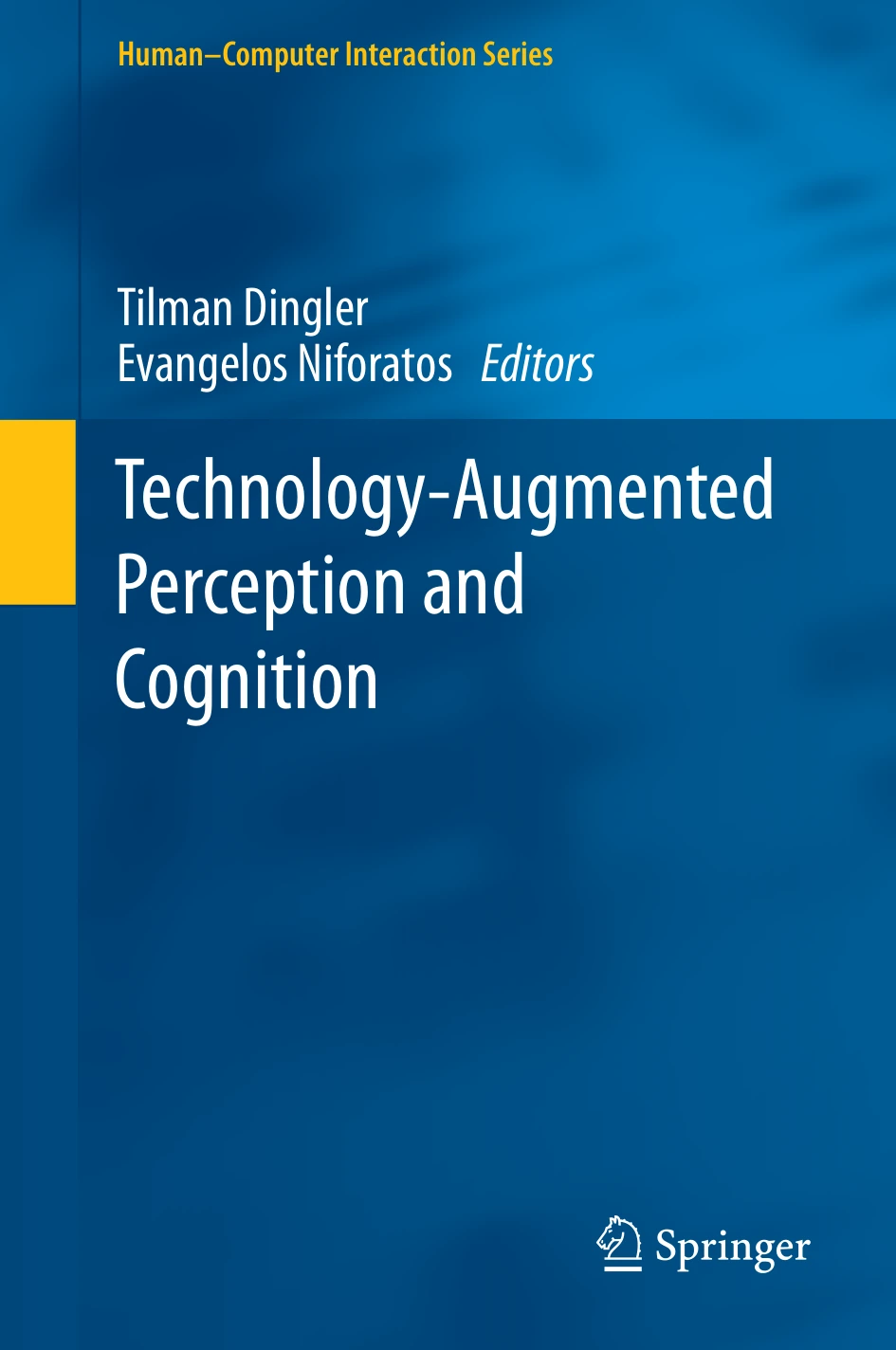
Technology-Augmented Perception and Cognition
Original price was: $5.00.$2.50Current price is: $2.50.

Tilman Dingler
Product Specs:
- File Type: PDF
- File Size: 6.1 MB
- Book Language: English
- Total Page Count: 288
- Instant Download
Where Human Cognition Meets Pervasive Computing
The line between our own mental processes and the digital tools we use every day is becoming increasingly fluid. This edited volume, part of Springer’s Human–Computer Interaction Series, brings together original research that explores how ubiquitous technologies can extend, reshape, and sometimes complicate the ways we perceive, remember, and interact with the world.
Grounded in a series of workshops held at major conferences such as Ubicomp and MobileHCI between 2014 and 2017, the book reflects a collaborative effort that began with the EU-funded RECALL project. The editors, Tilman Dingler and Evangelos Niforatos, both former RECALL researchers, have assembled contributions from leading experts across human-computer interaction, psychology, and design.
What the Chapters Explore
The chapters are organized into three thematic sections that build a comprehensive picture of technology-augmented cognition.
- Cognitive Enhancements and Learning: Topics include neurofeedback training in virtual reality environments, memory augmentation through lifelogging, technology-mediated memory impairment, and designing task resumption cues for interruptions.
- Sensory Enhancements: This section looks at insertable devices that go beyond traditional wearables and evaluates applications for augmented senses.
- Reflections: The final chapters address privacy and security in augmentation technologies and offer a summary outlook on the field.
A Multidisciplinary Research Agenda
Rather than treating technology as a simple external tool, the volume frames it as an active participant in cognitive processes. The research presented here draws on insights from neuroscience, psychology, interaction design, and engineering. It offers both concrete empirical findings and conceptual frameworks for understanding how devices can support or disrupt human capabilities.
Who Will Find This Volume Useful
This book is particularly relevant for researchers and graduate students in human-computer interaction, ubiquitous computing, cognitive science, and related fields. Designers and practitioners working on wearable, mobile, or immersive systems will also find the practical case studies and design considerations valuable. The material assumes a basic familiarity with HCI concepts but remains accessible to those with an interdisciplinary background.
Evidence-Based, Forward-Looking
Every chapter is grounded in actual studies, prototypes, or systematic reviews, making this a reliable reference for anyone investigating the intersection of technology and human mind. At the same time, the volume does not shy away from open questions and challenges, making it a springboard for future research.
For readers curious about the next steps in human-computer integration, this collection provides a well-structured entry point into a rapidly evolving field.
User Reviews
Only logged in customers who have purchased this product may leave a review.
Original price was: $5.00.$2.50Current price is: $2.50.






There are no reviews yet.