

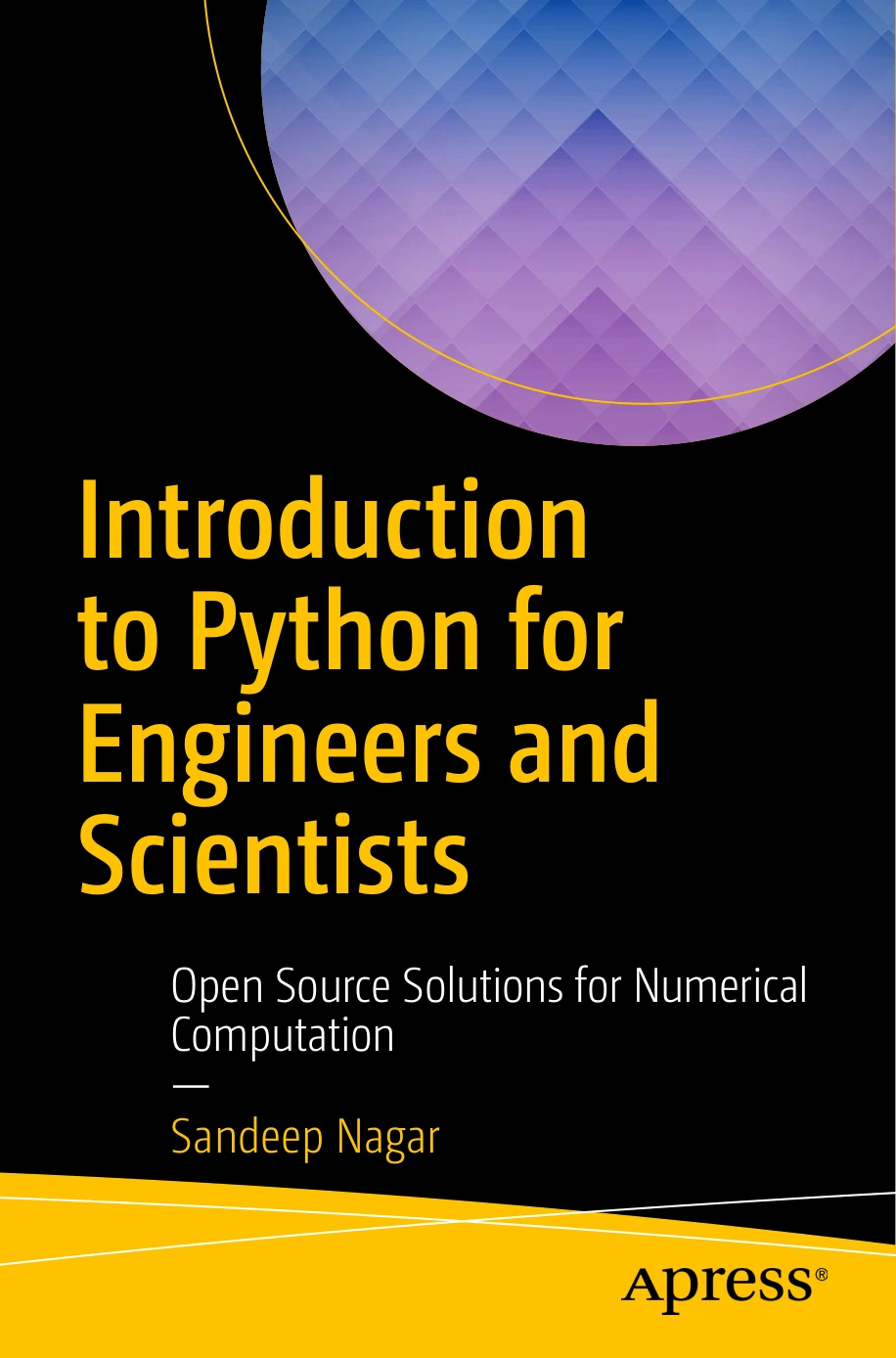
Introduction to Python for Engineers and Scientists: Open Source Solutions for Numerical Computation
Original price was: $43.44.$21.72Current price is: $21.72.

Sandeep Nagar
Product Specs:
- File Type: PDF
- File Size: 3.8 MB
- Book Language: English
- Total Page Count: 264
- Instant Download
Scientific and engineering problems often begin with a calculation, but useful computational work quickly calls for more: organizing data, building repeatable procedures, and making results visible. Sandeep Nagar’s Introduction to Python for Engineers and Scientists develops those foundations step by step, with Python presented as a practical tool for numerical computation.
Start with Python, then put it to work
The opening chapters introduce Python’s approach to programming and the essentials of getting started. From using the interpreter and working in IPython to understanding data types and operators, the book builds a base readers can use as the examples grow more involved.
Make arrays and plots part of the workflow
Arrays receive substantial attention, including their creation, indexing, and basic statistical operations. The discussion then turns to plotting with Matplotlib, including plot features, annotations, saving figures, and 3D visualizations. Together, these topics show how code can support both numerical work and the communication of results.
Build useful programming habits
Functions, loops, and object-oriented programming extend the introductory material toward reusable, better-organized code. The closing chapter considers numerical computing more broadly, including how to define and prototype a computational problem.
Who may find it useful?
This Python programming book is intended for engineers, scientists, researchers, and students who are new to the language. Its incremental treatment makes it a fitting starting point for readers who want to connect programming fundamentals with scientific and engineering computation; previous programming experience can help, but is not required.
User Reviews
Only logged in customers who have purchased this product may leave a review.
Original price was: $43.44.$21.72Current price is: $21.72.



There are no reviews yet.