

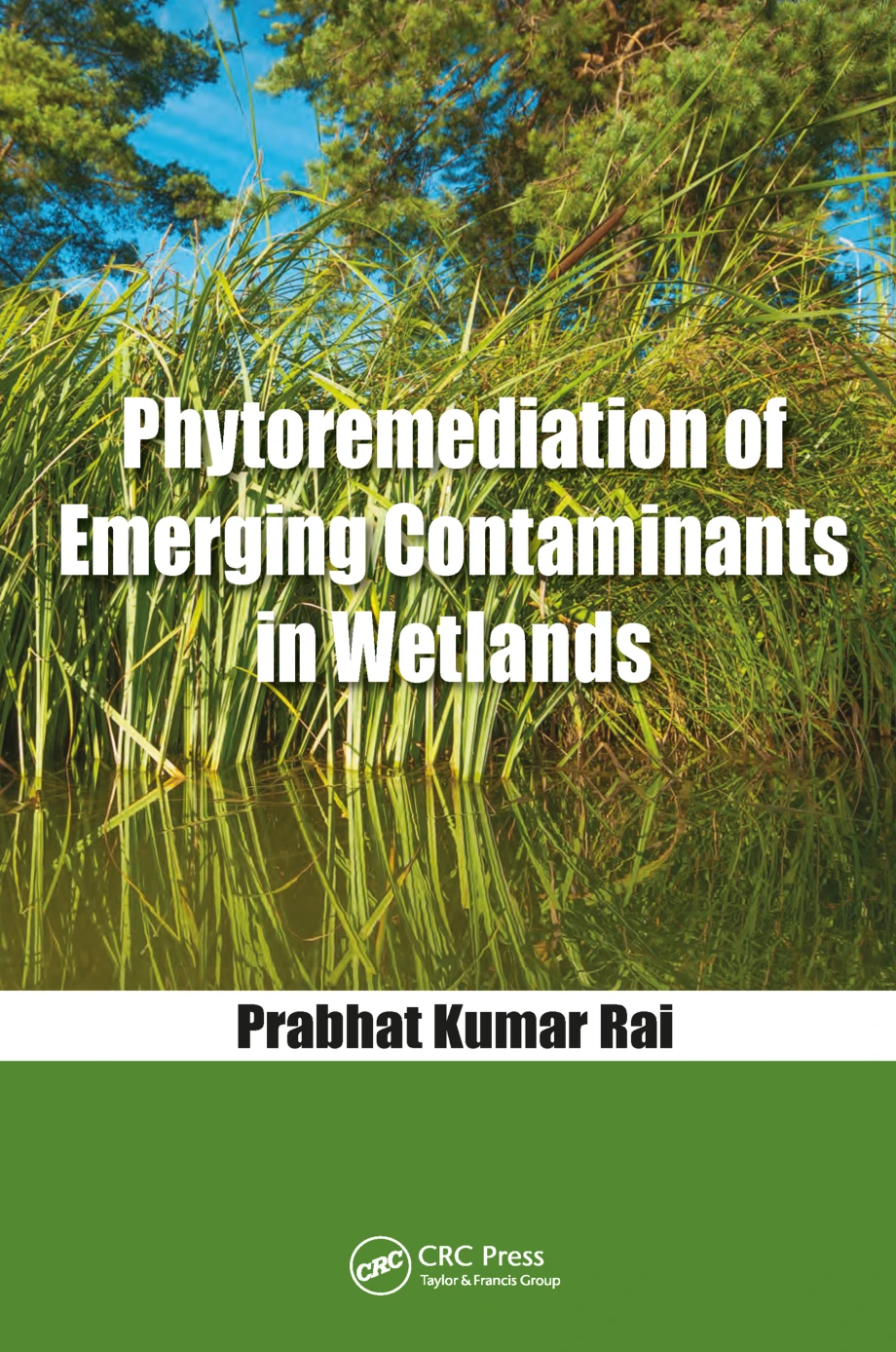
Phytoremediation of Emerging Contaminants in Wetlands
Original price was: $5.00.$2.50Current price is: $2.50.

Prabhat Kumar Rai
Product Specs:
- File Type: PDF
- File Size: 21.4 MB
- Book Language: English
- Total Page Count: 246
- Instant Download
Wetlands as Living Water-Treatment Systems
Phytoremediation of Emerging Contaminants in Wetlands examines how wetland plants, microbes, and constructed wetland systems can reduce pollutants in water. The book connects wetland ecology with remediation science, focusing on contaminants that are often difficult to treat with conventional methods.
Prabhat Kumar Rai begins with the global distribution of water, water-quality attributes, and the main pollution sources that affect freshwater and wetland environments: sewage, industrial effluents, agricultural discharge, and detergents.
From Pollution Sources to Plant-Based Solutions
The opening chapters move from water pollution to the practical role of wetland plants and macrophytes. Readers encounter phytoremediation as a green technology, with attention to organic pollutants, PAHs, heavy metals, pharmaceuticals and personal care products (PPCPs), pathogenic microbes, and antibiotics.
Rather than treating phytoremediation as a single technique, the book separates the concept, principles, mechanisms, and microbial associations that shape how plants and their root zones interact with contaminants.
Mechanisms That Make Phytoremediation Work
Later sections explain rhizofiltration, enzyme activity, plant uptake, evapotranspiration, and the physical effects of root structure. The discussion also considers plant-microbe interactions in constructed wetlands and the factors that influence contaminant removal.
This mechanistic focus helps readers understand why some wetland systems perform better than others and how design choices affect outcomes.
Constructed Wetlands and Global Case Studies
The book compares natural and constructed wetlands and asks why constructed systems are often used to replace or supplement natural wetlands for treatment. It outlines types of constructed wetlands, the role of plants, and the processes that drive remediation.
Case studies from tropical and temperate countries provide a global perspective, with examples involving nutrient phytoremediation, metals, selenium, organic pollutants, and microbial pathogens.
Ramsar Sites, Biodiversity, and Field Evidence
A substantial case-study section focuses on Ramsar wetland sites and biodiversity hotspots. It covers Loktak Lake, water-quality analysis, heavy-metal analysis, macrophytes and wetland plant composition, similarity indices, and family dominance.
Field investigations and microcosm results show how metal and metalloid phytoremediation is studied in real wetland settings, not only in laboratory conditions.
Methods, Monitoring, and Analytical Design
Later chapters address methods and design in water-pollution science. Topics include analytical and instrumentation technologies for assessing emerging contaminants, characterization of nanoparticles and nanomaterials, sampling, macrophyte and wetland plant assessment, and heavy-metal analysis.
The book also discusses phytosociological analysis and experimental design using macrophytes, including a detailed example focused on iron (Fe).
Wastewater Treatment and Future Directions
The final chapter turns to wastewater treatment with green chemical ferrate as an eco-sustainable option. It covers ferrate preparation, common water-quality indices, and the treatment of emerging environmental contaminants.
Across the volume, the author also considers limitations, SWOT analysis for phytotechnologies, the fate of contaminant-loaded biomass, and future prospects involving genetic engineering and molecular biology.
Who This Book Is For
This title is suited to researchers, environmental scientists, wetland ecologists, water-quality specialists, postgraduate students, and practitioners working on nature-based water treatment. It will be especially useful for readers who need both mechanistic explanations and case-study evidence from tropical and temperate wetland systems.
Why It Matters
Emerging contaminants and heavy metals continue to challenge conventional wastewater treatment. By bringing wetland plants, microbial processes, constructed systems, and field data together, this book offers a focused view of phytoremediation as one part of a sustainable response to water pollution.
User Reviews
Only logged in customers who have purchased this product may leave a review.
Original price was: $5.00.$2.50Current price is: $2.50.



There are no reviews yet.