

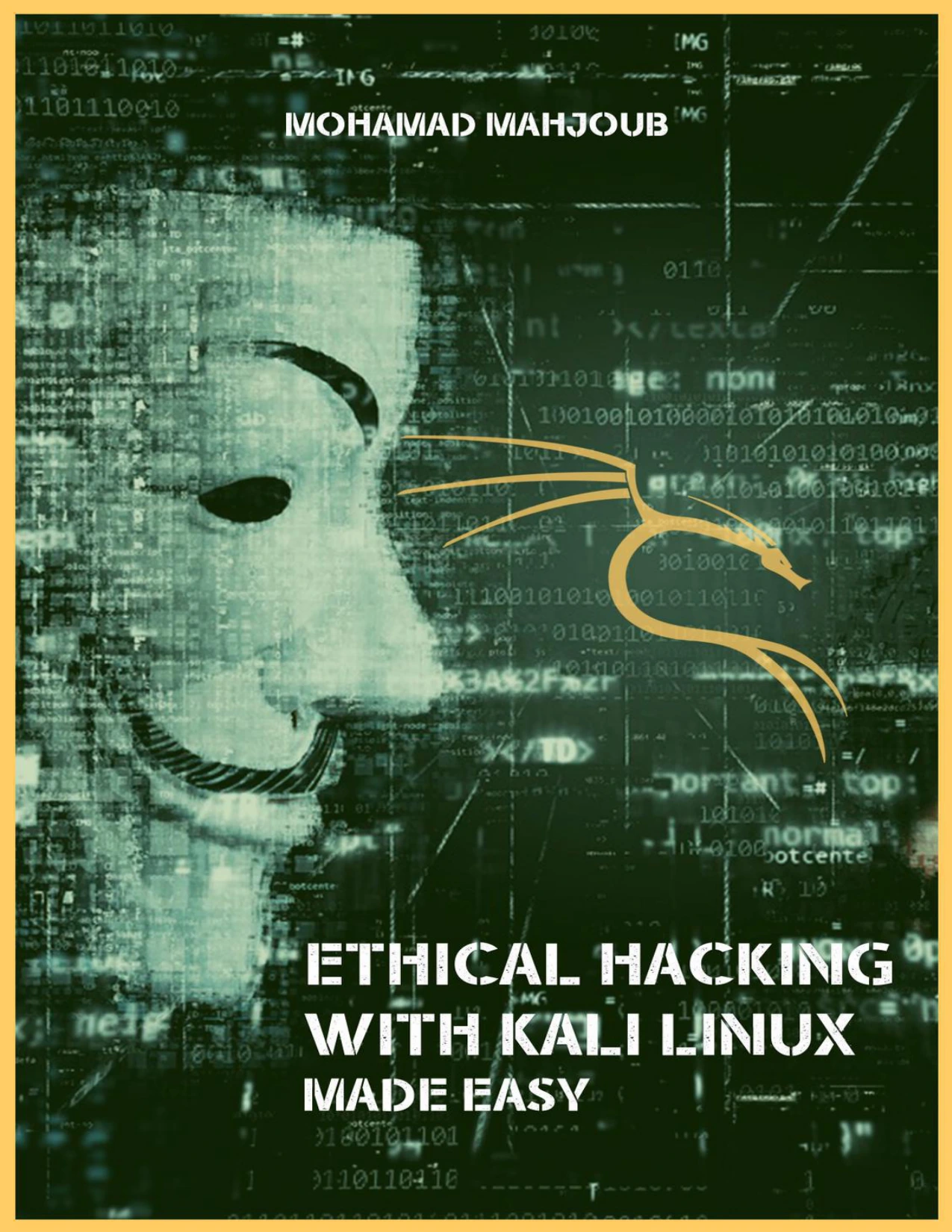
Ethical Hacking With Kali Linux: Made Easy
Original price was: $49.00.$24.50Current price is: $24.50.

Mohamad Mahjoub
Product Specs:
- File Type: PDF
- File Size: 20.5 MB
- Book Language: English
- Total Page Count: 185
- Instant Download
Learning ethical hacking starts with a clear boundary: test only systems you own or have explicit permission to assess. Mohamad Mahjoub’s Ethical Hacking With Kali Linux: Made Easy puts that principle alongside a practical introduction to penetration testing, beginning with a lab setup and moving into the tools and techniques used to examine computer networks and applications.
The book’s progression—from installing Kali and learning Linux basics to exploring network, wireless, web, password, social-engineering, and mobile security—gives readers a broad view of how penetration-testing work is organized. Its examples are framed around a practice environment, making the lab an important part of the reading experience.
Start with a Kali Linux practice lab
The opening sections explain why Kali is used for security testing and walk through setting up Kali alongside a Windows target machine. Readers then get an introduction to the desktop environment, Linux commands, and services before moving into threat modeling and penetration-test planning.
Explore network testing tools and techniques
Network-focused chapters introduce Wireshark, port scanning, Nmap, NetBIOS and SMB, DNS, and man-in-the-middle attacks. Together, these topics show how testers inspect network activity and investigate potential weaknesses. The contents also include Metasploit and Armitage, with examples framed as part of penetration testing.
From wireless and web security to passwords
Later sections cover WPA/WPA2 and WPS attacks, web application attack surfaces, SQLMap, WordPress, and analyzing web traffic. Password topics include hashing, online and offline attacks, rainbow tables, and wordlist design. These varied examples offer a broad introduction to common areas of security assessment rather than focusing on just one tool or target.
People, mobile devices, and post-exploitation
The book also discusses open-source intelligence, Maltego, phishing, mobile attack surfaces, Android reverse engineering, and maintaining access. Its contents touch on sensitive offensive-security techniques, so the author’s stated rule matters throughout: work only in an authorized lab or on systems for which you have permission.
Who may find it useful?
This title may suit readers beginning to explore Kali Linux and penetration testing, including information-security students and curious practitioners who want a wide-ranging introduction to the subject. The best way to approach its hands-on material is with a deliberately isolated practice environment and a firm commitment to authorized testing.
User Reviews
Be the first to review “Ethical Hacking With Kali Linux: Made Easy”
You must be logged in to post a review.
Original price was: $49.00.$24.50Current price is: $24.50.






There are no reviews yet.