

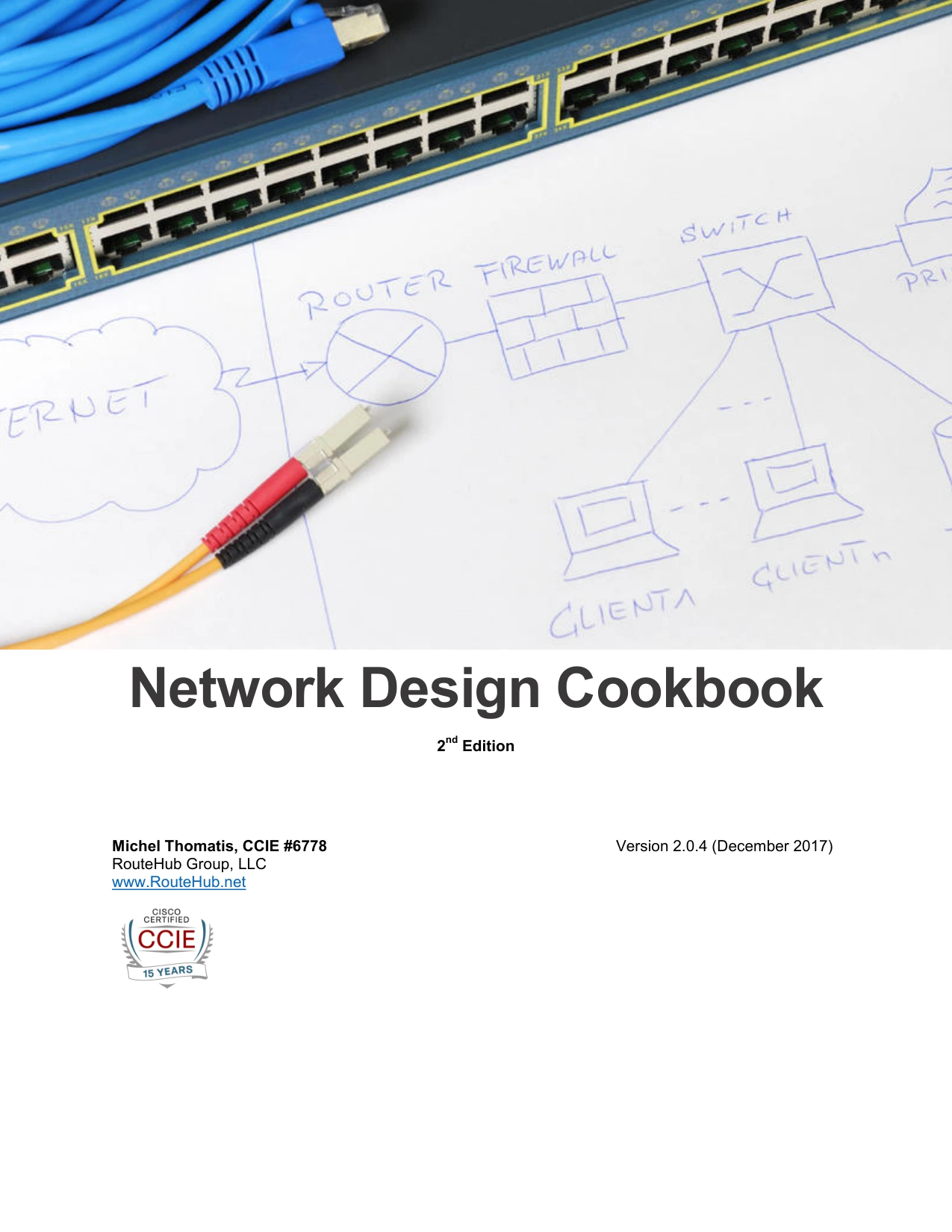
Network Design Cookbook, 2nd Edition
Original price was: $5.00.$2.50Current price is: $2.50.

Michel Thomatis
Product Specs:
- File Type: PDF
- File Size: 28.6 MB
- Book Language: English
- Total Page Count: 412
- Instant Download
A Cookbook Approach to Network Design
Network design rarely follows one universal recipe. Michel Thomatis built the Network Design Cookbook, 2nd Edition around that reality. Instead of presenting a single ‘correct’ diagram, he gives network professionals a structured way to combine design modules, match them to business requirements, and justify choices through recommendations and preferences. The result is a practical reference for architects and engineers who need to move from business needs to a defensible design.
Framework First, Then Solutions and Services
The book organises design work into a clear sequence:
- Framework — establish the underlying structure, whether that is a LAN, data center, WAN, Internet, or service-provider environment.
- Solutions — layer on capabilities such as voice, SDN, firewall, or WAN optimisation.
- Services — add routing, switching, VPN, SNMP, and other operational services.
- Attributes — consider naming standards, IP addressing standards, bandwidth choices, and similar details throughout the process.
It is a logical progression: build the structure before deciding which rooms and furniture belong inside it. That sequence helps keep a design coherent when requirements grow or change.
Modules and PODs for Real Design Choices 🧩
One of the book’s central ideas is the design module or POD. These modules show alternative ways to solve common networking problems, such as how to connect to one or more ISPs or how to approach data-center and WAN topologies. Because each organisation has different risk tolerances, budgets, and operational habits, the cookbook treats these modules as ingredients rather than fixed rules. You can compare options and choose the combination that fits the requirement.
From Topologies to Security and Services
The second edition expands into many of the areas network architects encounter in day-to-day work. Topics visible in the book’s structure include traditional one-tier and two-tier topologies, IPv6 addressing and interface IDs, first-hop redundancy protocols, access control lists, VPNs, virtual routing and forwarding, and advanced threat protection. These are not isolated definitions; they sit within a design framework that asks how each technology affects the larger architecture.
Who This Cookbook Is For 💡
Network engineers, architects, administrators, and technical leads will find the most value here. The material assumes familiarity with networking concepts and speaks to readers who make design decisions, document them, or need to explain them to others. It can also help CCIE, CCDE, and other advanced candidates think more deliberately about design trade-offs. If you have ever wondered why two experienced engineers produce very different network diagrams from the same requirements, this book addresses that question directly.
Why the Cookbook Approach Helps
Design documentation often suffers from inconsistency. By giving names to modules and a repeatable order for decisions, the Network Design Cookbook makes it easier to compare options, communicate rationale, and maintain standards across projects. The second edition, version 2.0.4, reflects Michel Thomatis’s continued work on that structure. Keep it nearby when you are building a new design or reviewing one that already exists.
User Reviews
Only logged in customers who have purchased this product may leave a review.
Original price was: $5.00.$2.50Current price is: $2.50.





There are no reviews yet.