

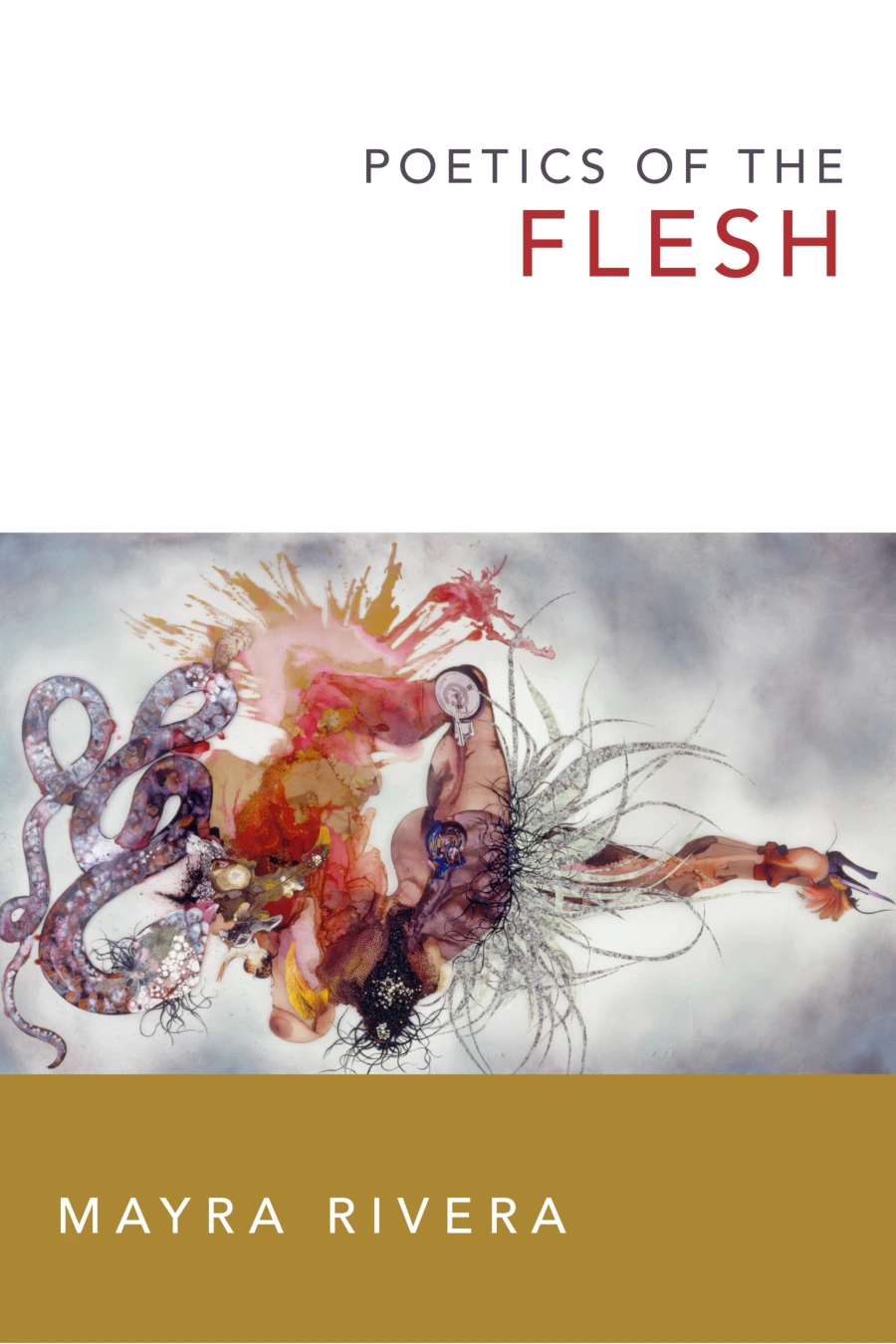
Poetics of the Flesh
Original price was: $5.00.$2.50Current price is: $2.50.

Mayra Rivera
Product Specs:
- File Type: PDF
- File Size: 9.1 MB
- Book Language: English
- Total Page Count: 217
- Instant Download
A Theology of Flesh Beyond Simple Dualisms
Poetics of the Flesh begins with a tension: flesh carries memories of divine touch and suffering, but also sin, lust, and death. Mayra Rivera does not resolve that tension by choosing one meaning over another. Instead, she traces how Christian theology and Western philosophy have made flesh a site of both condemnation and longing. The introduction, Both Flesh and Not, sets up the problem: flesh can be used to demonize corporeality or to spiritualize it, and both moves can lose touch with ordinary bodies.
Rivera’s study is not a survey of body theology. It is a focused argument about how flesh becomes a concept shaped by Scripture, doctrine, and philosophy, and what those conceptual habits do to our thinking about embodiment, relation, and difference.
From Christian Bodies to the Philosophers’ Flesh
The book moves in three parts. Part I, Regarding Christian Bodies, reads the Gospel of John, the Letters of Paul, and Tertullian. Each chapter examines a different theological gesture: becoming flesh, abandoning flesh, and embracing flesh. Together they show that Christian traditions do not speak about flesh with one voice. They inherit multiple, sometimes conflicting, ways of naming the body and its desires.
Part II, The Philosophers’ (Christian) Flesh, turns to philosophy’s uneasy relationship with the term. Incarnate Philosophy and The Ends of Flesh consider why postmodern thinkers remain suspicious of flesh as an essence or as an unmediated interiority, and why that suspicion itself deserves scrutiny. Rivera argues that the critique of flesh is not merely academic; it reveals how deeply Christian ideas continue to structure secular thought.
A Labyrinth of Incarnations
Part III, A Labyrinth of Incarnations, brings the discussion toward bodies in relation. Chapters on Inescapable Bodies and Carnal Relations explore what it means to be a body among other bodies, shaped by histories, social locations, and desires that cannot be fully mastered or transcended. The conclusion gathers these threads into a poetics, a way of speaking about flesh that remains attentive to both its painful associations and its possibilities for connection.
Across the book, Rivera writes as a constructive theologian in conversation with philosophy. She does not offer a simple recovery of flesh or a dismissal of the body. Instead, she asks how language, doctrine, and theory might do better justice to the complexity of embodied life.
Who May Find This Book Useful
Poetics of the Flesh is an academic work suited to readers in theology, philosophy of religion, Christian thought, and religious studies. It will also interest scholars and graduate students working on embodiment, gender and sexuality, critical theory, and postcolonial or decolonial approaches to religion. The argument assumes some familiarity with Christian theological vocabulary and twentieth-century philosophy; it is best approached as a sustained scholarly study rather than an introductory overview.
Notes, a bibliography, and an index support further research, making the book useful for seminar discussions, dissertation work, and ongoing conversations about the body in religious and philosophical thought.
Why This Study Matters
Terms like flesh are never neutral. They carry histories of exclusion and longing, and they shape how people imagine sin, desire, incarnation, and community. By tracing those histories through Scripture, theology, and philosophy, Rivera shows why a poetics of the flesh is also an ethical and political question. For readers willing to sit with complexity, this book offers a rigorous and original contribution to conversations about bodies, belief, and belonging.
Original price was: $5.00.$2.50Current price is: $2.50.
There are no reviews yet.