

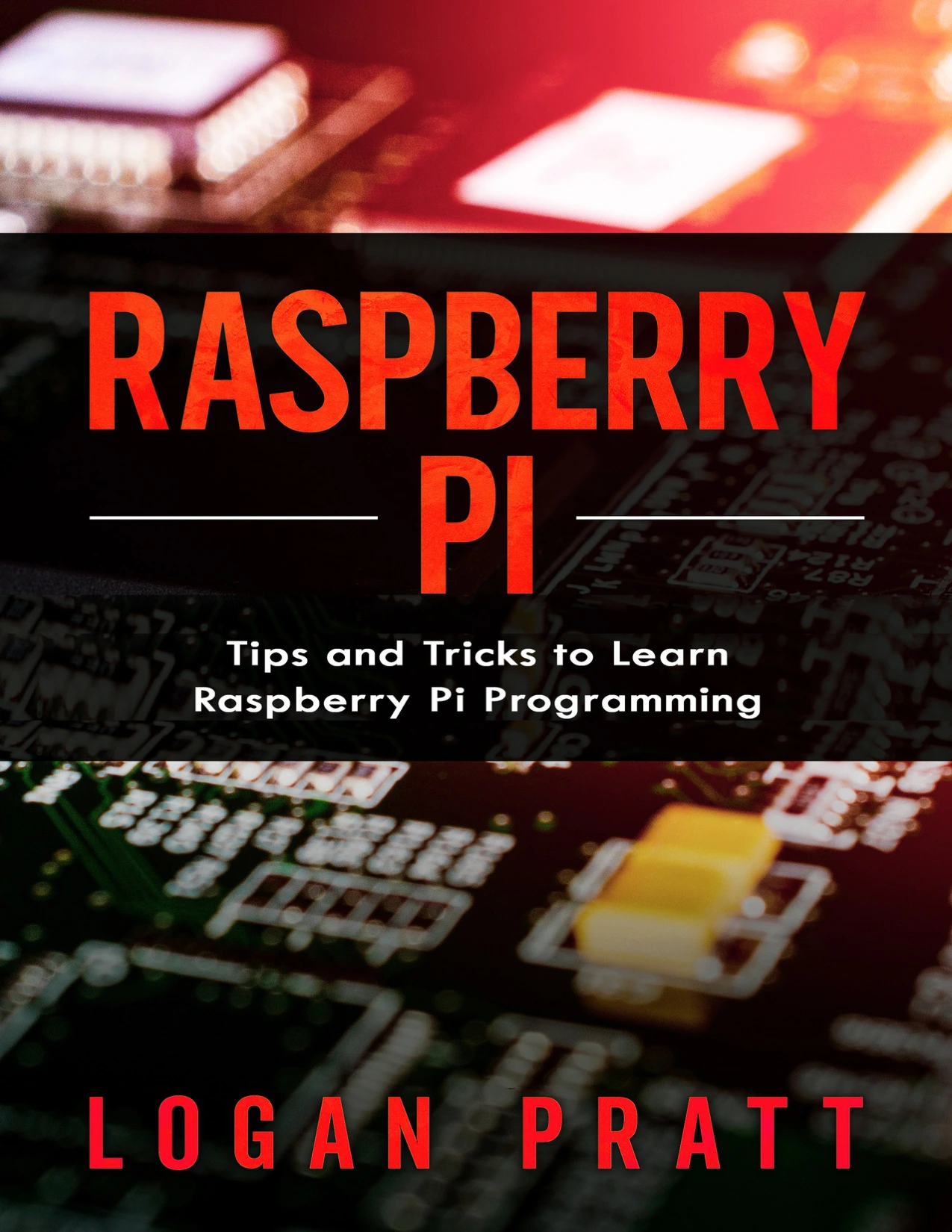
Raspberry Pi: Tips and Tricks to Learn Raspberry Pi Programming
Original price was: $5.00.$2.50Current price is: $2.50.

Logan Pratt
Product Specs:
- File Type: PDF
- File Size: 1.5 MB
- Book Language: English
- Total Page Count: 100
- Instant Download
A Practical Starting Point for Raspberry Pi
Raspberry Pi: Tips and Tricks to Learn Raspberry Pi Programming is a hands-on guide by Logan Pratt for readers who want to move from a bare board to working projects. It begins with the hardware itself—the ports, peripherals, GPIO header, camera connector, and other components that make the Pi such a flexible little computer—then walks through setup and everyday use before moving into code.
The book keeps its focus on learning by doing. Rather than treating the Raspberry Pi as a sealed appliance, it shows how the parts fit together and how software can interact with the physical world. ⚙️
From First Boot to Daily Use
Early chapters cover Raspberry Pi 3 Model B+ requirements, equipment organization, software installation, and first-use setup. Readers get oriented with the desktop, Chromium, the file manager, productivity tools, and the configuration options that make the Pi comfortable to use as a small desktop computer.
- Understanding the major components of a Raspberry Pi board
- Identifying USB, Ethernet, HDMI, audio, camera, and display connections
- Preparing the equipment and installing the software
- Navigating the desktop and basic Raspberry Pi tools
Scratch and Python Through Small Projects
Scratch 2 and Python are introduced through short, manageable exercises. The Scratch chapters begin with a simple “Hey, World!” program and build toward variables, conditionals, loops, and mini-projects such as a reaction timer and simple games. The Python chapters use the Thonny IDE, starting with basic programs and moving through loops, indentation, conditionals, and variables before creating projects like Turtle Snowflakes and an RPG maze. 💻
Physical Computing with GPIO, LEDs, and Sense HAT
The later sections turn to physical computing. Pratt explains the GPIO header, resistor color codes, breadboard use, LED control, buttons, and simple circuits with both Scratch and Python. The Sense HAT chapter extends those ideas with sensors, displays, and inertial sensing, while the camera chapter covers camera types, module installation, focus adjustment, testing, and Python-based camera programming.
Who This Book Suits
This is a beginner-friendly Raspberry Pi guide for readers who learn best by following clear steps and trying projects. It is especially useful for hobbyists, students, and self-taught programmers who want a single path from setting up the hardware to writing simple Python and Scratch programs that interact with electronic components.
If you have a Raspberry Pi waiting on your desk, this guide offers a structured way to understand it—and plenty of small projects to turn that understanding into practice. 🧠
User Reviews
Be the first to review “Raspberry Pi: Tips and Tricks to Learn Raspberry Pi Programming”
You must be logged in to post a review.
PHP: Tips and Tricks for Building Modern PHP Apps
Sold by Logan Pratt Original price was: $5.00.$2.50Current price is: $2.50.





There are no reviews yet.