

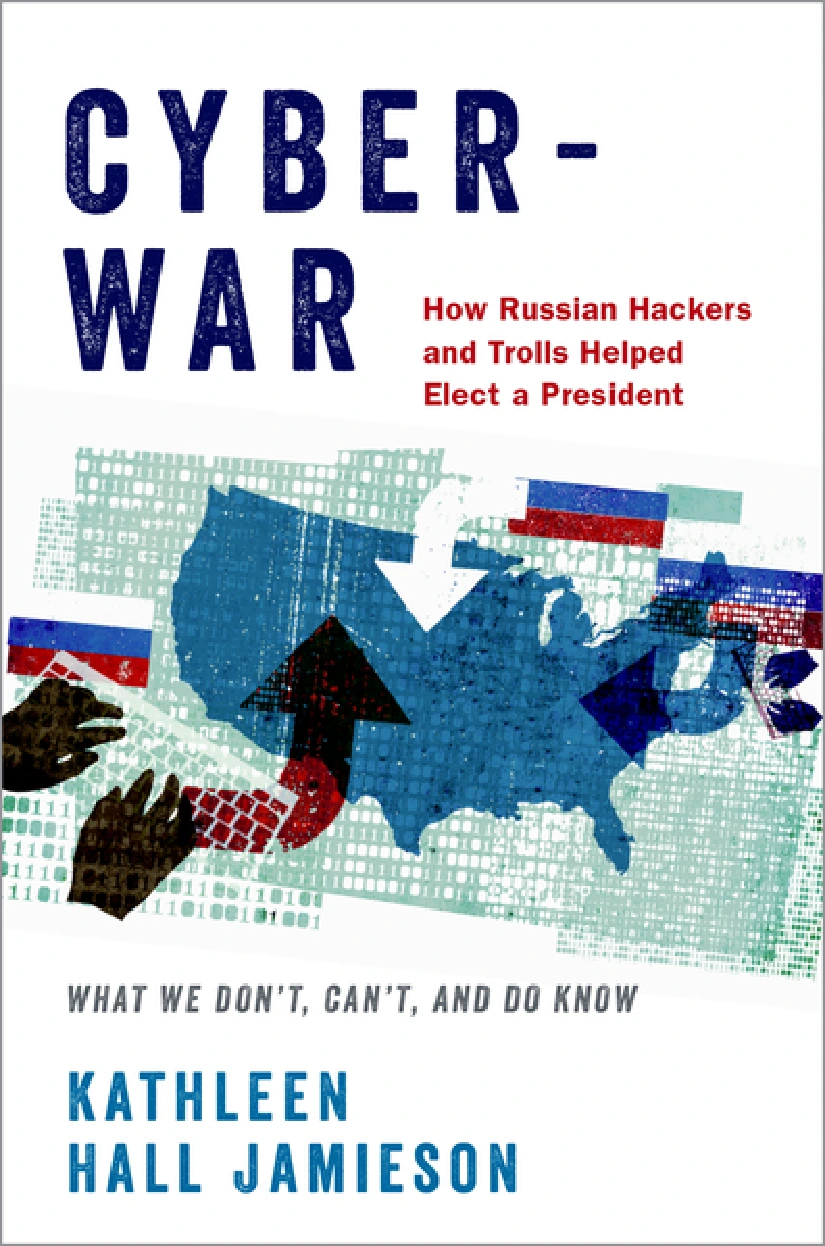
Cyberwar: How Russian Hackers and Trolls Helped Elect a President: What We Don’t, Can’t, and Do Know
Original price was: $5.00.$2.50Current price is: $2.50.

Kathleen Hall Jamieson
Product Specs:
- File Type: PDF
- File Size: 17.6 MB
- Book Language: English
- Total Page Count: 337
- Instant Download
What can evidence tell us about the role of Russian hackers and online trolls in the 2016 U.S. presidential election—and where does certainty end? In Cyberwar, political communication scholar Kathleen Hall Jamieson takes up that difficult question by examining campaign messaging, hacked material, polling evidence, press coverage, and the final presidential debates.
Rather than treating influence as a simple yes-or-no claim, Jamieson considers how political communication might affect what people see, discuss, and ultimately decide. The result is a research-led account of a consequential election and the competing forces that shaped its public conversation.
How influence might work
The opening sections establish the case for Russian intervention and introduce a theory of communication effects. Jamieson then assesses the conditions that could allow troll messaging to matter: whether it reached a broad audience, aligned with particular electoral interests, appealed persuasively, and reached groups whose participation or choices could be affected.
From social media to the news agenda
The book follows the story beyond individual posts. Its later chapters examine how hacked content and Russian activity intersected with press coverage, the topics raised in the last presidential debates, and the media agenda in the campaign’s closing days. This wider lens helps readers consider how online activity can travel into mainstream political discussion.
Evidence, argument, and limits
Jamieson draws on analyses of troll messages, election surveys, research on media effects, and the treatment of hacked material in news and debate. The central conclusion is presented as an assessment of what the evidence makes plausible—not as proof that one outside intervention alone determined the result.
Appendices extend the analysis with material on changing perceptions of the candidates, debate exposure, and the relationship between candidate evaluations and vote intentions. These sections make the book especially relevant to readers who want to follow the reasoning and evidence behind its argument.
For readers of elections and political media
Cyberwar will interest readers of U.S. politics, campaign communication, social media, and journalism. It offers a focused way to think about how digital messages, news coverage, and voter response can connect—and why careful distinctions between evidence, inference, and uncertainty matter.
User Reviews
Only logged in customers who have purchased this product may leave a review.
Original price was: $5.00.$2.50Current price is: $2.50.





There are no reviews yet.