

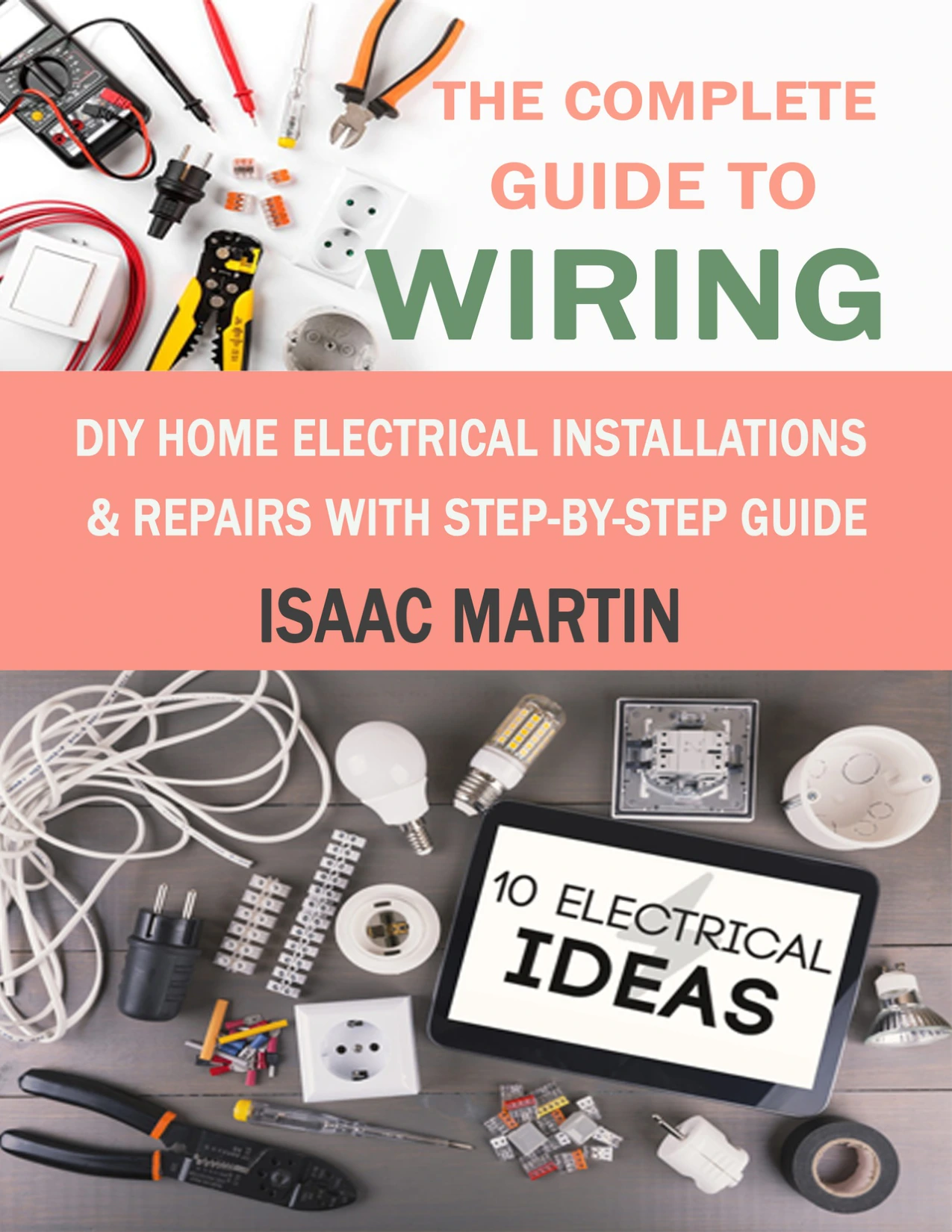
The Complete Guide to Wiring: DIY Home Electrical Installations & Repairs with Step-by-Step Guide
Original price was: $5.00.$2.50Current price is: $2.50.

Isaac Martin
Product Specs:
- File Type: PDF
- File Size: 3.6 MB
- Book Language: English
- Total Page Count: 51
- Instant Download
Working with household wiring can feel intimidating, but a clear understanding of wire colors, circuit loads, and common repair procedures turns a confusing panel of cables into a manageable set of decisions. Isaac Martin’s The Complete Guide to Wiring addresses the practical questions that come up in real homes—whether you are changing a fixture, adding a circuit, or simply checking that an existing installation is safe.
Wire Color Codes, Demystified ⚡️
The guide opens with one of the most important safety skills a homeowner can develop: reading the color of electrical wires correctly. Black and red wires are typically hot, white or gray wires are neutral, and bare copper or green wires provide grounding. Martin also explains the special case of white wires marked with black or red tape, which indicate that the wire is being used as a hot conductor. These distinctions matter because neutral and hot wires can both carry current and pose a shock risk—assuming otherwise is dangerous.
Matching Wire Gauge to Circuit Load
Choosing the wrong wire size for a circuit can lead to overheating and fire, even if a breaker sometimes offers protection. This book explains the American Wire Gauge (AWG) system and provides clear amperage capacities for common non-metallic cable sizes. You’ll learn why 14-gauge wire suits a 15-amp circuit, why 12-gauge is needed for 20 amps, and how stranded and solid wire behave differently in practice. The goal is not just code compliance, but making installations that stay safe under real load conditions.
Common Repairs You Can Tackle 🧰
Beyond the basics of installation, the guide covers several repair tasks that many homeowners face. Step-by-step guidance is provided for:
- Replacing a light fixture safely
- Repairing a chandelier without damaging the finish or wiring
- Diagnosing and fixing ceiling fan problems
- Repairing power cords and plugs
Each project builds on the earlier foundational chapters, so you can approach the work with a better sense of why a particular connection is made a certain way.
Safety First, Always
The National Electrical Code (NEC) is referenced throughout as a baseline for correct practice. Grounding is given special attention, including the difference between metal and plastic electrical boxes. Martin also warns against overloading circuits and explains how to calculate load before adding outlets or appliances. This is not a book that encourages risky shortcuts—it is a book that teaches you to spot and avoid them.
Who This Guide Helps
If you are a homeowner who wants to handle small electrical projects rather than calling an electrician for every switch or fixture, this guide offers a solid starting point. It assumes no formal training but does expect careful reading and respect for the risks involved. Beginners will appreciate the clear explanations, while those with some experience can use the reference sections on wire sizing and color codes as a quick refresher.
Take the time to understand your home’s electrical system before turning off that breaker. With the right knowledge, many routine repairs become safer and more approachable.
User Reviews
Be the first to review “The Complete Guide to Wiring: DIY Home Electrical Installations & Repairs with Step-by-Step Guide”
You must be logged in to post a review.
Original price was: $5.00.$2.50Current price is: $2.50.




There are no reviews yet.