

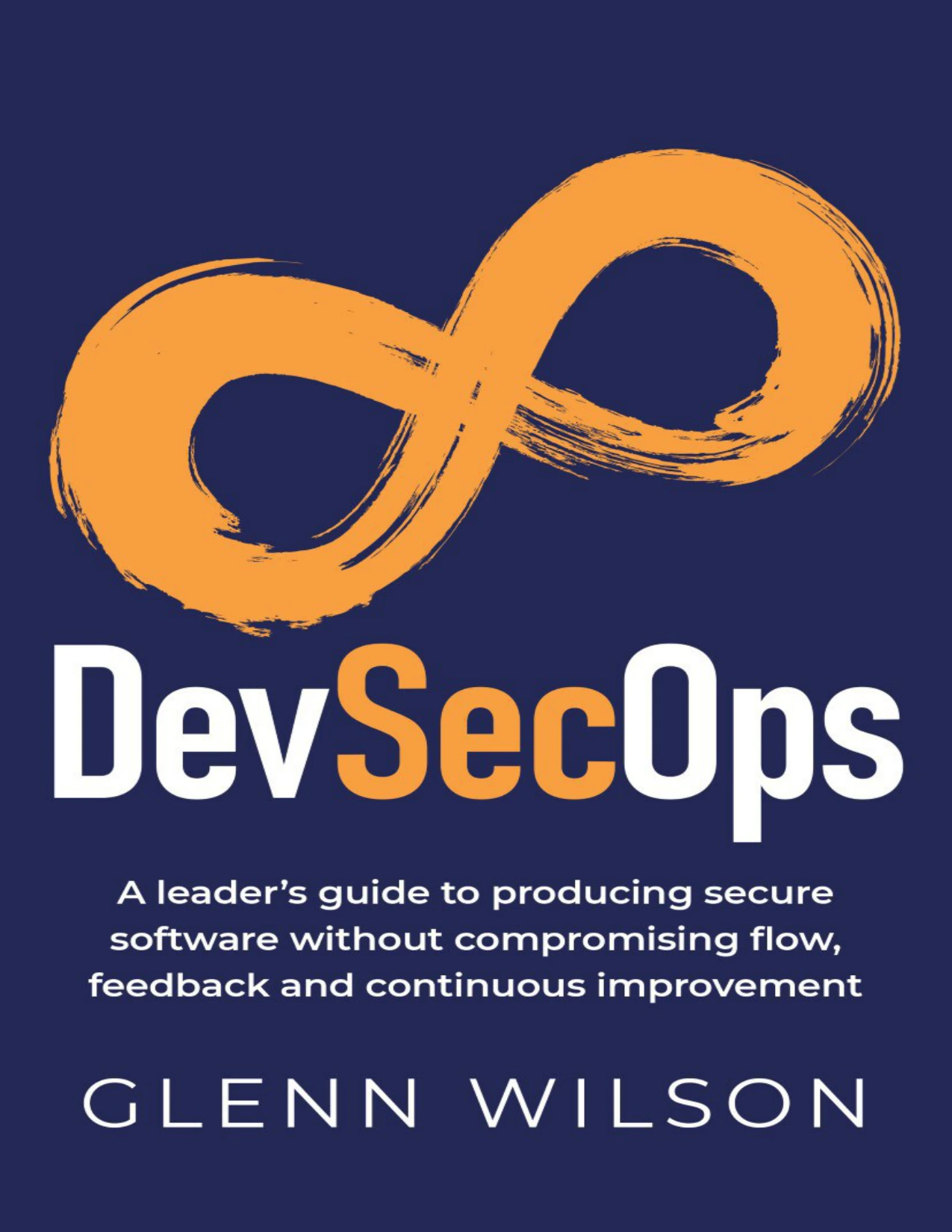
DevSecOps: A Leader’s Guide to Producing Secure Software Without Compromising Flow, Feedback and Continuous Improvement
Original price was: $5.00.$2.50Current price is: $2.50.

Glenn Wilson
Product Specs:
- File Type: PDF
- File Size: 2.2 MB
- Book Language: English
- Total Page Count: 181
- Instant Download
Software teams are expected to deliver quickly, but security cannot be left waiting at the end of the pipeline. In DevSecOps, Glenn Wilson sets out a practical framework for bringing security into the way teams learn, design, build, test, and improve software—while keeping the flow and feedback that make DevOps work.
Three layers for making security part of delivery
Wilson organizes the book around three connected layers: security education, secure-by-design practices, and security automation. The structure gives leaders and delivery teams a way to think beyond adding a tool or a final approval step: security depends on people, design decisions, and repeatable checks working together.
Build security knowledge across the team
The education section explores ways to help delivery teams develop and share security knowledge. Topics include security champions, gamified and instructor-led learning, self-paced study, pair programming, peer review, informal knowledge sharing, and experimentation. The emphasis is on making security understanding part of the team’s working habits.
Put secure thinking into design
From threat modelling and clean code to application design principles, microservices, containers, and pipeline security, the secure-by-design layer looks at where security choices can be made during development. Its range makes the connection between everyday engineering practices and the security of the systems they produce.
Automate checks—and know their limits
The automation layer surveys application and mobile security testing, software composition analysis, unit testing, infrastructure-as-code checks, container image scanning, network scanning, monitoring, and vulnerability management. Wilson also recognizes that some testing cannot be automated, keeping human judgment in the picture rather than treating automation as a complete substitute.
From framework to improvement plan
The closing chapters turn the three-layer approach toward action: increasing DevSecOps maturity, addressing technical debt, introducing education, applying design principles, and measuring and adjusting the work. The book’s central point is that DevSecOps starts with people—and succeeds through coordinated, ongoing practice.
For software leaders and practitioners working to bring development, operations, and security closer together, this guide offers a structured way to examine the culture and engineering practices behind secure software delivery.
User Reviews
Be the first to review “DevSecOps: A Leader’s Guide to Producing Secure Software Without Compromising Flow, Feedback and Continuous Improvement”
You must be logged in to post a review.
Original price was: $5.00.$2.50Current price is: $2.50.
There are no reviews yet.