

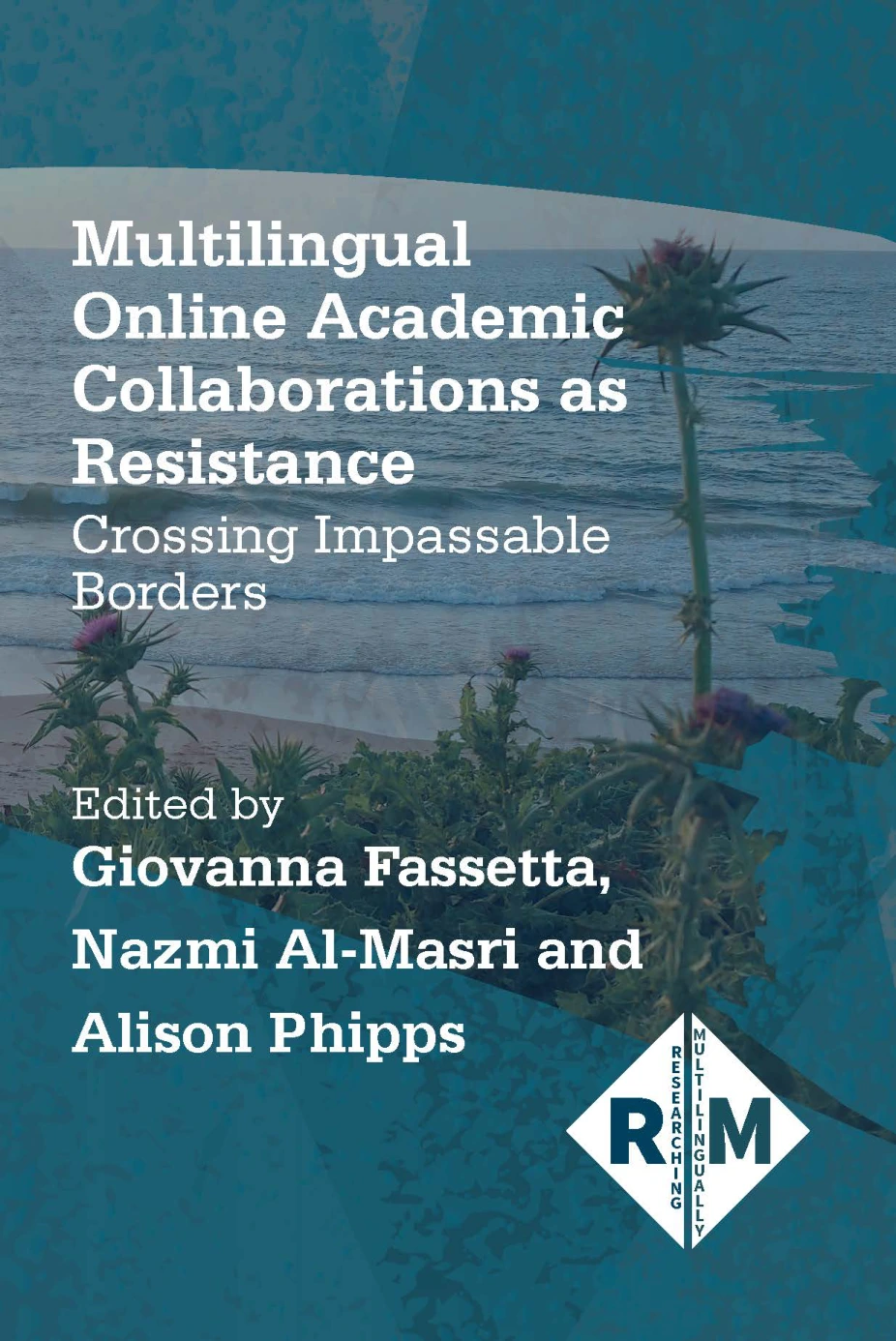
Multilingual Online Academic Collaborations as Resistance: Crossing Impassable Borders
Original price was: $5.00.$2.50Current price is: $2.50.

Giovanna Fassetta
Product Specs:
- File Type: PDF
- File Size: 2.7 MB
- Book Language: English
- Total Page Count: 218
- Instant Download
When Borders Cannot Be Crossed, Collaboration Finds Another Way
What happens when researchers, teachers and students are separated by borders that cannot be crossed? Multilingual Online Academic Collaborations as Resistance answers with a detailed account of online partnerships that connected universities in Europe and the USA with institutions in Palestine, especially the Gaza Strip. Edited by Giovanna Fassetta, Nazmi Al-Masri and Alison Phipps, this fourth volume in the Researching Multilingually series examines how digital tools, multilingual practices and sustained academic relationships can resist the isolation imposed by conflict and restricted mobility.
A Closer Look at the Volume
The book brings together contributors from Palestine, the UK, Europe and beyond. Their chapters move between reflective essays, project case studies and research reports. The collection is organised into four parts:
- English as an Additional Language and Online Technologies — telecollaboration between Glasgow and Gaza, postgraduate internationalisation at the Islamic University of Gaza, and mobile support for Syrian refugee teachers in Jordan.
- Motivation for Language Learning under Forced Immobility — how online technologies shape Palestinian EFL students’ motivation and what “really talking” across distributed environments can mean under pressure.
- Palestine and the Arabic Language — online Arabic teaching from Gaza and the difficult articulation of pain and trauma through idioms of distress.
- Making Connections — cross-border academic collaboration through the T-MEDA project, and the networked places that sustain collaborative imagination from the kitchen to Gaza.
Research, Resistance and Relationship
The volume does not treat technology as a neutral fix. Instead, it asks what it takes to build and maintain academic connections when infrastructure, political conditions and distance all push in the opposite direction. Chapters discuss language learning, teacher education, intercultural communication, digital pedagogy and institutional cooperation. The result is a book that is as much about relationship-building, ethics and resilience as it is about online platforms.
Who This Book Is For
This collection will be valuable for researchers and educators working in multilingual education, applied linguistics, higher education studies, internationalisation and online learning. It speaks directly to those interested in Palestine and the Gaza Strip, to language teachers using digital technologies, and to anyone studying academic collaboration across difficult political and geographical divides. The book’s mix of practical project accounts and critical reflection makes it relevant to both established scholars and postgraduate students.
Why It Matters
Academic collaboration across impassable borders is not only a technical challenge. It is a question of presence, voice and mutual recognition. By documenting how universities, teachers and students have worked together online, this volume offers a grounded, hopeful and clear-eyed contribution to conversations about multilingualism, resistance and the possibilities of digital connection. It is a resource for understanding what academic solidarity can look like when physical movement is severely restricted.
User Reviews
Only logged in customers who have purchased this product may leave a review.
Original price was: $5.00.$2.50Current price is: $2.50.





There are no reviews yet.