

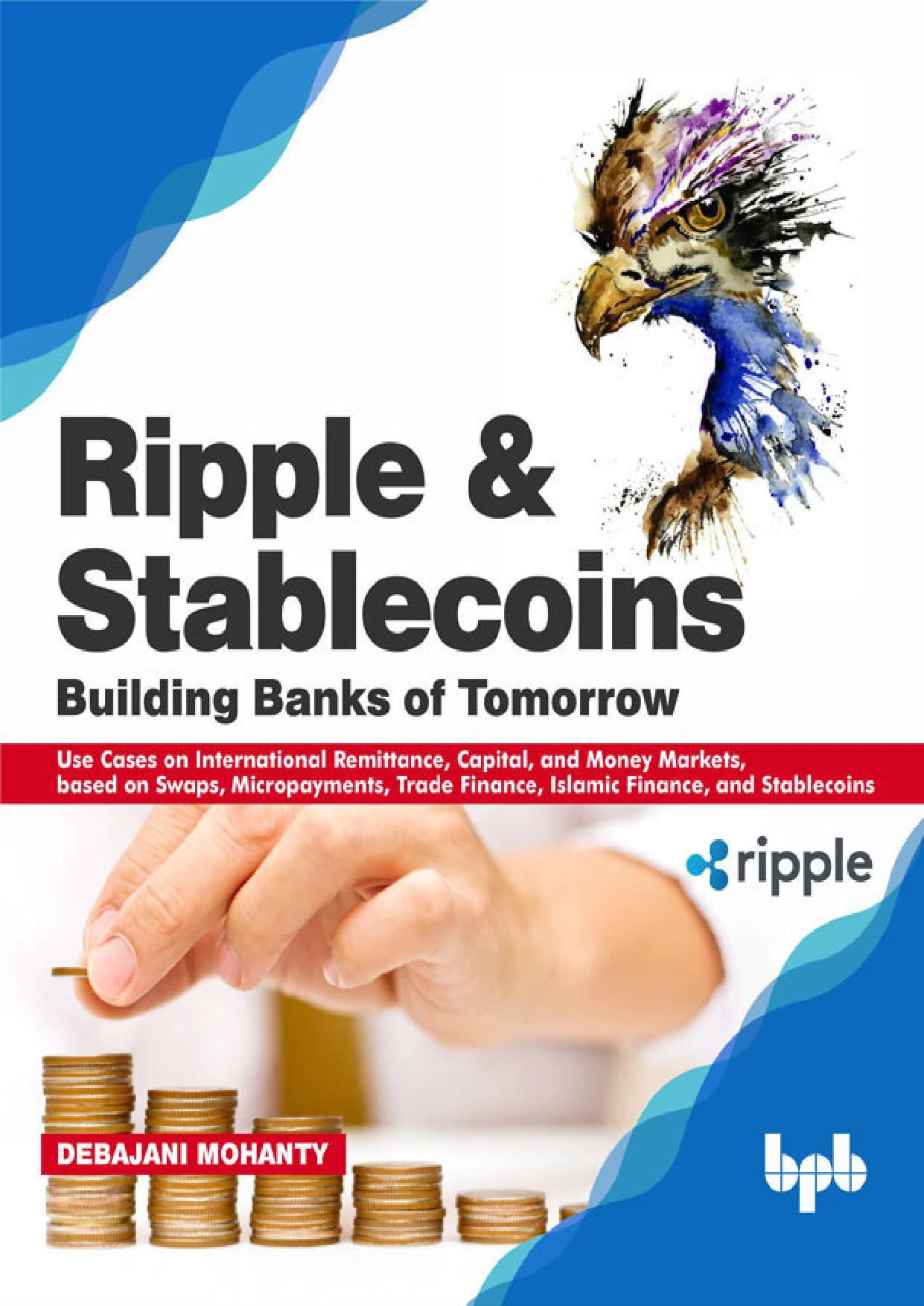
Ripple and Stablecoins: Building Banks of Tomorrow
Original price was: $155.00.$77.50Current price is: $77.50.

Debajani Mohanty
Product Specs:
- File Type: PDF
- File Size: 4.8 MB
- Book Language: English
- Total Page Count: 119
- Instant Download
Where Money Meets the Ledger
Payments look instant when you tap a card at a coffee shop. Behind the scenes, cross-border money still moves through a maze of correspondent banks, nostro accounts, cut-off times, and fees that can shave a noticeable slice off every transfer. Debajani Mohanty’s Ripple and Stablecoins: Building Banks of Tomorrow examines that gap—and the technologies aiming to close it.
Published by BPB Publications in 2019, the book is written for IT professionals and business readers who want more than a surface-level explanation of blockchain in finance. It traces the road from early payment systems and Bitcoin’s limitations to Ripple’s architecture, XRP, and the use cases that could reshape banking operations.
From Babylon to Bitcoin ⛓️
The opening chapters set the stage by reviewing the history of payments and the evolution of banks. They explore the pain points of modern banking, the credibility of banks before and after the 2007 financial crisis, and the pre-blockchain attempts at instant money transfer. Bitcoin enters the story as a breakthrough—but the book also asks why it lacked key criteria for cross-border remittance.
From there, Mohanty introduces blockchain technology and its advantages before moving into Ripple. The early section also addresses common misconceptions and the reasons some banks remain hesitant to adopt Ripple, giving readers a balanced view of both promise and resistance.
Inside Ripple and the XRP Ledger
Ripple’s architecture is treated in detail. Readers encounter international remittance mechanics, intrabank and interbank transfers, SWIFT and its pain points, SWIFT gpi, and the liquidity issues tied to nostro accounts. The book then explains RippleNet, xVia, xCurrent, xRapid, and xCurrent 4.0, alongside comparisons between SWIFT and Ripple.
A substantial development section covers the XRP Ledger, consensus, the rippled server, XRP, drops, issued currencies, trust lines, and freezing issued currencies. It walks through practical API interactions such as retrieving account information, transferring XRPs, partial payments, cross-currency payments, escrow, checks, and payment channels. Wallets—software, mobile, and hardware—are also discussed, as are ways to send and buy XRPs.
Use Cases That Reach Beyond Crypto 💱
The middle of the book shifts from architecture to application. Mohanty examines micropayments through scenarios involving Amazon and PayPal, IoT messaging, charity, services, and microfinance. She then moves to instant security settlement in the stock market, including tokenization models and Ripple-based settlement with forex rates.
Further chapters explore settlement for intraday trading in money markets, derivatives and swaps, and trade finance. A petroleum trade scenario illustrates how manufacturing and payment risks might be mitigated, how business insurance fits in, and how a complete blockchain solution could work. Live use cases from Euro Exim Bank and Standard Chartered Bank are included.
Stablecoins Enter the Frame
Stablecoins get their own dedicated section. The book defines them and sorts them into categories: backed by valuable collateral, fiat currency, cryptocurrency, or no collateral. It surveys major examples such as Tether, JPM Coin, Libra, and stablecoins from the Swiss Stock Exchange and Binance. A closing comparison asks whether Ripple or stablecoins will win, weighing the pros and cons of each.
Islamic Banking and Broader Finance
The final use-case chapter turns to Islamic banking. It explains what Islamic banking is, how cryptocurrencies are viewed in Islamic finance, and what an Islamic version of cryptocurrency might look like. This expands the book’s scope beyond conventional banking and into culturally specific financial structures.
Who Will Benefit from This Book
If you are a developer, solution architect, analyst, or business leader trying to understand how distributed ledgers fit into payments, this book offers a structured path. It pairs conceptual explanations with API-level examples, so technical readers can see how Ripple development works, while decision-makers can evaluate the use cases and adoption questions.
Because it was published in 2019, it captures the state of play at that moment. Readers looking for the latest regulatory or market developments should treat it as a foundation rather than a current news source. What remains useful is its detailed treatment of payment architecture, Ripple’s toolset, and the practical scenarios that continue to shape fintech conversations.
User Reviews
Be the first to review “Ripple and Stablecoins: Building Banks of Tomorrow”
You must be logged in to post a review.
Original price was: $155.00.$77.50Current price is: $77.50.






There are no reviews yet.